
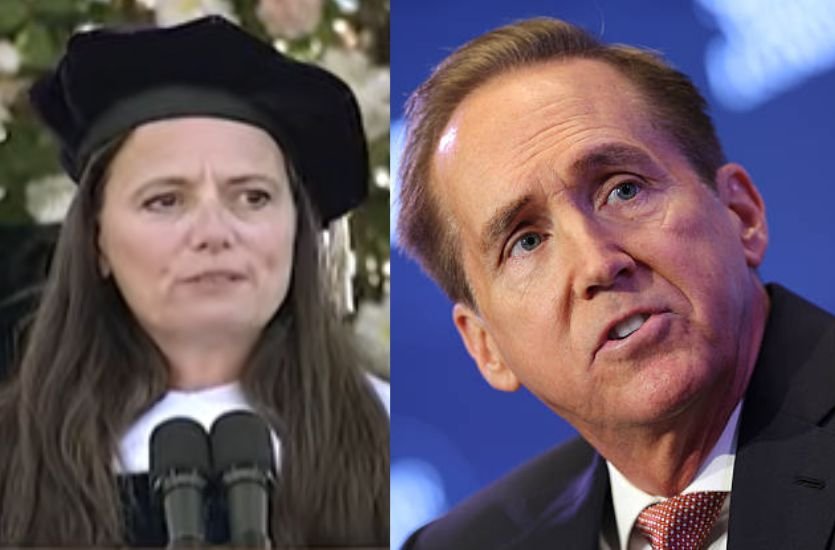
Mary Barra and David Cordani are two prominent corporate leaders whose professional careers demonstrate how experience, education, and long-term involvement in an organization can shape executive leadership. Barra is known for leading General Motors through changes in automotive technology, electrification, and software development, while Cordani spent nearly 17 years as chief executive of The Cigna Group, helping transform the healthcare and insurance business.
Although they work in different industries, their careers share several themes, including organizational transformation, customer-focused strategies, operational management, and the challenges of leading large international businesses. Their professional journeys also illustrate how executives must balance established business operations with changing customer expectations and emerging technologies.
As of October 2026, Mary Barra continues to serve as Chair and Chief Executive Officer of General Motors. David Cordani transitioned from CEO of The Cigna Group to Executive Chair on July 1, 2026, with Brian Evanko succeeding him as chief executive.
Quick Bio Table
| Detail | Mary Barra | David Cordani |
|---|---|---|
| Full name | Mary T. Barra | David M. Cordani |
| Nationality | American | American |
| Main organization | General Motors | The Cigna Group |
| Industry | Automotive and mobility | Healthcare and insurance |
| Current position | Chair and CEO | Executive Chair |
| Career start at organization | 1980 | 1991 |
| Became CEO | January 2014 | 2009 |
| Board leadership | Chair since 2016 | Executive Chair since July 2026 |
| Education | Electrical engineering and MBA | Business administration and MBA |
| Major leadership focus | Automotive innovation, electrification, and software | Healthcare services, customer relationships, and business transformation |
Who Is Mary Barra?
Mary Barra is an American business executive who leads General Motors, one of the world’s major automobile manufacturers. Her professional background is notable because she spent her career within the company, progressing from an engineering student position to its highest executive role. Her experience includes manufacturing, engineering, human resources, product development, purchasing, and supply chain management.
Barra became CEO of General Motors in January 2014 and was elected chair of its board in January 2016. Her leadership has coincided with significant changes in the automotive industry, including the growth of electric vehicles, increased use of vehicle software, changing consumer expectations, and competition from established automakers and newer technology-focused manufacturers.
Her career provides an example of how technical knowledge and business management experience can combine in a senior leadership position. Rather than entering the company directly as a top executive, she developed her expertise through different operational and managerial responsibilities over several decades.
Mary Barra’s Early Life and Education
Mary Barra grew up in the Detroit metropolitan area in Michigan, a region closely associated with the American automobile industry. Her family background included a connection to automotive manufacturing, as her father worked as a die maker for General Motors. This environment helped establish an early connection between her personal background and the industry in which she would later build her career.
Barra pursued electrical engineering at the General Motors Institute, now known as Kettering University. She graduated with a bachelor’s degree in electrical engineering in 1985. Her education provided a technical foundation that was relevant to vehicle manufacturing, engineering processes, and industrial operations.
She later continued her education at Stanford Graduate School of Business, where she earned a Master of Business Administration in 1990 after receiving support through a General Motors fellowship. This combination of engineering and business education became an important part of her professional background.
Engineering studies helped her understand technical systems and manufacturing environments, while business education provided additional knowledge of strategy, organizational management, and commercial decision-making. Her subsequent career would draw on both areas of expertise.
Mary Barra’s Career at General Motors
Barra began her General Motors career in 1980 as a cooperative education student at the Pontiac Motor Division. The co-op program allowed her to combine academic study with practical experience in the workplace. This early exposure to the manufacturing environment gave her an opportunity to learn about the people, processes, and systems involved in producing vehicles.
During the following decades, she moved through positions involving engineering, manufacturing, and management. She served in several leadership roles, including vice president of global manufacturing engineering and vice president of global human resources. She also worked as senior vice president of global product development before becoming executive vice president responsible for global product development, purchasing, and supply chain operations.
These responsibilities gave her experience across several important parts of the automotive business. Product development requires coordination among engineering, design, production, and commercial teams. Purchasing and supply chain management involve suppliers, materials, costs, and delivery schedules. Human resources leadership requires attention to workforce planning, organizational culture, and employee development.
Her progression through these functions provided a broad understanding of General Motors before she became CEO. In January 2014, she took the company’s top executive position, becoming the first woman to lead a major global automaker as CEO. She subsequently became chair of the board in January 2016.
Mary Barra’s Leadership and Automotive Industry Strategy
One of the defining features of Barra’s tenure has been the need to prepare General Motors for an automotive market undergoing technological and competitive change. Traditional automakers have had to respond to electric vehicles, advanced driver assistance systems, software-based features, evolving emissions requirements, and changing expectations about vehicle ownership.
Under Barra’s leadership, GM has pursued electrification and the development of software capabilities alongside its established vehicle business. These priorities require substantial coordination between engineering teams, manufacturing facilities, suppliers, technology developers, and dealerships. They also involve investment decisions that must account for uncertain consumer demand, production costs, infrastructure, and competition.
Electric vehicles represent a significant strategic challenge because their development can require different components, manufacturing processes, battery supply arrangements, and technical expertise compared with conventional vehicles. For a large automaker, adapting to this transition involves more than introducing new models. It requires managing production systems, supplier relationships, workforce capabilities, and long-term investment priorities.
Barra’s engineering background is relevant to understanding her career, but her position also requires broad commercial judgment. A CEO must consider profitability, vehicle quality, customer satisfaction, operational efficiency, and shareholder expectations while determining how quickly a company should invest in emerging technologies.
GM’s technology strategy has included electrification, software, and autonomous-driving development. These areas present opportunities for new products and services, but they also involve technical uncertainty, high investment requirements, and regulatory considerations. The company’s progress in each area must therefore be evaluated through actual operating results rather than strategy announcements alone.
Another important aspect of Barra’s leadership is her attention to manufacturing and workforce development. Skilled workers remain essential to the automotive industry, particularly as manufacturing processes incorporate more advanced equipment, digital systems, and electric vehicle technologies. Workforce training helps employees adapt to changing production requirements and supports the development of technical capabilities.
Her career also highlights the relationship between organizational knowledge and leadership continuity. Having worked across multiple GM functions, Barra brings experience with the company’s internal operations as well as its external market challenges. However, the automotive industry’s rapid evolution means that past experience must continually be combined with new information, investment discipline, and the ability to respond to changing market conditions.
Who Is David Cordani?
David M. Cordani is an American business executive best known for his long leadership tenure at The Cigna Group, a global health services company. His career at Cigna began in 1991, and he held a series of senior positions before becoming president in 2008 and CEO in 2009.
Cordani’s background differs from Barra’s engineering-based path. His professional experience centers on business administration, healthcare operations, customer relationships, and the management of a complex organization operating in a heavily regulated industry.
During his time as CEO, Cigna expanded beyond its traditional identity as a health insurer and developed a broader portfolio of health services. The company’s activities include health insurance and related services, as well as healthcare capabilities through its Evernorth Health Services business.
Cordani’s leadership involved balancing financial performance with the challenges of healthcare affordability, access to services, customer expectations, and regulatory oversight. These issues make healthcare management different from automotive leadership, even though both industries require large-scale operations and long-term strategic planning.
After nearly 17 years as CEO, Cordani transitioned to the position of Executive Chair of The Cigna Group on July 1, 2026. Brian Evanko succeeded him as CEO, while Cordani remained involved in board leadership and strategic oversight.
David Cordani’s Education and Professional Background
Cordani earned a Bachelor of Business Administration from Texas A&M University and later completed an MBA at the University of Hartford. His educational background provided a foundation in business principles, organizational management, and commercial decision-making.
He joined Cigna in 1991 and gradually assumed responsibilities across different parts of the organization. His senior positions included leadership in customer segments and marketing, the presidency of Cigna Healthcare, and the role of chief operating officer. These assignments exposed him to customer engagement, business operations, and the practical challenges of delivering healthcare-related services at scale.
His appointment as president in 2008 and CEO in 2009 marked the culmination of nearly two decades of experience within the company. Like Barra, Cordani developed substantial institutional knowledge before taking responsibility for the overall organization.
The healthcare sector requires executives to understand more than revenue and operating costs. Health services companies must also navigate insurance rules, healthcare delivery systems, medical costs, customer privacy, and complex relationships among insurers, providers, employers, and patients.
Cordani’s experience across several business functions was relevant to these challenges. His leadership responsibilities required coordination among teams with different objectives while maintaining the company’s broader strategic direction.
David Cordani’s Leadership at The Cigna Group
Cordani’s tenure as CEO was associated with a major expansion in Cigna’s scale and business model. According to the company’s 2026 leadership succession announcement, Cigna evolved during his tenure from a traditional insurer serving approximately 46 million customers and generating $18 billion in annual revenue into a global health company reporting around 180 million customer relationships and approximately $275 billion in annual revenue. The company also reported more than 185 million customer relationships in its subsequent board biography.
These figures illustrate the scale of the company’s transformation, although customer relationships are not necessarily the same as unique individual customers. They also represent company-reported results and do not mean that every aspect of the growth was attributable to a single executive.
A central element of Cigna’s development was the expansion of health services beyond traditional insurance coverage. This broader model aims to connect different parts of the healthcare system, including services related to pharmacy benefits, healthcare management, and support for customers and clients.
Such a strategy can create opportunities to serve different customer needs and develop additional revenue streams. It can also introduce operational complexity, particularly when a company must integrate businesses, coordinate technology systems, manage costs, and maintain consistent service standards.
Cordani’s leadership also emphasized customer engagement and the role of data analytics and digital capabilities in healthcare. These tools can help organizations understand service utilization, coordinate benefits, and improve the administration of healthcare programs. Their value, however, depends on how effectively they are implemented and whether they produce meaningful benefits for the people and organizations using the services.
Healthcare affordability remained another important concern. Medical costs, prescription expenses, and insurance arrangements affect individuals, employers, and other customers. Health services companies operate within a complicated environment where financial sustainability must be balanced against the need for accessible and useful services.
Cordani’s long tenure therefore provides an example of the challenges involved in transforming a large healthcare organization while maintaining its operational responsibilities.
David Cordani’s Transition to Executive Chair in 2026
The transition of David Cordani from CEO to Executive Chair marked an important leadership change for The Cigna Group. Announced in March 2026, the succession plan became effective on July 1, 2026, when Brian Evanko assumed the CEO position.
Evanko had served as Cigna’s president and chief operating officer and previously held senior financial and business leadership positions. His experience within the organization provided continuity during the change in executive leadership. Cordani’s move to Executive Chair allowed the company to retain his institutional knowledge while placing day-to-day executive leadership under a new CEO.
Leadership succession is an important issue for large companies because a CEO’s departure can affect strategic priorities, employee expectations, investor confidence, and relationships with customers. A planned transition can help preserve organizational knowledge while clarifying responsibilities between the board and executive management.
Cordani’s new position focuses on board leadership and strategic oversight rather than continuing in his former role as CEO. The arrangement also provides an opportunity to transfer experience to the incoming chief executive. The company’s longer-term performance will depend on how effectively its leadership team responds to industry developments, operational challenges, and customer needs.
His transition demonstrates that executive leadership does not always end when a person leaves the CEO position. In some organizations, experienced leaders continue contributing through governance, board oversight, and strategic guidance.
Mary Barra and David Cordani: Similarities and Differences
Mary Barra and David Cordani lead organizations in different industries, but their professional backgrounds reveal several similarities. Both developed their careers within their respective companies over many years, moved through multiple leadership positions, and gained experience in different business functions before becoming CEOs.
Their careers also demonstrate the importance of understanding how an organization operates beyond its most visible products or services. General Motors depends on engineering, manufacturing, supply chains, dealerships, and technology development. The Cigna Group depends on healthcare services, insurance operations, customer relationships, data capabilities, and regulatory compliance.
The main difference lies in the industries they serve and the strategic decisions those industries require. Barra’s work is closely associated with vehicle development, manufacturing, electrification, and software. Cordani’s tenure focused on healthcare services, insurance, business expansion, and the management of complex relationships throughout the healthcare system.
Their educational backgrounds also differ. Barra trained as an electrical engineer before earning an MBA, while Cordani studied business administration and completed an MBA. Both paths demonstrate how specialized knowledge and business education can contribute to senior executive careers, although neither educational route alone determines leadership outcomes.
Their current responsibilities differ as well. Barra remains both chair and CEO of General Motors, combining board leadership with executive management. Cordani became Executive Chair in July 2026 after handing the CEO position to Brian Evanko. These roles illustrate different arrangements for distributing responsibility between company boards and executive teams.
Lessons From Their Corporate Careers
The careers of Barra and Cordani offer several useful observations about leadership in large organizations.
First, long-term experience can provide executives with a detailed understanding of their companies. Both leaders held multiple positions before reaching the top, allowing them to develop knowledge of internal operations, customers, and strategic challenges.
Second, business transformation requires sustained attention to changing markets. Automakers must adapt to technological developments and evolving consumer preferences, while healthcare companies must respond to affordability concerns, service expectations, and changes in healthcare delivery. Neither industry can rely entirely on historical business models.
Third, leadership requires balancing long-term investment with current operating performance. Developing new automotive technologies and expanding healthcare services can require significant resources. Executives must consider potential benefits alongside financial risks, operational constraints, and the expectations of stakeholders.
Finally, leadership succession is part of organizational continuity. Cordani’s transition to Executive Chair demonstrates how an organization can retain the experience of a departing CEO while assigning executive responsibility to a successor. Barra’s continuing dual role at GM represents a different governance structure, with the chair and CEO responsibilities held by the same person.
These observations do not establish that one leadership approach is universally better than another. Their effectiveness depends on the company’s circumstances, governance arrangements, industry environment, and ability to execute its strategy.
Conclusion
Mary Barra and David Cordani have built significant corporate careers through long-term service, varied management responsibilities, and leadership of organizations facing complex changes. Barra’s career at General Motors reflects the intersection of engineering, manufacturing, and automotive innovation, while Cordani’s tenure at The Cigna Group illustrates the development of a broader healthcare services business from a traditional insurance foundation.
Their professional journeys share a commitment to organizational development, strategic planning, and adapting to changing business environments. Yet their responsibilities, industries, and current positions remain distinct. Barra continues to lead GM as chair and CEO, while Cordani serves as Executive Chair following his July 2026 CEO transition.
Together, their careers provide a useful comparison of corporate leadership across two major sectors of the American economy. Their experiences show how executive responsibilities evolve with business needs and why long-term organizational knowledge, careful decision-making, and leadership continuity remain important in large companies.
READ MORE : Amy Sherrill
READ MORE : Tiger Woods and Bill Ackman


One thought on “Mary Barra and David Cordani: Leadership, Career Journeys, and Business Impact”