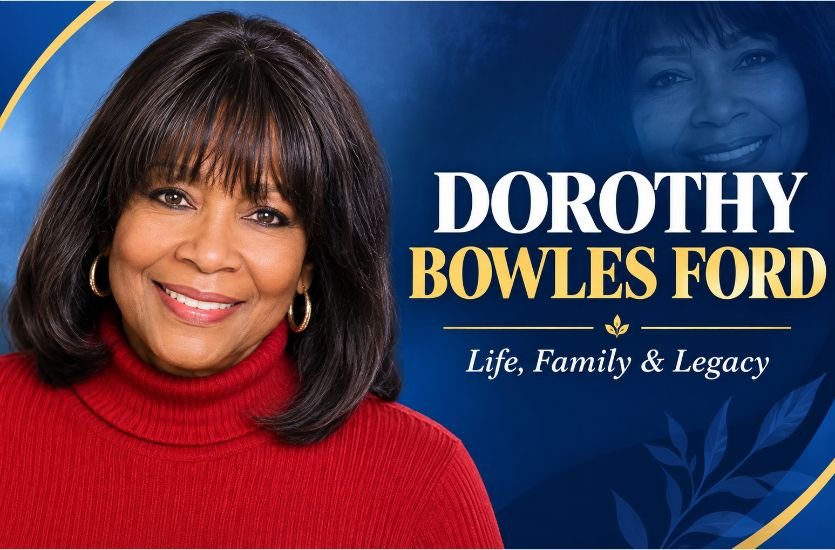
Dorothy Bowles Ford is a name closely associated with one of Tennessee’s best-known political families. Although she has remained largely outside the public spotlight, her connection to former U.S. Representative Harold Ford Sr. and former U.S. Representative Harold Ford Jr. has made her a subject of interest for people researching the Ford family, Memphis politics, and the personal background of Harold Ford Jr.
Unlike her former husband and eldest son, Dorothy Bowles Ford did not become a nationally recognized elected official. Much of the available information about her comes through historical records concerning her family. The U.S. House of Representatives identifies Harold Ford Jr. as the eldest son of Harold Eugene Ford and Dorothy Bowles Ford, while House records concerning Harold Ford Sr. confirm that he married Dorothy Bowles in 1969 and that they had three children before divorcing in 1999.
Because Dorothy maintained a relatively private public profile, there is considerably less authoritative information about her personal biography than there is about her former husband and son. This makes it especially important to distinguish documented information from claims repeated on biography websites.
Quick Bio Table
| Detail | Information |
|---|---|
| Full Name | Dorothy Bowles Ford |
| Best Known For | Mother of Harold Ford Jr. and former wife of Harold Ford Sr. |
| Former Husband | Harold Eugene Ford Sr. |
| Marriage | 1969 |
| Divorce | 1999 |
| Children | Harold Ford Jr., Newton Jake Ford, and Sir Isaac Ford |
| Family Connection | Ford political family of Memphis, Tennessee |
| Profession | Publicly documented as a longtime U.S. Department of Agriculture employee |
| Public Profile | Relatively private |
| Son’s Congressional Service | Harold Ford Jr. served in the U.S. House from 1997 to 2007 |
| Former Husband’s Congressional Service | Harold Ford Sr. served in the U.S. House from 1975 to 1997 |
| Current Personal Details | Limited reliable public information |
Who Is Dorothy Bowles Ford?
Dorothy Bowles Ford is best known publicly as the former wife of Harold Eugene Ford Sr. and the mother of Harold Ford Jr. Her family connection places her within a political family that played a significant role in Memphis and Tennessee public life for several decades.
Harold Ford Sr. represented Tennessee in the U.S. House of Representatives from 1975 through 1997. His son, Harold Ford Jr., subsequently succeeded him in the same Memphis-based congressional seat, serving from 1997 through 2007. The U.S. House describes Harold Ford Jr. as the eldest son of Harold Eugene and Dorothy Bowles Ford.
Dorothy herself did not serve as an elected member of Congress. Her public identity is instead connected to her family, her professional life, and her place in the history of the Ford family.
This distinction is important because many online biographies focus heavily on Harold Ford Sr. and Harold Ford Jr. when discussing Dorothy. Her own publicly documented life is much less extensive.
Dorothy Bowles Ford and Harold Ford Sr.
Dorothy Bowles married Harold Eugene Ford Sr. on February 10, 1969, according to the official historical record maintained by the U.S. House of Representatives. The couple later had three sons: Harold Ford Jr., Newton Jake Ford, and Sir Isaac Ford. Their marriage ended in divorce in 1999.
The timing of the marriage was significant because Harold Ford Sr. was beginning the public-service career that would eventually make him a prominent Tennessee political figure.
Before entering Congress, Harold Ford Sr. served in the Tennessee state legislature. He was subsequently elected to the U.S. House in 1974 and began serving in January 1975. He remained in Congress until January 1997.
During this period, the Ford family became increasingly prominent in Memphis public life.
Dorothy therefore spent much of her married life connected to a family involved in politics and public service, although she herself remained outside elected office.
Harold Ford Sr.’s Political Career
Understanding Dorothy Bowles Ford’s family background requires some context about Harold Ford Sr.
Born in Memphis in 1945, Harold Ford Sr. attended Geeter High School and later Tennessee State University. He also studied mortuary science at John Gupton College and eventually earned an MBA from Howard University. Before entering politics, he worked as a mortician and was involved in the family funeral-home business.
Ford entered the Tennessee House of Representatives in 1971. He then won election to the U.S. House of Representatives, where he represented a Memphis-centered district from 1975 until 1997.
During his congressional career, he served on several committees and became chairman of the House Select Committee on Aging during the 102nd and 103rd Congresses.
His long congressional career established the Ford name as an important part of Tennessee political history.
Dorothy Bowles Ford’s Children
Dorothy Bowles Ford and Harold Ford Sr. had three sons: Harold Ford Jr., Newton Jake Ford, and Sir Isaac Ford. This family information is specifically documented by the U.S. House’s historical biography of Harold Ford Sr.
Among the three children, Harold Ford Jr. became the most nationally prominent.
His career eventually extended the Ford family’s congressional presence into a second generation.
Harold Ford Jr.
Harold Ford Jr. was born in Memphis, Tennessee, on May 11, 1970. According to the U.S. House of Representatives, he attended St. Albans School for Boys in Washington, D.C., graduated from the University of Pennsylvania in 1992, and received a J.D. from the University of Michigan Law School in 1996.
Before entering Congress, he worked as a staff aide for the U.S. Senate Committee on the Budget and as a special assistant at the U.S. Department of Commerce. He was elected to the U.S. House in 1996 and began serving in January 1997.
Ford Jr. represented Tennessee’s 9th Congressional District for five terms, from 1997 until January 2007. He did not seek reelection to the House in 2006 and instead ran unsuccessfully for the U.S. Senate.
The House historical record specifically identifies him as the eldest son of Harold Eugene and Dorothy Bowles Ford.
Dorothy Bowles Ford’s Role in the Ford Family
Although Dorothy did not hold elected office, her place in the Ford family is historically significant because she was the mother of a second-generation congressman and the wife of a longtime congressman.
The U.S. House’s historical biography of Harold Ford Jr. provides one additional detail about her professional life. It states that Dorothy was a longtime employee of the U.S. Department of Agriculture.
This is important because it shows that Dorothy’s identity was not limited to her relationship with politicians. She also had a documented career in federal government employment.
However, detailed public information about the exact nature, dates, and progression of that employment is limited in authoritative sources. It is therefore better to describe her career conservatively rather than assign specific job titles or responsibilities that are not adequately documented.
Dorothy Bowles Ford’s Career
Online biographies sometimes attribute various professional positions to Dorothy Bowles Ford, including jobs at private companies and administrative roles. However, these descriptions are not consistently supported by strong primary sources.
The strongest source located for this article is the U.S. House historical biography of Harold Ford Jr., which states that Dorothy was a longtime employee of the U.S. Department of Agriculture.
That provides a reliable basis for saying that she had a long-term federal government career.
Other detailed claims about her employment history should be treated cautiously unless supported by official records, contemporary newspaper reports, or other strong documentation.
This is especially important when researching people who lived much of their lives outside the public spotlight. Repeated claims on biography websites can sometimes become accepted as facts even when their original source is unclear.
Life in Washington, D.C.
The Ford family’s political career eventually brought the family to Washington, D.C.
The House biography of Harold Ford Jr. notes that the family moved to Washington in the late 1970s, during Harold Ford Sr.’s congressional career. Harold Jr. subsequently attended St. Albans School for Boys in Washington.
This period would have placed Dorothy within the environment surrounding a congressional family.
Washington was an important part of the family’s life because Harold Ford Sr. was serving in Congress while his children were growing up. Harold Jr.’s later political career also developed partly from the experiences he had while growing up around the nation’s capital.
The Ford Family and Memphis
Memphis, Tennessee, remained central to the Ford family’s political identity.
Harold Ford Sr. represented a Memphis-centered congressional district for more than two decades. After he retired from Congress, his son Harold Ford Jr. successfully ran for the same seat.
The U.S. House describes Harold Ford Jr.’s 1996 election as a succession to his father’s Memphis-based congressional seat. Ford Jr.’s election continued the family’s congressional representation into another generation.
This made the Ford family unusual in modern Tennessee political history.
Harold Ford Jr. became the first African American representative to succeed his father in Congress, according to a historical highlight from the U.S. House.
Dorothy’s connection to both men is therefore one of the reasons her name appears in historical discussions of the Ford political family.
Dorothy Bowles Ford and the Second Generation
The transition from Harold Ford Sr. to Harold Ford Jr. was a major event in the Ford family’s political history.
Harold Ford Sr. left Congress in 1997 after more than two decades of service. His son won the seat in the 1996 election and began his congressional career the following year.
This created a direct father-to-son succession in Congress.
Dorothy was the mother of that second-generation representative, making her an important family connection between the two congressional careers.
While she did not become a public political figure herself, her name appears in official House material precisely because of this family history.
What Is Known About Dorothy’s Early Life?
One of the biggest challenges in writing a biography of Dorothy Bowles Ford is the limited authoritative information about her early years.
Several websites claim specific details about her birth year, birthplace, education, parents, and other personal information. However, these claims are not consistently supported by strong primary sources.
For that reason, a responsible biography should avoid presenting an exact date of birth or specific educational history as established fact unless reliable documentation is available.
The available official record provides considerably stronger evidence about her marriage, children, and federal employment than about her childhood and education.
This limitation is worth mentioning because online biographies can sometimes make a private person’s life appear much more documented than it actually is.
Dorothy Bowles Ford After Her Divorce
Dorothy Bowles Ford and Harold Ford Sr. divorced in 1999. The U.S. House historical record confirms the year of the divorce.
Information about Dorothy’s life after the divorce is considerably more limited.
Unlike Harold Ford Jr., who remained a public figure after leaving Congress, Dorothy largely stayed away from national political attention. As a result, there is not enough reliable public information to provide a detailed account of her day-to-day life in later years.
Some online sources make claims about her current location, occupation, relationships, finances, or other personal circumstances. Those claims are not consistently verified by authoritative sources.
A factual biography should therefore avoid turning such claims into established facts.
Where Is Dorothy Bowles Ford Today?
The current whereabouts and private circumstances of Dorothy Bowles Ford are not well documented in authoritative public sources.
Some websites have published specific claims about where she lives or what she currently does. However, these claims vary, and reliable public documentation is limited.
For that reason, it is more accurate to say that Dorothy has maintained a private life and that detailed information about her current circumstances is not broadly established through authoritative sources.
This approach also avoids publishing unnecessary private information about someone who has not maintained the same level of public visibility as her former husband or son.
Is Dorothy Bowles Ford on Wikipedia?
Searches for Dorothy Bowles Ford can lead readers to biographies of Harold Ford Sr. and Harold Ford Jr., but a dedicated Wikipedia biography should not be assumed simply because her name appears in search results.
Her public significance comes primarily through her family connections and documented federal employment.
The lack of an extensive independent public biography also helps explain why many websites publish similar articles attempting to fill in details about her life.
When researching her, official historical sources are more useful than assuming that every repeated online biography detail is accurate.
Why Is Dorothy Bowles Ford Important to the Ford Family Story?
Dorothy Bowles Ford’s importance comes from her position within a family that produced two generations of congressional representatives.
Harold Ford Sr. represented Tennessee in Congress from 1975 to 1997. Harold Ford Jr. represented the same state in the House from 1997 to 2007.
Dorothy was married to the first and was the mother of the second.
That makes her an important connecting figure in the family’s history.
Her story also provides a different perspective on political families. Public attention often concentrates on elected officials, campaigns, speeches, and legislative careers. Family members who maintain private careers and family responsibilities may receive far less attention, even though they remain part of the historical context surrounding public figures.
What Should Be Avoided When Writing About Dorothy Bowles Ford?
Because information about Dorothy is limited, several commonly repeated claims should be treated carefully.
An exact birth date should not be presented as confirmed without a reliable source. The same applies to claims about her current residence, personal finances, current relationships, or other private circumstances.
It is also important not to confuse Dorothy Bowles Ford with other people who have similar names or connections to other members of the Ford family.
The Ford surname is associated with several different American families and public figures, so accurate identification is essential.
Dorothy Bowles Ford and Historical Records
Official congressional records provide the strongest foundation for understanding Dorothy’s connection to American political history.
The U.S. House identifies her as Harold Ford Jr.’s mother and documents her longtime employment with the Department of Agriculture. The House also records her marriage to Harold Ford Sr., their three children, and their 1999 divorce.
These details establish the core of her public biography.
Beyond these documented facts, the available record becomes less detailed.
That does not make her story unimportant. Instead, it demonstrates the difference between public historical documentation and private life.
The Broader Ford Political Legacy
The Ford family’s political history extends beyond one congressional term.
Harold Ford Sr. entered the Tennessee legislature before moving to Congress. He became a longtime member of the U.S. House and served through 1997. His son Harold Ford Jr. then represented the same Memphis-centered district for another decade.
The Congressional Black Caucus’s historical material also includes Harold Ford Sr. among its members, reflecting his place in the history of Black representation in Congress.
Dorothy’s family connection to this history is therefore significant even though she was not herself an elected representative.
Final Thoughts on Dorothy Bowles Ford
Dorothy Bowles Ford is best known as the former wife of Harold Ford Sr. and the mother of Harold Ford Jr., two members of a prominent Tennessee political family.
Official U.S. House records establish that Dorothy married Harold Ford Sr. in 1969, that they had three sons, and that they divorced in 1999. The same congressional historical record identifies her as a longtime employee of the U.S. Department of Agriculture.
Her son Harold Ford Jr. went on to serve in the U.S. House from 1997 through 2007 after succeeding his father in the Memphis-based congressional seat.
Despite these significant family connections, Dorothy herself has maintained a much lower public profile. As a result, reliable information about her early life and later personal circumstances is limited.
The most accurate way to understand Dorothy Bowles Ford is therefore through the documented elements of her life: her marriage to Harold Ford Sr., her three children, her federal government employment, and her place within a family that produced two generations of congressional representation.
Her story is also a reminder that public families contain many people whose lives are not fully recorded in newspapers or political biographies. In Dorothy’s case, the available evidence provides a clear picture of her family connections and some aspects of her professional life, while leaving many personal details private.
For readers researching Dorothy Bowles Ford, separating verified historical information from repeated online claims is especially important. The strongest available evidence comes from official congressional records, while many additional details circulating online remain insufficiently documented.
Visit: Editorial Magazine