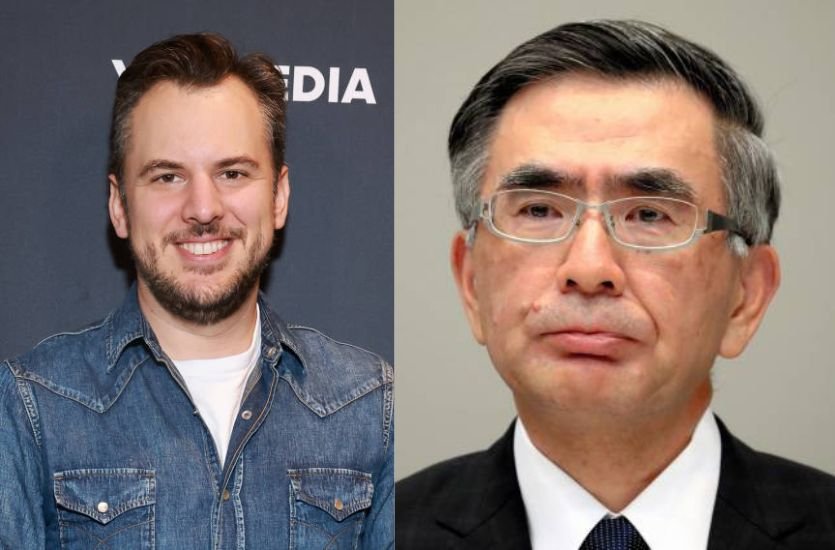
Mike Krieger and Toshihiro Suzuki represent two very different paths to business leadership. Krieger built his reputation in software, consumer technology and artificial intelligence, while Suzuki has spent decades in the automotive and mobility industry.
Krieger is best known as the co-founder and former chief technology officer of Instagram. After helping scale the social platform to more than one billion users, he moved into personalized news technology with Artifact and later joined Anthropic, where his work shifted toward AI products.
Toshihiro Suzuki, meanwhile, built his career inside Suzuki Motor Corporation. He joined the company in 1994, progressed through manufacturing, product planning and corporate leadership, and became president in 2015. He continues to lead Suzuki as its Representative Director and President.
Although their names sometimes appear together online, there is no publicly documented professional or family relationship between Mike Krieger and Toshihiro Suzuki. The meaningful connection is that their careers provide an interesting comparison between digital product innovation and large-scale industrial transformation.
Quick Answer
Mike Krieger is a Brazilian-born software engineer, entrepreneur and product leader who co-founded Instagram with Kevin Systrom in 2010. As Instagram’s CTO, he helped build and scale its engineering organization. Anthropic says that during his time there, the engineering team grew to more than 450 people and Instagram expanded to more than one billion users.
After leaving Instagram, Krieger co-founded Artifact, an AI-powered personalized news application. Yahoo acquired Artifact’s technology in 2024, and Krieger subsequently joined Anthropic as Chief Product Officer. In January 2026, Anthropic announced that he would move to Labs, an initiative focused on experimental products built around Claude’s emerging capabilities.
Toshihiro Suzuki is the Representative Director and President of Suzuki Motor Corporation. He joined Suzuki in 1994 and held positions involving manufacturing, product planning, corporate planning and global marketing before becoming president in June 2015. Suzuki’s current corporate information lists him as Representative Director and President and Chairman of the Board.
Their careers are therefore best understood as two separate stories: Krieger’s progression from social-media engineering to AI product development, and Suzuki’s progression from automotive operations to global corporate leadership.
Why Are Mike Krieger and Toshihiro Suzuki Mentioned Together?
There is no established joint company, startup, investment or major business project connecting Mike Krieger with Toshihiro Suzuki.
The two names are more appropriately discussed as a comparison of leadership and innovation in different industries.
Krieger’s work has focused on software products that can be developed, tested and distributed digitally. His career includes Instagram, Artifact and Anthropic.
Suzuki’s responsibilities are much more closely tied to physical products and industrial systems. Suzuki Motor Corporation operates businesses covering automobiles, motorcycles, marine products and other mobility-related activities. The company’s history shows how it developed from a loom manufacturer into a diversified mobility company while continuing to emphasize customer needs.
That difference makes their careers useful to examine side by side without suggesting that they have worked together.
Mike Krieger at a Glance
| Category | Information |
|---|---|
| Name | Mike Krieger |
| Background | Brazilian-born software engineer and entrepreneur |
| Best known for | Co-founding Instagram |
| Instagram role | Co-founder and CTO |
| Major later project | Artifact |
| Anthropic role | Former Chief Product Officer; joined Anthropic Labs in 2026 |
| Main fields | Software, consumer products and artificial intelligence |
| Co-founder | Kevin Systrom |
| Current direction | Experimental AI product development |
Who Is Mike Krieger?
Mike Krieger is a technology entrepreneur whose career combines engineering, product development and user experience.
He became internationally known after co-founding Instagram with Kevin Systrom. Before Instagram, Krieger worked at Meebo and developed experience in engineering and user experience design.
His educational background also helped shape his approach to technology. He studied Symbolic Systems at Stanford University, an interdisciplinary field that connects computing with areas related to human behavior and cognition.
This combination of technical and human-centered thinking became particularly relevant to Instagram’s product philosophy.
Mike Krieger’s Early Career
Before Instagram, Krieger worked at Meebo, a technology company where he gained experience in software engineering and user experience.
He later joined forces with Kevin Systrom on Burbn, an application that included location-sharing and several other features.
The founders eventually recognized that photo sharing was the strongest part of the product. Rather than continuing to build every possible feature into Burbn, they narrowed the concept and created a more focused photo-sharing application.
That application became Instagram.
Co-Founding Instagram
Instagram launched in October 2010 and quickly gained attention for making mobile photo sharing straightforward.
Krieger’s role was heavily technical. As CTO, he helped develop the systems needed to support a rapidly expanding user base while maintaining the product’s performance and usability.
Anthropic later described the scale of Krieger’s work at Instagram, stating that he helped grow the engineering organization to more than 450 people while the platform expanded beyond one billion users.
Facebook agreed to acquire Instagram in 2012 in a transaction valued at approximately $1 billion.
Krieger remained involved with Instagram after the acquisition and eventually left the company in 2018.
Mike Krieger and Artifact
Krieger later reunited with Kevin Systrom to create Artifact.
Artifact was designed as a personalized news product that used artificial intelligence and recommendation technology to help users discover content.
The project eventually reached a different outcome from Instagram. Artifact announced that it would wind down as a standalone application, and Yahoo acquired its technology in 2024.
Reuters reported that Yahoo planned to incorporate Artifact’s AI-powered recommendation technology into its news and other services.
The experience nevertheless became an important part of Krieger’s transition from social-media technology into AI-powered products.
Mike Krieger at Anthropic
Krieger joined Anthropic in May 2024 as Chief Product Officer.
According to Anthropic, his responsibilities included product engineering, product management and product design as the company worked to expand its applications and bring Claude to a wider audience.
His role also connected his previous experience with large consumer platforms to the emerging AI industry.
In January 2026, Anthropic announced the expansion of Anthropic Labs, a team intended to incubate experimental products at the frontier of Claude’s capabilities. Krieger joined Labs to build alongside Anthropic co-founder Ben Mann after spending two years as Chief Product Officer.
This represents another major stage in his career: moving from scaling established consumer software toward experimenting with new AI products.
What Defines Mike Krieger’s Leadership?
Several themes appear consistently throughout Krieger’s career.
Product Simplicity
Instagram emerged after its founders reduced a more complicated concept to a focused photo-sharing experience.
Engineering at Scale
Krieger’s technical responsibilities expanded as Instagram grew from a small startup into a platform serving more than one billion users.
User Experience
His background combines software engineering with user-experience thinking, allowing him to approach technology from both technical and consumer perspectives.
Experimentation
Artifact and Anthropic Labs show a willingness to work on products in emerging technology areas rather than remaining focused on a single successful platform.
Who Is Toshihiro Suzuki?
Toshihiro Suzuki is a Japanese business executive and the Representative Director and President of Suzuki Motor Corporation.
Unlike Krieger, whose career developed largely through startups and technology companies, Suzuki spent most of his professional life inside a large industrial organization.
Suzuki joined Suzuki Motor Corporation in January 1994. His official corporate biography records a progression through manufacturing, international assignment, product planning, corporate planning and executive leadership.
His career included serving as plant manager of Suzuki’s Iwata Plant and being assigned to General Motors in the United States. He later became involved in product planning and corporate planning before becoming Representative Director and Executive Vice President in 2011.
In June 2015, he became Representative Director and President.
Toshihiro Suzuki’s Leadership at Suzuki Motor Corporation
Suzuki’s role involves managing an organization with extensive manufacturing, engineering, international sales and mobility operations.
The company was incorporated in 1920 as Suzuki Loom Manufacturing and later expanded into motorcycles, automobiles, outboard motors and other businesses.
As president, Toshihiro Suzuki has therefore been responsible for guiding a company with a long industrial history while responding to major changes in the mobility industry.
These changes include:
- Battery-electric vehicles
- Hybrid technology
- Alternative fuels
- Manufacturing expansion
- Digital and connected technologies
- Changing customer preferences
- Global supply chains
- Carbon-neutrality efforts
Suzuki’s “Sho-Sho-Kei-Tan-Bi” Philosophy
One of the most recognizable ideas associated with Suzuki’s product philosophy is “Sho-Sho-Kei-Tan-Bi,” translated by Suzuki as “Smaller, Fewer, Lighter, Shorter, Beauty.”
The philosophy emphasizes products that are appropriately sized, lightweight, efficient and equipped with features people actually need.
Suzuki’s own sustainability materials connect this philosophy with its goal of producing safe and efficient vehicles that require relatively little energy.
This philosophy is particularly relevant to Suzuki’s focus on compact mobility.
Rather than treating innovation as simply adding size or complexity, Suzuki’s approach emphasizes optimization.
Toshihiro Suzuki and India’s Growing Importance
India has become a major part of Suzuki’s global manufacturing and mobility strategy.
Suzuki’s operations in India have expanded substantially, and the company continues to increase production capacity there.
In July 2026, Suzuki announced that commercial production had begun at Plant D at its Hansalpur manufacturing facility in Gujarat. The plant has annual capacity of 250,000 vehicles and produces the e VITARA. The expansion brought the Hansalpur facility’s total annual capacity to one million vehicles and Suzuki’s total automobile production capacity in India to approximately 2.9 million units.
Suzuki has also stated an ambition to establish annual production capacity of four million units in India during the 2030s.
These developments illustrate why India is central to the company’s future manufacturing strategy.
Toshihiro Suzuki and the e VITARA
Electrification is another major part of Suzuki’s current strategy.
The e VITARA is Suzuki’s first global strategic battery-electric vehicle. It was unveiled in Milan in November 2024 and subsequently introduced into several markets.
Suzuki began sales of the e VITARA in India in February 2026. The company says the vehicle is produced at the Hansalpur plant in Gujarat and is intended for export to more than 100 countries and regions.
The model uses Suzuki’s HEARTECT-e platform and includes the company’s ALLGRIP-e electric four-wheel-drive system.
The e VITARA represents an important transition for Suzuki because it combines the company’s compact-mobility philosophy with battery-electric technology.
Mike Krieger vs. Toshihiro Suzuki: Career Comparison
| Area | Mike Krieger | Toshihiro Suzuki |
|---|---|---|
| Primary industry | Software and AI | Automotive and mobility |
| Best known for | Co-founding Instagram | Leading Suzuki Motor Corporation |
| Career environment | Startups and technology companies | Large industrial corporation |
| Major product | Suzuki mobility products | |
| Major transition | Social media to AI | Conventional mobility toward multiple powertrain technologies |
| Growth model | Digital users and software scale | Manufacturing, distribution and global production |
| Innovation focus | Product experience and AI | Mobility, efficiency and electrification |
| Leadership timeline | Rapid startup growth | Long-term corporate progression |
| Current direction | Experimental AI products at Anthropic Labs | Global mobility and manufacturing strategy |
The comparison should not be interpreted as a ranking. The two careers operate under fundamentally different economic and technological conditions.
How Their Innovation Models Differ
Digital Product Innovation
Krieger’s work demonstrates the speed at which software products can evolve.
A software company can release a new feature, measure user behavior, make changes and distribute an update globally without physically manufacturing each individual product.
Instagram’s growth depended heavily on this digital scalability.
Industrial Innovation
Suzuki’s environment is different.
A vehicle requires engineering validation, factories, suppliers, logistics, regulatory approval, dealerships and long-term service support.
A change in automobile technology can therefore require years of investment and coordination.
This helps explain why Krieger’s career is associated with rapid experimentation, while Suzuki’s leadership involves long-term capital planning and manufacturing strategy.
Similarities Between Mike Krieger and Toshihiro Suzuki
Despite these differences, several themes appear in both careers.
Customer-Focused Products
Krieger helped develop a product designed around simple mobile photo sharing.
Suzuki’s corporate philosophy emphasizes creating appropriately sized and efficient mobility products around customer needs.
Simplification
Instagram’s early success came partly from narrowing its product concept.
Suzuki’s product philosophy emphasizes smaller, lighter and efficient mobility.
Adaptation
Krieger moved from social networking to personalized news and then AI.
Suzuki is adapting an established mobility company to electrification, alternative fuels and new manufacturing requirements.
Global Thinking
Instagram became a global digital platform.
Suzuki operates across international mobility markets, with India playing a particularly important role in its current manufacturing strategy.
Major Differences Between Their Careers
The biggest difference is the nature of the businesses they lead.
Krieger’s work is centered on software, product development and AI. His products can reach users digitally and can be changed comparatively quickly.
Suzuki’s work involves physical manufacturing and international industrial operations. Product development requires substantial investment and coordination across suppliers, plants, transportation networks and regulators.
The two leaders therefore face different forms of risk.
For Krieger, product adoption, technical reliability, competition and the usefulness of AI products are central considerations.
For Suzuki, the challenges include manufacturing efficiency, supply chains, vehicle regulations, energy technology, capital investment and changing consumer demand.
Current Work in 2026
As of 2026, both careers remain connected to major technological transitions.
Krieger is working within Anthropic Labs, where the stated purpose is to incubate experimental products around emerging Claude capabilities. Anthropic says Labs is designed to provide space for experimentation before successful concepts are scaled into products.
Suzuki remains Representative Director and President of Suzuki Motor Corporation. Suzuki’s June 2026 corporate announcement confirms his continuing position and identifies him as Chairman of the Board.
At the company level, Suzuki is overseeing a period that includes expansion of Indian manufacturing and the commercialization of the company’s first global strategic battery EV, the e VITARA.
Are Mike Krieger and Toshihiro Suzuki Related?
There is no reliable public evidence that Mike Krieger and Toshihiro Suzuki are relatives.
There is also no documented direct business partnership between them.
Their names are sometimes presented together because articles and search results compare their careers. That should not be confused with an actual professional relationship.
Another potential source of confusion is the name Toshio Suzuki, who is associated with Studio Ghibli. Toshio Suzuki and Toshihiro Suzuki are different people.
Toshihiro Suzuki is the president of Suzuki Motor Corporation. Toshio Suzuki is a film producer associated with Studio Ghibli.
What Can Be Learned From Their Careers?
The careers of Mike Krieger and Toshihiro Suzuki demonstrate that innovation does not follow one universal model.
1. Solve a Specific Problem
Instagram became more focused when its founders concentrated on photo sharing.
Suzuki’s product philosophy similarly emphasizes mobility that is practical and appropriately designed for customer needs.
2. Build for Scale
Krieger helped develop engineering systems capable of supporting enormous digital growth.
Suzuki’s organization continues expanding production capacity to serve growing international markets.
3. Adapt When Technology Changes
Krieger moved into AI after his social-media career.
Suzuki is incorporating battery-electric and other powertrain technologies into a long-established mobility business.
4. Do Not Confuse Innovation With Complexity
Both careers provide examples of simplification.
Digital products can become more useful when unnecessary features are removed, while physical products can become more efficient through reductions in size, weight and resource use.
5. Long-Term Success Requires Different Forms of Leadership
A startup founder may need to make decisions at high speed and respond quickly to user behavior.
An industrial president must coordinate investments, manufacturing facilities, suppliers, employees, governments and customers over much longer periods.
Both require adaptability, but the mechanisms are different.
What Comes Next?
Mike Krieger
Krieger’s move into Anthropic Labs places him closer to experimental AI development. Anthropic describes Labs as a place for building products around emerging Claude capabilities and testing ideas before scaling them more broadly.
His previous experience at Instagram and Artifact gives him a background spanning social products, recommendation systems, engineering and AI.
Toshihiro Suzuki
Suzuki’s next phase is closely connected with the transformation of global mobility.
The e VITARA is already being produced in India, while Suzuki continues expanding Indian manufacturing capacity. The company has also continued developing hybrid and alternative-fuel technologies alongside battery EVs.
This reflects Suzuki’s stated approach of pursuing multiple technology pathways rather than relying on one solution for every market.
Mike Krieger and Toshihiro Suzuki FAQs
Who is Mike Krieger?
Mike Krieger is a Brazilian-born software engineer and entrepreneur who co-founded Instagram with Kevin Systrom. He later co-founded Artifact and joined Anthropic, where he moved into Anthropic Labs in 2026.
Who is Toshihiro Suzuki?
Toshihiro Suzuki is the Representative Director and President of Suzuki Motor Corporation. He joined the company in 1994 and became president in 2015.
Did Mike Krieger and Toshihiro Suzuki work together?
There is no publicly documented evidence of a direct business partnership or collaboration between the two.
What is Mike Krieger best known for?
He is best known for co-founding Instagram and serving as its CTO during its major growth period.
What is Toshihiro Suzuki best known for?
He is best known for leading Suzuki Motor Corporation and overseeing its long-term mobility, manufacturing and global business strategy.
What happened to Artifact?
Artifact, the AI-powered news platform founded by Kevin Systrom and Mike Krieger, was acquired by Yahoo in 2024. Yahoo planned to integrate its personalization technology into its products.
What is Mike Krieger doing now?
In January 2026, Anthropic announced that Krieger was joining Anthropic Labs to work on experimental products based on emerging Claude capabilities.
What is Toshihiro Suzuki working on now?
Suzuki continues to lead Suzuki Motor Corporation. Current priorities include global manufacturing, electrification and the expansion of Suzuki’s mobility business, including the e VITARA and increased production capacity in India.
Final Thoughts
Mike Krieger and Toshihiro Suzuki come from completely different professional worlds, but their careers demonstrate two important approaches to innovation.
Krieger’s story is built around software, product design, engineering and artificial intelligence. From Instagram to Artifact and Anthropic Labs, his career has repeatedly moved toward emerging consumer technologies.
Suzuki’s story is rooted in manufacturing and mobility. His progression from joining Suzuki Motor Corporation in 1994 to becoming its president reflects decades of experience across production, product planning, corporate strategy and international business.
Their careers should not be treated as a story of collaboration. Instead, they provide two distinct examples of how leaders can respond to changing customer needs and technological conditions.
One operates primarily through digital products that can scale rapidly. The other leads a global industrial organization where innovation requires factories, engineering, suppliers, infrastructure and long-term investment.
Both stories ultimately demonstrate that innovation is not simply about adopting the newest technology. It is about understanding what customers need, building practical solutions, developing capable organizations and adapting as the environment changes.
Visit: Editorial Magazine for more biographies.



One thought on “Mike Krieger and Toshihiro Suzuki: Careers, Leadership & Success”