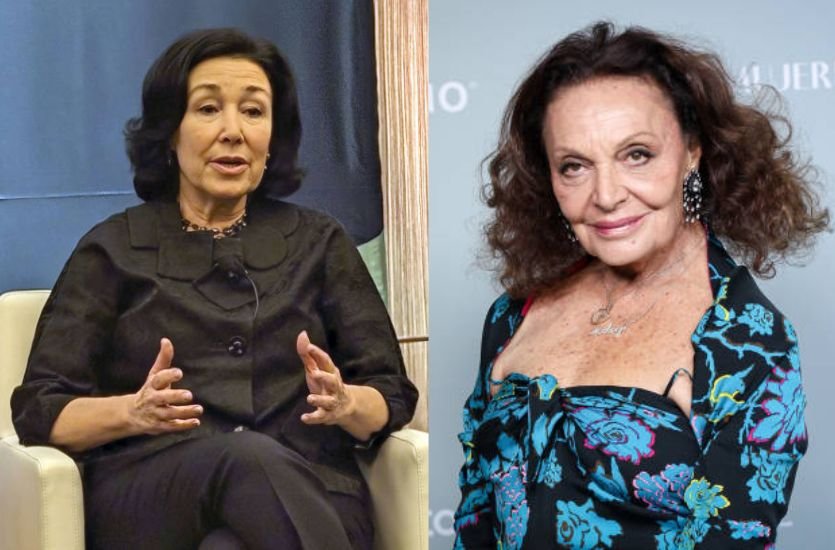
The names Safra Catz and Diane von Furstenberg come from two very different worlds. One became a leading figure in technology, corporate finance, and global business through her long career at Oracle, while the other transformed the fashion industry with a design that became one of the most recognizable garments of the modern era. Despite their different industries, backgrounds, and professional paths, both women represent determination, entrepreneurship, leadership, and the ability to build lasting influence.
Safra Catz is best known for her long association with Oracle, where she rose through senior financial and executive positions and eventually served as chief executive officer. In 2025, she moved from the CEO position to become executive vice chair of Oracle’s board. Diane von Furstenberg, meanwhile, became internationally famous for her iconic wrap dress and developed a fashion brand that continues to carry her name and creative legacy.
The phrase “Safra Catz and Diane von Furstenberg” can therefore be understood less as a reference to a direct partnership and more as a comparison between two influential women who achieved extraordinary success in different industries. Their stories show how leadership can take many forms, from managing one of the world’s largest technology companies to creating a fashion identity recognized across generations.
Quick Bio: Safra Catz and Diane von Furstenberg
| Detail | Safra Catz | Diane von Furstenberg |
|---|---|---|
| Full Name | Safra Ada Catz | Diane von Furstenberg |
| Birthplace | Holon, Israel | Brussels, Belgium |
| Birth Year | 1961 | 1946 |
| Profession | Business Executive | Fashion Designer and Entrepreneur |
| Best Known For | Oracle leadership | Iconic wrap dress and DVF fashion brand |
| Major Industry | Technology and Business | Fashion and Luxury |
| Major Company | Oracle | Diane von Furstenberg |
| Education | University of Pennsylvania | University of Geneva |
| Notable Achievement | Leading Oracle through major corporate growth | Creating the famous wrap dress |
| Current Legacy | Technology and corporate leadership | Fashion, entrepreneurship, and women’s empowerment |
Who Is Safra Catz?
Safra Catz is an Israeli-born American business executive whose career has been closely connected with Oracle. She joined Oracle in 1999 after working in investment banking and eventually became one of the company’s most important senior executives.
Catz’s professional background is particularly interesting because she entered the technology industry after developing extensive experience in finance. Her understanding of corporate finance, acquisitions, negotiations, and business strategy became an important part of her role at Oracle.
Oracle’s executive biography identifies Catz as the company’s executive vice chair and notes that she previously served as president, chief financial officer, and chief executive officer. She also became a member of Oracle’s board of directors in the early 2000s.
Her rise through Oracle demonstrates how financial expertise can become a powerful foundation for technology leadership. Rather than coming from a traditional engineering or software-development background, Catz built her reputation around business strategy, financial management, negotiations, and corporate decision-making.
Safra Catz’s Early Career
Before joining Oracle, Safra Catz worked in investment banking. She began her professional career in the financial sector in the 1980s and eventually became a managing director at Donaldson, Lufkin & Jenrette.
Her investment-banking experience gave her exposure to mergers, acquisitions, corporate transactions, and complex financial negotiations. These skills later became highly relevant to Oracle’s growth strategy.
Catz joined Oracle in 1999 as a senior executive. Her responsibilities expanded over time, and she became increasingly involved in the company’s strategic direction. Her career illustrates how experience in finance can translate into senior leadership within the technology sector.
Her role at Oracle became especially significant as the company expanded through acquisitions. Catz was closely associated with major corporate transactions and became known for her strong negotiating style and detailed understanding of business strategy.
Safra Catz and Oracle
Safra Catz spent more than two decades in some of Oracle’s most influential leadership positions. She became president in 2004 and served as chief financial officer during multiple periods.
In 2014, Oracle announced that Larry Ellison would step down as CEO and that Safra Catz and Mark Hurd would become co-CEOs. After Hurd’s death in 2019, Catz became Oracle’s sole CEO.
Her period as CEO coincided with major changes in the technology industry, particularly the growth of cloud computing and subscription-based software services. Oracle was transforming from a company historically associated with databases and enterprise software into a broader cloud and technology provider.
Catz’s leadership was therefore not simply about maintaining an established company. It involved navigating a rapidly changing technology market while Oracle competed with other major technology companies.
Forbes currently describes Catz as Oracle’s former CEO, noting that she served in that position from 2014 until 2025 before becoming executive vice chair.
Safra Catz’s Leadership Style
Catz became known for a direct and commercially focused leadership style. Her background in finance influenced the way she approached corporate strategy, and she was frequently associated with Oracle’s acquisition activity.
Her career also demonstrates the importance of adaptability. Technology companies operate in an environment where products, business models, and customer expectations can change quickly. Oracle’s expansion into cloud services required the company to compete in areas that were very different from its traditional software business.
Catz’s experience managing financial decisions and acquisitions became an important part of that transformation. Her career is consequently often discussed as an example of how business leadership extends beyond a single technical specialization.
Who Is Diane von Furstenberg?
Diane von Furstenberg is a Belgian-born fashion designer, entrepreneur, author, and philanthropist. She became internationally famous during the 1970s after introducing the wrap dress.
Born in Brussels in 1946, von Furstenberg eventually moved to New York, where she established herself within the fashion industry. Her career developed at a time when women’s clothing was changing alongside broader cultural and social changes.
The defining moment of her career came in 1974, when she introduced the jersey wrap dress. The design was simple but highly adaptable, allowing women to wear it in professional, social, and everyday settings.
The wrap dress became far more than another fashion product. It became associated with independence, confidence, and the changing role of women during the 1970s.
The Story Behind Diane von Furstenberg’s Wrap Dress
The wrap dress is the most recognizable part of Diane von Furstenberg’s legacy.
Its design allowed the garment to wrap around the body and close at the waist. This created a silhouette that was comfortable, practical, and fashionable at the same time.
The timing was also important. The dress appeared during an era when women were increasingly entering professional environments and seeking clothing that reflected both independence and personal style.
The success was remarkable. By 1976, more than one million wrap dresses had reportedly been sold. The design helped turn von Furstenberg into one of the best-known fashion entrepreneurs of her generation.
The wrap dress eventually became part of the cultural history of fashion. Its influence continued long after the original 1970s boom, and modern versions of the concept remain associated with the DVF name.
Diane von Furstenberg as an Entrepreneur
Von Furstenberg’s career was not limited to designing clothes. She developed a broader business identity around her name and expanded into accessories, beauty products, publishing, and other areas.
Her journey also included significant setbacks. Like many entrepreneurs, she experienced periods when her business faced difficulties. Rather than ending her career, those challenges became part of her larger story of reinvention.
In the 1990s, von Furstenberg successfully returned to the spotlight and rebuilt her fashion business. Her willingness to adapt to new forms of retail and communication demonstrated that entrepreneurship requires more than having a successful initial product.
Her career therefore represents both creativity and business resilience.
Diane von Furstenberg and Women’s Empowerment
A major part of Diane von Furstenberg’s public identity is her connection with women’s empowerment.
Her fashion philosophy has frequently emphasized confidence, independence, and self-expression. The wrap dress itself became symbolic of these ideas because it combined practicality with a distinctly feminine design.
Her influence later extended beyond clothing through philanthropy, mentorship, and initiatives supporting women.
The DVF Awards, established in 2010 through the Diller-von Furstenberg Family Foundation, recognize women who have made meaningful contributions to their communities and broader society.
This aspect of von Furstenberg’s career makes her influence different from that of Safra Catz. Catz’s influence is primarily associated with corporate and technology leadership, while von Furstenberg has built a legacy that combines fashion, entrepreneurship, philanthropy, and women’s empowerment.
What Is the Connection Between Safra Catz and Diane von Furstenberg?
One of the most important questions surrounding the keyword “Safra Catz and Diane von Furstenberg” is whether the two women have a direct personal or professional relationship.
There is no strong evidence that they are relatives, business partners, or co-founders of a company. They come from separate professional worlds and developed their careers independently.
The more meaningful connection is that both became highly successful foreign-born women who built influential careers in the United States.
Their names have appeared together in Forbes coverage concerning successful foreign-born women in America. Catz was born in Israel, while von Furstenberg was born in Belgium. Their inclusion in such coverage highlights a broader story about immigrant and foreign-born entrepreneurs and executives who built major careers in the United States.
This shared context provides a legitimate reason to compare them without suggesting that they have a closer relationship than the available evidence supports.
Safra Catz and Diane von Furstenberg: Different Industries, Similar Determination
The biggest difference between Safra Catz and Diane von Furstenberg is their industries.
Catz built her career in finance and technology. Her work involved corporate strategy, acquisitions, financial management, and executive leadership.
Von Furstenberg built her career in fashion. Her success depended on creativity, branding, product development, consumer understanding, and cultural relevance.
Despite these differences, their careers share several themes.
Both women developed internationally recognized personal reputations. Both became associated with major organizations bearing significant influence in their respective industries. Both experienced changing professional environments and had to adapt to new circumstances.
Most importantly, both demonstrate the importance of creating a professional identity that extends beyond a single position or product.
Their International Backgrounds
Another notable similarity between Safra Catz and Diane von Furstenberg is their international background.
Catz was born in Israel before moving to the United States. Von Furstenberg was born in Belgium and later established her career in New York.
Their stories demonstrate how major American business and cultural institutions have been shaped by people with international backgrounds.
Catz became an important figure in American technology and corporate leadership, while von Furstenberg became an influential figure in American fashion.
Their journeys also demonstrate that professional success does not necessarily require being born into the industry or country where a person eventually becomes famous.
Their Approach to Reinvention
Reinvention is another theme connecting the careers of Safra Catz and Diane von Furstenberg.
For Catz, reinvention can be seen in Oracle’s transformation and in her own movement through different executive responsibilities. She went from investment banking to technology leadership and ultimately became CEO of one of the world’s major technology companies.
In 2025, another chapter began when she moved from Oracle’s CEO role to executive vice chair. Oracle appointed new co-CEOs while Catz transitioned to the board leadership position.
Von Furstenberg’s career contains a different form of reinvention. After the enormous success of the wrap dress and later business challenges, she rebuilt her fashion presence and continued developing her brand.
Her ability to remain relevant across several generations has been one of the strongest aspects of her career.
Diane von Furstenberg’s Continuing Fashion Legacy
Diane von Furstenberg’s influence remains visible in fashion today.
In September 2026, the DVF brand returned to the New York Fashion Week runway spotlight with a Spring/Summer 2027 collection led creatively by Henry Zankov. The collection revisited recognizable elements of the DVF identity, including wrap-inspired silhouettes, vivid colors, prints, and expressive designs.
The development is significant because it demonstrates how the brand continues to evolve while retaining the design philosophy associated with its founder.
Von Furstenberg’s legacy therefore does not depend only on reproducing the original wrap dress. Instead, her broader influence can be seen in the continued use of concepts such as confidence, movement, femininity, and freedom within the brand.
Safra Catz’s Continuing Business Legacy
Safra Catz’s legacy is similarly larger than her former CEO title.
Her more than two decades at Oracle placed her at the center of some of the company’s most important strategic developments. She became one of the best-known female executives in the technology industry and one of the most prominent women in American corporate leadership.
Her transition to executive vice chair does not represent the end of her influence. Instead, it marks a change from direct operational leadership to a senior board-level position.
Her career remains particularly notable because she combined financial expertise with technology leadership, demonstrating how executives can move between industries and responsibilities throughout a long career.
Safra Catz and Diane von Furstenberg as Role Models
Although their careers are very different, Safra Catz and Diane von Furstenberg can both be viewed as examples of professional independence.
Catz demonstrates how expertise, discipline, and strategic thinking can lead to the highest levels of corporate leadership.
Von Furstenberg demonstrates how creativity can become a global business and how a single innovative product can develop into a lasting cultural legacy.
Their stories also challenge the idea that success has only one definition. Catz’s achievement can be measured through corporate leadership and technology, while von Furstenberg’s achievement can be seen through fashion, entrepreneurship, cultural influence, and philanthropy.
Final Thoughts on Safra Catz and Diane von Furstenberg
Safra Catz and Diane von Furstenberg represent two very different paths to international success. Catz built a powerful career through finance, technology, corporate strategy, and leadership at Oracle. Von Furstenberg transformed fashion through the wrap dress and built a brand that became closely connected with confidence, independence, and women’s empowerment.
There is no established evidence that the two women are relatives or that they built a major business together. Their connection is instead found in the broader story of successful foreign-born women who established influential careers in the United States.
Their professional journeys demonstrate the importance of ambition, adaptability, and resilience. Catz’s story is centered on technology and corporate leadership, while von Furstenberg’s is rooted in fashion and creative entrepreneurship. Yet both have created legacies that extend well beyond their original achievements.
For anyone researching Safra Catz and Diane von Furstenberg, the most interesting lesson is not that they share the same career path. It is that two women from different countries and completely different industries were able to create extraordinary influence through their own skills, decisions, and determination.
Their stories ultimately show that success can emerge in many forms. Whether through leading a global technology company or changing the way generations of women dress, both Safra Catz and Diane von Furstenberg have left distinctive marks on modern business and culture.
Visit Editorial Magazine for more quality biographies.