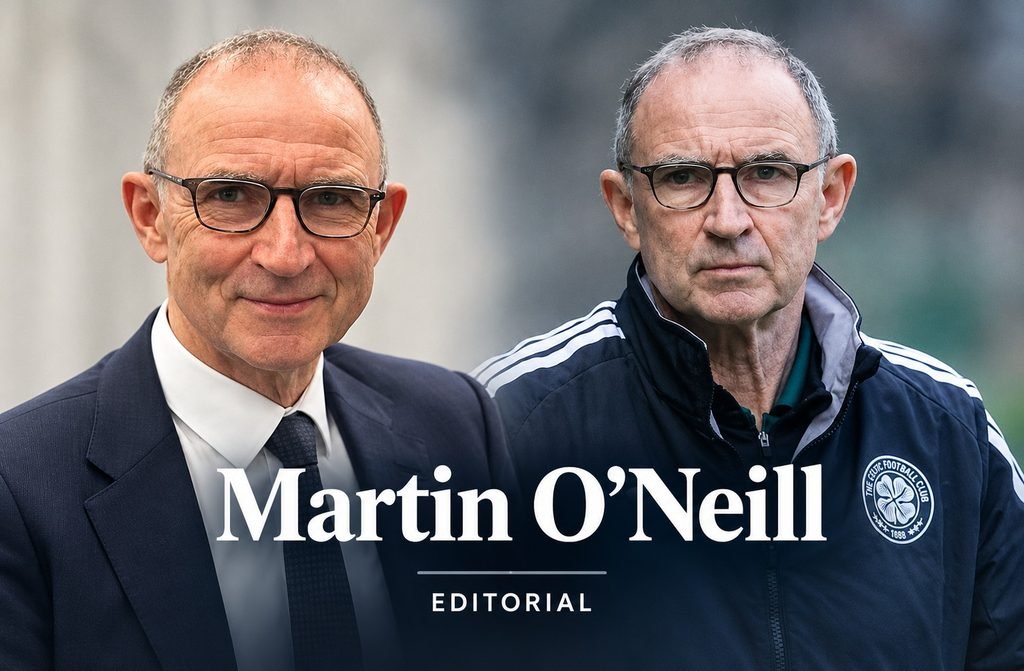
Martin O’Neill is one of the most recognizable figures in British and Irish football, known for his achievements as both a professional footballer and an experienced manager. From winning European Cups with Nottingham Forest to leading Celtic to domestic trophies and a memorable European campaign, O’Neill has built a career defined by leadership, determination, and an ability to guide teams through challenging situations. His journey from a small town in Northern Ireland to the biggest stages of European football makes his story interesting to football supporters across generations.
Born in Kilrea, Northern Ireland, O’Neill first gained attention as a talented midfielder before moving into management after his playing career ended. Over the years, he has managed clubs in England and Scotland and coached the Republic of Ireland national team. His work at Leicester City, Celtic, Aston Villa, Sunderland, and Nottingham Forest has contributed to his reputation as a manager who understands the importance of organization, team spirit, and competitive consistency. His return to Celtic in 2025 and subsequent permanent appointment in June 2026 brought another significant chapter to his football story.
Quick Bio Table
| Detail | Information |
|---|---|
| Full Name | Martin Hugh Michael O’Neill |
| Date of Birth | 1 March 1952 |
| Age | 74 years (as of October 2026) |
| Birthplace | Kilrea, County Londonderry, Northern Ireland |
| Nationality | Northern Irish |
| Profession | Football Manager and Former Professional Footballer |
| Playing Position | Midfielder |
| Wife | Geraldine O’Neill |
| Famous Playing Club | Nottingham Forest |
| Current Managerial Club | Celtic |
| Former National Team Role | Republic of Ireland Manager |
| Major Playing Achievement | Two European Cup victories |
| Major Managerial Achievement | Multiple domestic trophies with Celtic and Leicester City |
| Honour | Officer of the Order of the British Empire (OBE) |
Early Life and Background of Martin O’Neill
Martin O’Neill was born on 1 March 1952 in Kilrea, a town in Northern Ireland. Growing up in a community where football held an important place in local life, he developed an early interest in the sport. His natural ability, competitive attitude, and commitment helped him progress from local football to the professional game.
Northern Ireland has produced several notable footballers despite its relatively small population, and O’Neill became one of the prominent names from his generation. During his early years, he learned the importance of discipline, teamwork, and tactical awareness. These qualities later became central to his management style.
Before achieving wider recognition in England, O’Neill began his senior playing career with Lisburn Distillery. His performances attracted attention, creating opportunities to join more established clubs. The move from Northern Ireland to English football was an important step because it exposed him to a higher level of competition and gave him the opportunity to develop his skills against experienced professional players.
O’Neill’s early background also influenced his approach to leadership. He became known for expecting commitment from his players and maintaining high standards in training and competitive matches. His later success as a manager reflected many of the values he developed during his formative years as a footballer.
Martin O’Neill’s Playing Career
Nottingham Forest and European Success
Nottingham Forest played a particularly important role in Martin O’Neill’s playing career. He joined the club in 1971 and became part of a successful team under manager Brian Clough. Forest rose to prominence during the late 1970s, establishing themselves among the leading sides in English and European football.
O’Neill contributed to the team’s success as a midfielder, making numerous appearances and helping the club compete at the highest level. Nottingham Forest won the European Cup in 1979 and successfully defended the trophy in 1980. These achievements placed the club among the most memorable teams in European football history.
Winning two consecutive European Cups was an extraordinary achievement, and O’Neill’s involvement in that era became one of the defining elements of his sporting legacy. His time at Forest also gave him first-hand experience of the standards required to succeed in major competitions.
Playing under Brian Clough exposed O’Neill to a distinctive approach to management. Clough was known for his strong personality, confidence, and ability to motivate players. Although O’Neill eventually developed his own managerial methods, his experiences at Nottingham Forest provided valuable lessons about leadership, preparation, and the psychology of winning.
After his Forest years, O’Neill continued his playing career with clubs including Norwich City, Manchester City, Notts County, and Fulham. He retired from professional football in the mid-1980s.
International Career with Northern Ireland
Martin O’Neill also represented Northern Ireland at international level. He earned 64 caps for the national team and was part of the squad that competed at the 1982 FIFA World Cup in Spain. He also captained the national side during that tournament.
Northern Ireland’s performance at the 1982 World Cup remains a notable moment in the country’s football history. Competing against established international teams gave O’Neill valuable experience in high-pressure situations and exposed him to the tactical demands of international football.
His international career helped strengthen his understanding of football beyond the club level. Years later, when he became manager of the Republic of Ireland, this experience proved relevant to his work with international players and tournament preparation.
Martin O’Neill’s Managerial Career
After retiring as a player, O’Neill moved into management and began building a second career in football. His first managerial appointment came at Grantham Town in 1987. He subsequently managed Shepshed Dynamo before joining Wycombe Wanderers in 1990.
His early appointments gave him experience working with clubs operating outside the top levels of English football. Rather than relying on a famous playing reputation alone, he had to develop squads, motivate players, and find practical ways to improve results.
Wycombe Wanderers: Building a Reputation
O’Neill’s achievements at Wycombe Wanderers were among the first major indicators of his managerial potential. When he joined the club, Wycombe were competing in non-league football. Under his leadership, they progressed through the divisions and eventually reached the Football League.
The club’s rise demonstrated O’Neill’s ability to organize a team and maintain consistent standards over a prolonged period. His success attracted attention from larger clubs and established him as a promising manager capable of achieving results with limited resources.
Wycombe also helped shape his reputation for direct communication and strong team spirit. His teams were expected to work hard, remain organized, and compete intensely regardless of their opponents’ reputations.
Norwich City and Leicester City
O’Neill briefly managed Norwich City in 1995 before taking charge of Leicester City later that year. Leicester became one of the most successful periods of his managerial career, particularly because of the club’s achievements in domestic cup competitions.
Under O’Neill, Leicester won the League Cup in 1997 and 2000. The team also reached the final in 1999, demonstrating its ability to compete consistently in knockout football.
His Leicester teams were respected for their organization, determination, and ability to challenge more financially powerful opponents. O’Neill built competitive squads and developed a clear sense of purpose among his players.
The success at Leicester established him as a manager capable of winning trophies in English football. It also created the foundation for his move to Celtic, where he would experience even greater attention and expectations.
Martin O’Neill at Celtic
His First Celtic Appointment
Martin O’Neill became Celtic manager in 2000. The Scottish club had a passionate supporter base and a long history of domestic success, but expectations were especially high because of its rivalry with Rangers.
O’Neill made an immediate impact. His team defeated Rangers 6–2 in an early Old Firm derby, a result that became one of the memorable matches of his first season. Celtic went on to win the domestic treble in 2000–01, securing the league title, Scottish Cup, and Scottish League Cup.
The achievement was significant because it restored confidence among supporters and established O’Neill as one of the most successful managers of the modern Celtic era.
During his first spell, Celtic won three Scottish league titles, three Scottish Cups, and one Scottish League Cup. His teams regularly competed in domestic finals and developed a reputation for strong performances in important matches.
The 2003 UEFA Cup Final
One of the most memorable achievements of O’Neill’s first Celtic tenure came during the 2002–03 European campaign. Celtic reached the UEFA Cup final in Seville after progressing through several challenging rounds, including a notable victory over Liverpool.
The final against Porto took place in May 2003. Celtic lost 3–2 after extra time, but reaching the final was a major achievement for the club and its supporters.
The campaign helped strengthen Celtic’s international profile and demonstrated that O’Neill could guide a team beyond domestic competition. His side combined experienced players with attacking quality and a strong collective mentality.
Although Celtic did not win the trophy, the European run remains an important part of O’Neill’s legacy. It showed his ability to prepare a team for high-pressure matches and manage the challenges of competing on multiple fronts.
Why Martin O’Neill Left Celtic in 2005
O’Neill left Celtic at the end of the 2004–05 season. His departure was connected to a difficult family situation involving his wife, Geraldine, who had been diagnosed with lymphoma.
The decision highlighted the personal responsibilities that can influence a manager’s professional life. O’Neill had achieved considerable success at Celtic, but family circumstances became an important consideration.
His first spell at the club ended with a Scottish Cup victory. Despite his departure, his contribution remained highly regarded by supporters, and he continued to be associated with some of Celtic’s most memorable modern achievements.
Martin O’Neill at Aston Villa
In 2006, O’Neill became manager of Aston Villa in the English Premier League. The club was seeking to strengthen its position in English football, and his appointment brought experience from successful spells at Leicester City and Celtic.
Aston Villa improved under his leadership and became regular contenders for European qualification. The team finished sixth in the Premier League for three consecutive seasons, from 2007–08 through 2009–10.
These finishes demonstrated his ability to build a competitive squad in a demanding league. Villa combined energetic performances with a disciplined structure, and the team challenged established clubs for places near the top of the table.
O’Neill also guided Aston Villa to the 2010 League Cup final, where the club lost to Manchester United. Despite that defeat, his tenure was widely associated with a period of progress and renewed ambition.
He resigned in August 2010, shortly before the start of the 2010–11 season. His departure ended a period in which Aston Villa had become a consistent presence among the Premier League’s stronger teams outside the traditional title contenders.
Martin O’Neill and Sunderland
O’Neill returned to Premier League management when he took charge of Sunderland in December 2011. His appointment generated optimism among supporters who hoped his experience could help the club become more competitive.
Sunderland improved during the second half of the 2011–12 season. O’Neill helped the team move away from relegation danger and finish comfortably in the middle of the table. His early results suggested that his motivational and organizational methods could have a positive effect.
However, the following season proved more difficult. Sunderland struggled to maintain consistency, and the club eventually dismissed O’Neill in March 2013.
Although his time at Sunderland was shorter and less successful than his spells at Leicester City and Celtic, it remains an important part of his managerial history. It illustrates the unpredictable nature of Premier League football, where results, squad limitations, and expectations can change a manager’s position quickly.
Managing the Republic of Ireland
In November 2013, Martin O’Neill became manager of the Republic of Ireland national team. The appointment marked a return to international football, this time as the person responsible for selecting the squad, preparing tactics, and directing the team during competitive matches.
His most notable achievement with Ireland was qualification for UEFA Euro 2016 in France. The tournament represented an important milestone for the national team and gave Irish supporters an opportunity to follow their country at a major European competition.
Ireland reached the knockout stage after finishing third in their group. The team then defeated France in the round of 16, producing a memorable victory before eventually being eliminated.
O’Neill’s tenure also included difficult periods. Ireland did not qualify for the 2018 FIFA World Cup, and the team experienced mixed results in subsequent international competitions.
He left the position in November 2018. His time with Ireland nevertheless included a major tournament appearance and a memorable victory against the host nation at Euro 2016.
Martin O’Neill’s Return to Nottingham Forest
In January 2019, O’Neill became manager of Nottingham Forest, returning to a club that had played a central role in his playing career. The appointment attracted attention because of his emotional connection with Forest and his experience in English football.
Forest were competing in the Championship and hoping to challenge for promotion. O’Neill’s task was to improve performances and guide the club toward a stronger position in the league.
His second connection with Forest was relatively brief. He left the club in June 2019, ending his most recent managerial appointment before his eventual return to Celtic.
Despite the short tenure, Nottingham Forest remains a central part of his football identity. It was where he won two European Cups as a player and where his understanding of elite football developed.
Martin O’Neill’s Return to Celtic in 2025 and 2026
After leaving Nottingham Forest in 2019, O’Neill spent several years away from full-time club management. He remained involved in football discussion and analysis, but many supporters believed his managerial career had ended.
That changed in October 2025, when Celtic brought him back in a caretaker capacity following Brendan Rodgers’ departure. His return attracted considerable attention because of his previous achievements at the club.
O’Neill made an immediate impact, helping Celtic regain momentum during a difficult period. He then stepped aside when Wilfried Nancy took charge, but returned in January 2026 after another change in the managerial position.
The second spell proved highly successful. Celtic won the Scottish Premiership and Scottish Cup during the 2025–26 season, with O’Neill playing a central role in the club’s late-season recovery. The achievement added another league title to his Celtic record and strengthened his connection with supporters.
In June 2026, Celtic officially appointed O’Neill as manager on a one-year contract with an option for an additional year. The appointment confirmed that he would continue leading the club into the 2026–27 season.
His return demonstrates the value that football clubs can place on experience, leadership, and a manager’s understanding of a club’s culture. It also created a remarkable new chapter in a career that many had assumed was finished.
Martin O’Neill’s Wife and Family Life
Martin O’Neill is married to Geraldine O’Neill. Although he has spent much of his professional life in the public eye, he has generally kept his family life relatively private.
His wife’s illness in 2005 was widely reported because it influenced his decision to leave Celtic. The circumstances demonstrated that personal responsibilities can be just as important as professional achievements when making major life decisions.
O’Neill’s career has involved frequent changes of location, demanding training schedules, and the pressure of managing clubs with large supporter bases. Maintaining a family life alongside these responsibilities is a challenge faced by many senior football managers.
For readers interested in Martin O’Neill’s family, it is important to distinguish publicly confirmed information from online speculation. Details about relatives and private matters should be included in a biography only when supported by reliable reporting.
Martin O’Neill Net Worth and Salary
Martin O’Neill’s net worth is a frequently searched topic, but there is no independently verified public figure establishing his complete personal wealth as of 2026.
His long career in professional football has included playing contracts, managerial appointments at major clubs, international management, media appearances, and writing. These professional activities are potential sources of income, but the exact amounts earned over his career are not fully disclosed.
Online publications sometimes estimate his net worth at several million dollars. Such figures should be treated cautiously because many websites do not explain their calculations or provide documentary evidence.
Managerial salaries also vary according to the club, contract terms, performance bonuses, and the responsibilities attached to the position. Celtic’s public announcement of O’Neill’s June 2026 appointment confirmed the contract length but did not disclose his salary.
Therefore, the most accurate approach is to describe Martin O’Neill as a highly experienced football professional whose career has included numerous prominent appointments, while acknowledging that his current net worth and precise earnings remain private.
Martin O’Neill’s Health and Public Life
Searches for Martin O’Neill’s health reflect public interest in his age, workload, and long career in football. As of October 2026, he is 74 years old and continues to work as Celtic manager.
Managing a major football club requires travel, preparation, media duties, player communication, and pressure surrounding results. O’Neill’s return to management after several years away has attracted attention partly because of the demanding nature of the role.
However, age alone does not establish anything about an individual’s medical condition. Claims about his health should be based on public statements or reliable reporting rather than rumours or assumptions.
The most clearly documented personal health-related event in his biography concerns his wife’s illness in 2005. Readers should not confuse that historical family circumstance with claims about O’Neill’s own health.
Martin O’Neill’s Management Style and Legacy
Martin O’Neill’s management style has often been associated with strong motivation, clear communication, competitive discipline, and an emphasis on team unity. His teams have frequently demonstrated a willingness to compete in difficult circumstances and remain organized against stronger opponents.
His career also illustrates the importance of adapting to different football environments. At Wycombe Wanderers, he helped a smaller club progress through the divisions. At Leicester City, he built a side capable of winning major domestic cup competitions. At Celtic, he managed a club with intense expectations and delivered domestic trophies alongside an important European campaign.
His work with Aston Villa showed his ability to compete in the Premier League, while his tenure with the Republic of Ireland demonstrated the distinct challenges of international management.
O’Neill’s legacy is also connected to the influence of his playing career. Winning two European Cups with Nottingham Forest gave him a direct understanding of the standards required at the highest level. His experiences under Brian Clough helped shape his appreciation of leadership and competitive mentality.
His continued connection with Celtic demonstrates how a manager’s relationship with a club can endure long after an initial appointment ends. His return in 2025 and permanent appointment in 2026 created an unusual late-career achievement, adding another successful period to a distinguished football history.
Frequently Asked Questions About Martin O’Neill
How old is Martin O’Neill?
Martin O’Neill was born on 1 March 1952. He is 74 years old as of October 2026.
Who is Martin O’Neill’s wife?
Martin O’Neill is married to Geraldine O’Neill. His family life is generally kept private, although his wife’s illness in 2005 was reported in connection with his departure from Celtic.
What is Martin O’Neill famous for?
He is famous for winning two European Cups as a Nottingham Forest player and for managing successful teams at Leicester City and Celtic. He also led the Republic of Ireland to UEFA Euro 2016.
Which teams has Martin O’Neill managed?
His managerial career has included Grantham Town, Shepshed Dynamo, Wycombe Wanderers, Norwich City, Leicester City, Celtic, Aston Villa, Sunderland, the Republic of Ireland national team, and Nottingham Forest.
Is Martin O’Neill currently managing Celtic?
Yes. Celtic officially appointed him as manager on a one-year contract with an option for an additional year in June 2026.
What is Martin O’Neill’s net worth?
His exact net worth has not been publicly verified. Online estimates vary, and no official financial disclosure establishes his total wealth.
Did Martin O’Neill win the European Cup?
Yes. He was part of the Nottingham Forest team that won the European Cup in 1979 and 1980.
Why did Martin O’Neill leave Celtic in 2005?
His departure was influenced by family circumstances, including his wife Geraldine’s diagnosis of lymphoma. He left after five successful years in charge.
Conclusion
Martin O’Neill’s career is a story of achievement, resilience, and an enduring connection with football. From his early years in Northern Ireland to his European Cup victories with Nottingham Forest, he established himself as a respected midfielder before building an impressive managerial record. His successes at Leicester City, Celtic, and Aston Villa demonstrated his ability to develop competitive teams and win important trophies.
His international work with the Republic of Ireland added another dimension to his career, while his return to Celtic in 2025 and permanent appointment in June 2026 brought renewed attention to his achievements. Although his exact net worth remains unknown and much of his family life is private, his professional legacy is well documented.
For football supporters researching Martin O’Neill, his biography offers insight into a manager whose career has spanned different generations of the game. His European successes, domestic trophies, international experience, and continued leadership at Celtic ensure that he remains an important figure in British and Irish football.


2 thoughts on “Martin O’Neill: Biography, Wife, Net Worth, Career and Achievements”