
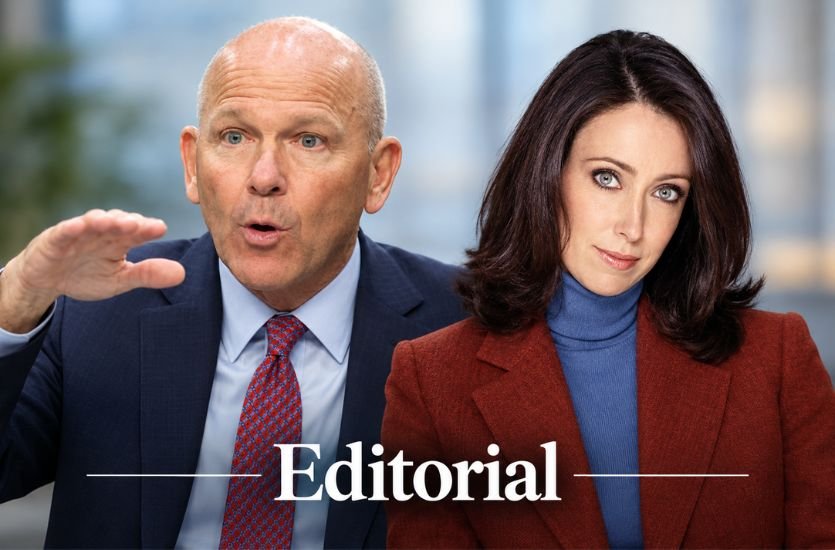
Doug McMillon and Joaquin Duato are two prominent business executives whose careers illustrate how leadership can shape large international organizations. McMillon spent more than a decade as the chief executive officer of Walmart, guiding the retail company through major changes in digital commerce, technology and supply-chain operations. Duato, meanwhile, leads Johnson & Johnson as chairman and chief executive officer, overseeing a healthcare business focused on innovative medicines and medical technology.
Although their professional backgrounds differ, both executives have worked in complex global organizations where long-term planning, customer needs, employee development and technological change play important roles. Their careers also demonstrate that executive leadership involves more than managing daily operations. It requires making strategic decisions, responding to changing markets and preparing organizations for future challenges.
Understanding Doug McMillon and Joaquin Duato provides a useful perspective on modern corporate leadership. Their professional journeys show how experience, organizational knowledge and a clear business strategy can influence the direction of companies operating in very different industries.
Quick Bio: Doug McMillon and Joaquin Duato
| Detail | Doug McMillon | Joaquin Duato |
|---|---|---|
| Full name | Carl Douglas McMillon | Joaquin Duato |
| National background | American | Spanish-American |
| Main company | Walmart | Johnson & Johnson |
| Industry | Retail and e-commerce | Healthcare, pharmaceuticals and medical technology |
| Executive position | Former president and CEO of Walmart | Chairman and CEO of Johnson & Johnson |
| CEO tenure | February 2014–January 2026 | Began in January 2022 |
| Education | University of Arkansas; University of Tulsa | ESADE Business School; Thunderbird School of Global Management |
| Major professional focus | Retail operations, digital commerce and supply-chain modernization | Healthcare innovation, pharmaceuticals and medical technology |
| Key career milestone | Led Walmart through a major period of digital transformation | Became Johnson & Johnson chairman in January 2023 |
Who Is Doug McMillon?
Doug McMillon is an American business executive best known for his leadership of Walmart, one of the world’s largest retail companies. His career is notable because he progressed through the organization’s ranks, beginning as an hourly associate before eventually becoming its president and chief executive officer. This experience gave him exposure to different aspects of retail, from everyday operations to international business management.
McMillon became Walmart’s CEO in February 2014 and held the position until January 31, 2026. During his tenure, the company invested in digital commerce, supply-chain capabilities, employee development and technology intended to improve customer experiences. Walmart’s strategic direction increasingly emphasized the combination of physical stores and online shopping services.
His career is an example of how experience within a large organization can prepare an executive for senior leadership. Rather than entering the company directly into its highest management levels, McMillon gained experience in operational and commercial roles. This progression is an important part of his professional story and helps explain his familiarity with the different parts of Walmart’s business.
Doug McMillon’s Early Life and Education
Carl Douglas McMillon, commonly known as Doug McMillon, was born on October 17, 1966. He studied accounting at the University of Arkansas, where he earned his bachelor’s degree. He later completed a Master of Business Administration at the University of Tulsa.
His educational background provided a foundation in business management, financial decision-making and organizational operations. These subjects are important for leaders responsible for large companies, where decisions involving inventory, staffing, pricing and investment can influence performance across multiple markets.
However, McMillon’s career was not defined by academic qualifications alone. His experience working within Walmart gave him practical knowledge of retail operations and customer behavior. That combination of education and workplace experience became a significant feature of his professional development.
Doug McMillon’s Career at Walmart
McMillon began working at Walmart in 1984 as an hourly associate. Over the following years, he developed experience across different areas of the business and advanced into increasingly senior management positions.
He became president and CEO of Sam’s Club in 2005, leading Walmart’s membership-based warehouse retail business. In 2009, he moved into the position of president and CEO of Walmart International, where his responsibilities extended across markets outside the United States. These roles exposed him to different customer groups, operating environments and competitive conditions before his appointment as Walmart’s chief executive in 2014.
This career path illustrates the value of understanding a business at several levels. Retail executives must consider customer expectations, supplier relationships, product availability, employee performance and the economics of individual stores. International leadership adds further challenges, including differences in consumer behavior, regulations, distribution systems and market conditions.
McMillon’s progression through Sam’s Club, Walmart International and the company’s top leadership position gave him experience across these interconnected responsibilities.
Leadership at Walmart and Digital Transformation
One of the defining themes of McMillon’s tenure was Walmart’s effort to strengthen its digital capabilities while maintaining the scale and reach of its physical store network.
Traditional retailers face competition from online marketplaces and digital-first companies. Customers increasingly expect convenient ordering, reliable delivery, accurate product information and flexible collection options. For a company with thousands of stores and extensive distribution operations, meeting those expectations requires significant coordination between technology and physical infrastructure.
Under McMillon’s leadership, Walmart expanded its e-commerce business and invested in technology and supply-chain modernization. The company also worked to connect online shopping with its stores, creating an operating model commonly described as omnichannel retail. In this model, physical locations and digital services support one another rather than operating as completely separate businesses.
For example, a retailer may use its store network to support online order collection, local fulfillment and faster delivery. These services can make shopping more convenient while helping the company use existing infrastructure more effectively. Their success, however, depends on inventory accuracy, logistics, labor planning and the quality of the customer experience.
McMillon’s leadership period also included investments in Walmart’s workforce. The company highlighted higher wages, expanded parental leave and educational opportunities among its people-focused initiatives. These measures reflected the idea that retail performance depends not only on technology and pricing but also on the employees who serve customers and operate stores.
Doug McMillon’s Retirement and Professional Legacy
Walmart announced on November 14, 2025, that John Furner would succeed McMillon as president and CEO, effective February 1, 2026. McMillon retired from the position on January 31, 2026, after leading the company for more than eleven years. His tenure included significant investments in employee development, e-commerce and supply-chain modernization.
His departure marked the end of a major chapter in Walmart’s leadership history. His tenure is particularly relevant to discussions of how established retailers adapt to digital competition while continuing to operate large physical networks.
A balanced assessment of his legacy should consider both the company’s strategic direction and the ongoing challenges faced by large retailers. Digital transformation is not a one-time project. It requires continuous investment, effective execution and adjustments as customer preferences and competitors change.
McMillon’s career therefore provides a useful case study in organizational transformation, internal career progression and leadership succession. His experience also illustrates why a CEO’s influence is best understood through the long-term direction of a business rather than a single announcement or financial result.
Who Is Joaquin Duato?
Joaquin Duato is a Spanish-American business executive who serves as chairman and chief executive officer of Johnson & Johnson. The company operates in healthcare, focusing on innovative medicines and medical technology. Duato became CEO in January 2022 and assumed the chairmanship in January 2023.
His career differs from McMillon’s in its industry focus, but it shares an important characteristic: extensive experience within the organization he leads. Duato spent decades working across Johnson & Johnson’s businesses, geographical markets and corporate functions before becoming CEO.
This background is relevant in healthcare, where business decisions must account for scientific research, product development, manufacturing standards, regulatory requirements and patient needs. Leading a healthcare company requires coordination among specialists whose work can influence the safety, quality and availability of medical products.
Duato’s leadership is therefore closely associated with portfolio strategy, pharmaceutical research, medical technology and the company’s efforts to address significant unmet medical needs.
Joaquin Duato’s Education and Early Career
Duato earned a Master of Business Administration from ESADE Business School in Barcelona, Spain, and a Master of International Management from Thunderbird School of Global Management in Arizona. He holds dual citizenship in Spain and the United States.
His education reflects a combination of business management and international organizational knowledge. These areas are relevant to multinational healthcare companies, which must coordinate commercial operations, research teams, manufacturing facilities and regulatory responsibilities across different countries.
Duato joined Johnson & Johnson in 1989. Over the following decades, he held positions with increasing responsibility across business functions and geographical regions. He later served as worldwide chairman of the pharmaceutical business and as vice chairman of the company’s Executive Committee. These roles gave him experience in pharmaceutical strategy, technology, consumer health and global supply-chain operations.
His progression demonstrates how leadership in healthcare often requires both commercial expertise and an understanding of the wider systems involved in bringing treatments and medical technologies to patients.
Joaquin Duato’s Leadership at Johnson & Johnson
Johnson & Johnson has a long history in healthcare, but its business structure has changed significantly in recent years. Following the separation of its consumer health business, which became Kenvue, Johnson & Johnson increasingly focused its corporate strategy on innovative medicine and medical technology.
Duato’s current leadership strategy centers on these two areas. The company identifies oncology, immunology, neuroscience, cardiovascular care, surgery and vision as important areas in which it aims to develop products and address unmet medical needs.
This strategy reflects the research-intensive nature of modern healthcare. Developing a new medicine or medical device can require years of research, clinical testing, regulatory review and investment. Even after a product reaches the market, companies must continue monitoring its performance, managing manufacturing quality and responding to new scientific evidence.
Leadership in this environment requires balancing innovation with risk management. Research investment can create opportunities for future treatments, but individual development programs do not always succeed. Companies must decide how to allocate resources across competing projects while maintaining high standards of product quality and patient safety.
Duato’s responsibilities also include guiding a global organization through changes in technology and healthcare demand. Artificial intelligence and data science can support parts of research and business operations, but their use must be assessed carefully, particularly when decisions involve medical evidence, patient information or product quality.
Innovation, Research and Medical Technology
Research and development are central to Johnson & Johnson’s business model. Unlike a retailer whose main activity involves sourcing and selling products, a pharmaceutical company must invest in discovering, testing and developing potential treatments. Medical technology businesses also require engineering, clinical evidence, manufacturing expertise and regulatory oversight.
Under Duato, Johnson & Johnson has emphasized investment in its medicine and medical technology portfolios. The strategic goal is to develop treatments and devices that can improve care in areas where existing options may be insufficient. The company has also discussed using technology and data science to support its research and operations.
Innovation, however, should not be measured only by research spending or the number of products in development. The broader questions include whether treatments demonstrate meaningful benefits, whether products meet regulatory standards, whether manufacturing is reliable and whether patients can access the resulting care.
Johnson & Johnson also operates in a highly scrutinized environment. The company has faced significant product-related litigation, including claims concerning talc-containing products. Such matters are important to an accurate account of its leadership challenges, although legal allegations, company responses and final judicial outcomes must be distinguished carefully rather than treated as interchangeable.
Duato’s role involves steering the company through these scientific, commercial and reputational challenges while pursuing its stated healthcare mission.
Joaquin Duato’s Recent Corporate Responsibilities
Beyond his role at Johnson & Johnson, Duato’s professional responsibilities have continued to develop. In September 2026, PepsiCo announced that he had been elected as an independent member of its board of directors, with his appointment scheduled to take effect on December 1, 2026. PepsiCo said he would also serve on its Audit Committee.
This appointment provides another example of how experienced executives can contribute to corporate governance outside their primary organizations. Board members help oversee strategy, risk management, financial reporting and executive accountability. Their responsibilities differ from those of a company’s operating CEO, who manages day-to-day business execution.
Duato’s experience in a large, regulated international company may be relevant to board-level discussions involving innovation, portfolio management, operational resilience and oversight. Nevertheless, his scheduled board role at PepsiCo should not be confused with his executive responsibilities at Johnson & Johnson.
Doug McMillon and Joaquin Duato: Key Differences
The most important difference between Doug McMillon and Joaquin Duato is the nature of the industries they have led.
McMillon’s experience centers on retail, where customer demand, pricing, inventory, logistics and shopping convenience influence business performance. Walmart must maintain product availability while coordinating suppliers, stores, distribution centers and digital platforms. Its scale makes operational efficiency and the customer experience especially important.
Duato’s experience centers on healthcare, where scientific innovation, clinical evidence, regulation, product quality and patient needs are fundamental. Pharmaceutical research involves uncertainty and long development timelines, while medical technology businesses must address technical performance and healthcare requirements.
These differences affect how the two executives approach business priorities. A retail company may concentrate on making shopping more convenient, managing costs and fulfilling orders efficiently. A healthcare company may concentrate on developing new therapies, advancing medical devices and meeting stringent requirements for safety and effectiveness.
Their careers also reflect different forms of executive preparation. McMillon advanced through retail operations and international business at Walmart. Duato spent decades working across pharmaceutical, technology, supply-chain and international functions at Johnson & Johnson. Both pathways demonstrate the potential value of deep organizational experience, even though the specific knowledge required in each sector is different.
Similarities Between Doug McMillon and Joaquin Duato
Despite their different industries, the executives share several professional characteristics.
First, both built long careers within their principal organizations before becoming chief executives. Their experience gave them familiarity with internal processes, corporate culture and the challenges facing different business units. This type of career progression can help leaders understand how strategic decisions affect employees and operations.
Second, both have worked in international business environments. Walmart operates across retail markets, while Johnson & Johnson serves healthcare markets around the world. International leadership requires understanding different customer needs, regulatory systems, competitive pressures and operational conditions.
Third, technology has played an important role in the strategic direction associated with both executives. McMillon’s tenure included investment in e-commerce and digital retail operations. Duato has emphasized research, medical technology, data science and the potential contribution of artificial intelligence to healthcare. In both cases, technology is most useful when it addresses a clear business or customer need rather than being adopted simply because it is new.
Finally, both careers highlight the importance of organizational continuity. McMillon’s retirement required Walmart to manage a CEO succession, while Duato’s chairmanship and CEO responsibilities place him at the center of Johnson & Johnson’s current strategic leadership. Leadership transitions and long-term planning matter because major organizations must continue operating while adapting to changing conditions.
The Role of Technology in Their Leadership Strategies
Technology has become a major influence on companies across industries, but its purpose differs according to the business model.
At Walmart, digital tools can help connect customers with products, improve inventory visibility, coordinate deliveries and support store operations. E-commerce platforms also create new ways for customers to discover and purchase products. The challenge for a large retailer is to integrate these services with its physical infrastructure without making the shopping experience unnecessarily complicated.
McMillon’s tenure illustrates the strategic importance of combining online services with physical stores. Rather than treating e-commerce as a separate activity, Walmart developed an approach in which its store network, distribution operations and digital platforms could support one another. This transformation required investment in logistics, technology and employee capabilities.
At Johnson & Johnson, technological progress has a different emphasis. Data science, artificial intelligence, laboratory research and advanced medical devices may contribute to discovering treatments, improving development processes or supporting healthcare professionals. However, healthcare applications require careful validation, particularly when technology affects clinical decisions or patient safety.
Duato’s stated support for AI reflects the company’s interest in combining technology with professional expertise. The important distinction is that technological capability alone does not guarantee better healthcare outcomes. Research quality, clinical evidence, regulatory compliance and appropriate implementation remain essential.
The comparison shows why technology strategies must be designed around the needs of the organization. Retail innovation often focuses on convenience, efficiency and product access, whereas healthcare innovation must also address scientific uncertainty and the responsibility to protect patients.
Leadership Lessons From Their Careers
The professional journeys of Doug McMillon and Joaquin Duato offer several useful lessons for people studying management and business development.
One lesson is the importance of understanding operations before leading an organization. McMillon’s early experience at Walmart and Duato’s long career across Johnson & Johnson’s business functions provided exposure to the systems and people that support large enterprises. Senior leaders make better-informed decisions when they understand how different departments contribute to the organization’s overall performance.
Another lesson is that business strategy must evolve. Companies cannot assume that methods that worked in the past will remain effective indefinitely. Retailers face changing shopping habits and digital competition, while healthcare businesses must respond to scientific advances, new treatments and evolving patient needs. Leadership requires recognizing these changes and adjusting investment priorities accordingly.
Their careers also demonstrate the importance of people. Employees carry out the strategies developed by senior management, and their knowledge and experience influence execution. Technology can improve productivity, but its benefits depend on how effectively it is integrated into everyday work.
A further lesson concerns long-term decision-making. Major retail investments may require substantial changes to logistics and digital systems, while healthcare research can take years to produce marketable products. Executives must consider immediate financial responsibilities alongside investments intended to support future growth.
Finally, leadership includes accountability. Corporate decisions affect employees, customers, patients, suppliers, shareholders and communities. A responsible assessment of executive performance should therefore examine not only business expansion but also how organizations manage risks, maintain product quality and respond to stakeholder concerns.
Challenges Facing Their Organizations
The challenges associated with McMillon’s former role and Duato’s current position reflect the realities of managing large international companies.
For Walmart, retail competition, changing consumer spending patterns, labor costs and supply-chain disruptions remain important business considerations. The company must also keep its digital services competitive while maintaining reliable store operations. McMillon’s retirement does not end these strategic challenges; they continue under successor John Furner.
Walmart announced Furner’s appointment in November 2025 and made the transition effective on February 1, 2026. McMillon’s record can therefore be assessed as the leadership history of a former CEO, while Walmart’s subsequent decisions should be attributed to its current management where appropriate.
Johnson & Johnson faces a different set of pressures. Pharmaceutical and medical technology businesses must manage research costs, regulatory requirements, product quality, intellectual property, competition and patient access. Developing innovative treatments can create opportunities, but research outcomes remain uncertain, and products must meet appropriate safety and effectiveness standards.
The company has also faced litigation over certain products, including talc-related claims. Such disputes can affect public confidence and create financial and legal uncertainty. A balanced discussion should distinguish allegations from established findings and include the relevant legal status rather than drawing conclusions from the existence of litigation alone.
For Duato, these challenges form part of the broader responsibility of leading a healthcare company whose products can have a direct impact on people’s lives. For McMillon, the comparable challenge was leading a retailer through changing consumer behavior and technological disruption at global scale.
Why Doug McMillon and Joaquin Duato Matter in Modern Business
Doug McMillon and Joaquin Duato are relevant examples of executives who have led major organizations through periods of strategic change. Their careers demonstrate how leadership responsibilities differ according to industry, even when companies face some common management challenges.
McMillon’s Walmart tenure provides a case study in retail transformation, particularly the integration of digital commerce, physical stores and supply-chain operations. His progression from an hourly associate to CEO also makes his career relevant to discussions of internal promotion and long-term professional development.
Duato’s career at Johnson & Johnson offers a perspective on leadership in a research-intensive and highly regulated industry. His experience across business functions and geographical markets has informed his work overseeing a company focused on innovative medicine and medical technology.
Neither career should be reduced to a claim that one executive’s approach is universally better than the other’s. Their responsibilities, operating environments and measures of success are different. Comparing them is more useful when the analysis focuses on documented decisions, organizational priorities and the specific challenges of their industries.
Together, their professional histories show that effective corporate leadership requires more than a strong public profile. It involves understanding the organization, allocating resources carefully, responding to change and maintaining accountability to the people affected by business decisions.
Conclusion
Doug McMillon and Joaquin Duato represent two distinct paths in global corporate leadership. McMillon led Walmart from February 2014 through January 2026, overseeing a period of investment in digital commerce, technology, supply-chain modernization and employee development. Duato became CEO of Johnson & Johnson in 2022 and chairman in 2023, guiding a healthcare organization focused on innovative medicines and medical technology.
Their careers share themes of international experience, organizational knowledge, technological change and long-term planning. Yet the industries they serve require different priorities: retail depends heavily on customer convenience and operational efficiency, while healthcare places particular emphasis on scientific evidence, product quality and patient safety.
Studying Doug McMillon and Joaquin Duato provides a broader understanding of how business leaders adapt their organizations to changing markets while balancing innovation, operational responsibilities and stakeholder expectations. Their careers offer useful material for anyone interested in executive management, corporate strategy and the evolving relationship between technology and business.
READ MORE : Eudoxie Mbouguiengue
READ MORE : Nelson Peltz and Amancio Ortega


One thought on “Doug McMillon and Joaquin Duato: Careers, Leadership and Corporate Strategies”