
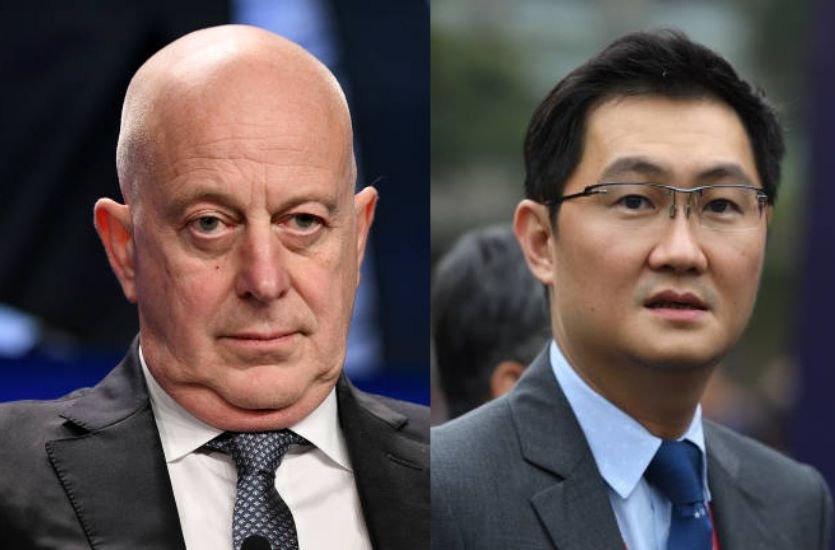
Larry Silverstein and Albert Bourla are two prominent business figures whose careers have attracted international attention for different reasons. Larry Silverstein is an American real estate developer best known for his role in rebuilding the World Trade Center in New York City, while Albert Bourla is a Greek-American pharmaceutical executive who leads Pfizer. Although their professional backgrounds belong to different industries, both have become recognizable figures in discussions about corporate leadership, major investments, and the influence of large organizations.
The keyword “Larry Silverstein and Albert Bourla” brings together two individuals whose professional histories provide useful insights into real estate development, pharmaceutical innovation, and business leadership. Silverstein’s career is associated with commercial property investment and the redevelopment of Lower Manhattan, while Bourla’s career focuses on pharmaceutical research, corporate strategy, and the development of medicines and vaccines. Their names have also appeared in connection with the same business awards organization, although this does not establish that they are direct business partners.
Quick Biography Table
| Detail | Larry Silverstein | Albert Bourla |
|---|---|---|
| Full name | Larry A. Silverstein | Albert A. Bourla |
| Nationality | American | Greek-American |
| Main industry | Real estate development | Pharmaceuticals and biotechnology |
| Associated organization | Silverstein Properties | Pfizer |
| Leadership position | Founder and chairman | Chairman and CEO of Pfizer |
| Education | New York University and Brooklyn Law School | Aristotle University of Thessaloniki |
| Best known for | World Trade Center redevelopment | Pfizer’s leadership during the COVID-19 pandemic |
| Main professional focus | Property investment, development, and management | Pharmaceutical research, development, and commercialization |
Who Is Larry Silverstein?
Larry A. Silverstein is an American real estate developer and the founder and chairman of Silverstein Properties, a privately held real estate development, investment, and management company established in 1957. His career has spanned several decades and includes commercial buildings, residential developments, hotels, and retail properties. He is particularly associated with the World Trade Center and the rebuilding of Lower Manhattan following the terrorist attacks of September 11, 2001.
Silverstein’s career demonstrates how real estate development involves much more than purchasing and selling buildings. Major projects require financing, long-term planning, architectural design, construction management, tenant negotiations, insurance arrangements, and cooperation with public authorities. These responsibilities become especially complicated when projects involve valuable urban land and large commercial properties.
Through Silverstein Properties, he became an influential participant in New York’s real estate market. His company has developed, owned, and managed millions of square feet of property across different sectors. Its projects illustrate how private developers can contribute to urban growth by constructing new buildings, modernizing existing properties, and attracting businesses to commercial districts.
Silverstein’s public profile is particularly connected to the rebuilding of the World Trade Center. However, his wider career also includes projects beyond that site, demonstrating his continued involvement in commercial property investment and development.
Larry Silverstein’s Early Career and Business Development
Silverstein began his involvement in real estate during the 1950s, working with his father and business partners. His early activities included acquiring properties and developing a foundation in the commercial real estate market. The establishment of Silverstein Properties in 1957 marked the beginning of a business that would expand alongside New York City’s changing economy.
During the following decades, Silverstein pursued opportunities in commercial buildings and other real estate assets. His work involved identifying investment opportunities, negotiating property transactions, managing development projects, and building relationships with tenants and financial institutions. These activities required an understanding of rental income, construction expenses, property values, and long-term economic trends.
Commercial real estate is a capital-intensive industry. Developers frequently commit substantial funds before a project generates income, and financial returns can depend on interest rates, tenant demand, occupancy levels, and changes in the wider economy. Large developments may also require years of planning and coordination before construction is completed.
Silverstein Properties grew through investments and development projects that expanded its presence in New York. Over time, the company became associated with significant office buildings and major redevelopment initiatives. Its history illustrates how real estate businesses can grow through long-term investment, strategic planning, and participation in projects that reshape urban neighborhoods.
Larry Silverstein and the World Trade Center Lease
One of the most significant events in Silverstein’s career occurred in 2001, when Silverstein Properties and Westfield America entered into a 99-year lease arrangement with the Port Authority of New York and New Jersey for the World Trade Center complex. The transaction was valued at approximately $3.2 billion.
The agreement represented a major commercial real estate commitment involving the Twin Towers and other buildings at the site. It placed Silverstein at the center of an important property transaction shortly before one of the most consequential events in modern American history.
On September 11, 2001, terrorists attacked the World Trade Center, destroying the Twin Towers and causing the collapse of other buildings. The attacks resulted in thousands of deaths and extensive damage to Lower Manhattan. They also created enormous challenges for the organizations responsible for the site, including questions about insurance coverage, rebuilding obligations, financing, and the future of the property.
The lease and its insurance arrangements subsequently became the subject of extensive legal and financial proceedings. Resolving these issues involved negotiations and litigation over the interpretation of policy provisions and the financial consequences of the destruction.
The World Trade Center case demonstrates the complexity of major commercial property agreements when an unexpected disaster changes the circumstances surrounding a development. The original lease, subsequent insurance disputes, and redevelopment arrangements were separate matters, each involving different obligations and decisions.
For this reason, any account of Silverstein’s involvement should distinguish the original transaction from the legal proceedings and construction projects that followed.
Rebuilding the World Trade Center
Following the September 11 attacks, Silverstein became a major private-sector participant in rebuilding the World Trade Center’s commercial buildings. The redevelopment involved coordination among property developers, public authorities, architects, engineers, construction companies, financial institutions, and future tenants.
Silverstein Properties participated in the development of 3 World Trade Center, 4 World Trade Center, and the rebuilt 7 World Trade Center. These buildings contributed to the restoration of office space in Lower Manhattan and became part of the area’s transformation after the attacks.
The redevelopment was not simply a construction project. It required decisions about building design, safety standards, financing, transportation, public access, and the commercial future of the neighborhood. The site also carried profound historical significance because of the people who lost their lives on September 11, 2001.
The process involved years of planning, investment, and coordination. It illustrated the difficulty of rebuilding a major commercial district after a catastrophic event while balancing business requirements with public expectations and historical remembrance.
Silverstein’s involvement in the project has consequently become a central part of his public reputation. His career is frequently discussed in relation to the World Trade Center’s redevelopment and the restoration of commercial activity in Lower Manhattan.
Beyond the World Trade Center, Silverstein Properties has continued to pursue development opportunities in New York and other markets. The company’s wider portfolio reflects the broader interests of a real estate business involved in office buildings, residential properties, hospitality, and other commercial assets.
Who Is Albert Bourla?
Albert A. Bourla is a Greek-American pharmaceutical executive who serves as chairman and chief executive officer of Pfizer, one of the world’s major biopharmaceutical companies. He was born in Thessaloniki, Greece, and studied veterinary medicine at Aristotle University of Thessaloniki. He subsequently earned a doctorate in the biotechnology of reproduction.
Bourla’s professional background differs significantly from Silverstein’s. Rather than working in real estate, he built his career in the pharmaceutical industry, where scientific research, clinical development, manufacturing, regulatory approval, and commercial strategy are closely connected.
He joined Pfizer in 1993 and gradually advanced through positions involving animal health, business development, established medicines, vaccines, and other pharmaceutical divisions. Before becoming CEO, he served as chief operating officer, overseeing important aspects of the company’s operations and commercial strategy.
Bourla became Pfizer’s CEO in January 2019 and subsequently assumed the role of chairman. His responsibilities include guiding corporate strategy, setting investment priorities, overseeing research and development, and managing the company’s international business operations.
Leading a pharmaceutical company requires coordination among researchers, physicians, regulatory specialists, manufacturing teams, commercial departments, and external partners. Decisions can affect patients, healthcare providers, employees, investors, and governments across many countries.
Bourla’s career illustrates how scientific education and experience in international business operations can lead to senior executive responsibilities within a major pharmaceutical organization.
Albert Bourla’s Career at Pfizer
Bourla’s rise through Pfizer involved more than two decades of work in different business divisions and international markets. His early responsibilities included animal health, and he later held management positions in Europe, the Middle East, Africa, and other regions.
He subsequently assumed senior responsibilities in areas including vaccines, oncology, consumer healthcare, and established medicines. These positions exposed him to different aspects of pharmaceutical development and commercialization, including product strategy, market access, manufacturing, and international operations.
The pharmaceutical industry operates under extensive regulatory requirements. New medicines and vaccines must undergo appropriate testing and review before they can be authorized for specific uses. Companies must also manage research expenses, production capacity, patent protection, competition, and changing healthcare needs.
Bourla’s appointment as CEO in 2019 placed him in charge of Pfizer during a period of significant change. The company continued investing in research and development while pursuing strategies intended to strengthen its position in important therapeutic areas.
Pfizer’s acquisition of Seagen in 2023 expanded its presence in oncology, particularly in antibody-drug conjugates, a class of targeted cancer treatments. More recently, the company has continued to pursue developments in areas such as obesity and metabolic disease and has explored the use of artificial intelligence in drug discovery and development.
These activities demonstrate the range of decisions involved in pharmaceutical leadership. Corporate executives must balance scientific opportunities with commercial risks, manufacturing requirements, regulatory responsibilities, and the needs of patients.
Albert Bourla and the COVID-19 Vaccine
Bourla became internationally prominent during the COVID-19 pandemic, when Pfizer collaborated with the German biotechnology company BioNTech to develop an mRNA vaccine against COVID-19.
The partnership combined Pfizer’s experience in clinical development, manufacturing, and global distribution with BioNTech’s expertise in messenger RNA technology. Their collaboration advanced through clinical testing during a period when governments, researchers, and healthcare systems urgently needed effective tools to reduce the impact of the pandemic.
In November 2020, Pfizer and BioNTech announced positive preliminary results from their Phase 3 clinical trial. In December 2020, the United States Food and Drug Administration granted the vaccine an emergency use authorization. Other regulatory authorities subsequently evaluated the vaccine under their respective regulatory frameworks.
Bourla’s role included executive oversight and communication with governments, investors, healthcare organizations, and the public. Pfizer also had to expand manufacturing capacity and coordinate international supply arrangements to distribute doses at a global scale.
Nevertheless, the vaccine’s development was a collective scientific and logistical achievement. Researchers at Pfizer and BioNTech, clinical investigators, trial participants, manufacturing employees, and regulatory specialists all contributed to the process. Attributing the scientific achievement to a single executive would overlook the extensive collaboration involved.
The vaccine program also brought Pfizer under greater public scrutiny. Discussions about effectiveness, safety monitoring, procurement agreements, pricing, and pharmaceutical-company profits became prominent in public debate. These issues require examination of clinical evidence, regulatory decisions, contractual documents, and financial disclosures rather than assumptions based solely on a corporate leader’s position.
Bourla later published Moonshot: Inside Pfizer’s Nine-Month Race to Make the Impossible Possible, which describes Pfizer’s experience during the vaccine development effort. The book presents his perspective on the company’s decisions, the urgency of the pandemic, and the organizational challenges involved.
Pfizer’s Broader Business Strategy
Pfizer’s operations extend well beyond COVID-19 vaccines. The company develops and commercializes medicines and vaccines across several therapeutic areas, including oncology, internal medicine, inflammation and immunology, and infectious diseases.
Under Bourla’s leadership, Pfizer has emphasized scientific innovation, research investment, and the development of treatments intended to address significant medical needs. Pharmaceutical research often requires substantial investment over many years because experimental treatments must undergo extensive testing before they can be approved for use.
The company’s acquisition of Seagen in 2023 strengthened its oncology portfolio and expanded its capabilities in targeted cancer treatments. Strategic acquisitions can help pharmaceutical companies gain access to new technologies, scientific expertise, research pipelines, and commercial opportunities.
However, pharmaceutical companies also face considerable challenges. Patent expirations can expose established medicines to competition from generic alternatives. Clinical trials may fail to produce the expected results, manufacturing can become more expensive, and regulatory requirements may change. Public debates over drug prices and access to treatments can also affect company strategy.
Bourla’s leadership therefore involves balancing scientific development with financial performance, operational efficiency, regulatory compliance, and patient needs. His career provides an example of executive management at the intersection of biotechnology, healthcare, and international business.
Larry Silverstein and Albert Bourla: What Is Their Connection?
The combined keyword “Larry Silverstein and Albert Bourla” raises an important question: do the two men have a documented business or personal relationship?
The strongest approach is to distinguish verified information from speculation. Silverstein’s career centers on real estate development and investment, while Bourla’s career centers on pharmaceuticals and corporate leadership at Pfizer. Their principal professional activities are different, and the available evidence reviewed for this article does not establish a direct business partnership between them.
A documented point of overlap appeared in an announcement published by the America-Israel Friendship League on November 2, 2022. The organization announced that Pfizer and its CEO, Albert Bourla, would receive the Kenneth J. Bialkin Leadership Award. The same announcement named Lisa Silverstein and Tal Kerret, executives of Silverstein Properties, as recipients of a separate Partners for Democracy Award.
This announcement provides a verifiable connection between Pfizer’s leadership and executives of the company founded by Larry Silverstein through the same awards program. However, it did not identify Larry Silverstein as a recipient of the award given to Bourla, nor did it establish that the two men jointly owned a company, shared an investment, or conducted a business partnership.
Attending the same event or being recognized by the same organization does not, by itself, prove a direct business relationship. A stronger claim would require additional evidence, such as a joint corporate announcement, an investment filing, a documented agreement, or credible reporting based on identifiable records.
Consequently, the awards announcement should be described as an organizational overlap rather than proof of a personal or financial partnership. This distinction is essential for maintaining factual accuracy when writing about public figures whose names appear together in online searches.
Comparing Their Industries and Leadership Responsibilities
Although Silverstein and Bourla work in different industries, their careers illustrate several shared features of corporate leadership. Both have held senior positions involving long-term planning, major financial commitments, organizational coordination, and decisions that affect people beyond their own companies.
Real estate development often requires years of planning, financing, construction, and tenant recruitment before a project becomes fully operational. Pharmaceutical research can also require years of investment, experimentation, clinical testing, and regulatory review before a medicine reaches patients.
The risks they manage, however, differ considerably. Silverstein’s industry involves property-market cycles, construction costs, financing conditions, insurance arrangements, tenant demand, and changes in urban planning. Bourla’s industry involves scientific uncertainty, clinical trial outcomes, medicine safety, manufacturing capacity, patent protection, and regulatory approval.
Their decisions also affect different groups. Real estate development can influence tenants, construction workers, investors, local communities, and the physical structure of cities. Pharmaceutical decisions can affect patients, healthcare providers, researchers, employees, investors, and public health systems.
These comparisons help explain why both individuals attract public attention despite their distinct professional backgrounds. Their careers illustrate the influence of major business organizations and the importance of accountability in industries that involve substantial investment and public interest.
Nevertheless, similarities in their responsibilities should not be mistaken for proof that they have collaborated directly. It is possible to compare their leadership roles without implying an undocumented personal or commercial relationship.
Public Attention and Corporate Accountability
Larry Silverstein and Albert Bourla have both operated in industries that receive substantial public scrutiny because of the scale and consequences of their work.
Silverstein’s public reputation is closely associated with the World Trade Center lease and the rebuilding of Lower Manhattan after September 11, 2001. The redevelopment involved complicated questions about insurance, financing, construction, public interests, and the commercial future of a major urban district. These issues have been examined through legal proceedings, public records, and industry reporting.
Bourla’s public profile expanded considerably during the COVID-19 pandemic. Pfizer’s vaccine development program received international attention, while the company also faced questions about vaccine procurement, pricing, safety monitoring, and pharmaceutical profits. These subjects illustrate the responsibilities and challenges associated with leading a multinational healthcare business.
Corporate accountability requires distinguishing documented events, legitimate criticism, and unsupported allegations. A public figure’s involvement in a controversial event does not automatically establish wrongdoing, just as commercial success does not remove the need for independent scrutiny.
For readers researching Larry Silverstein and Albert Bourla, this distinction is particularly important. Both men have been associated with organizations and events that have broad public consequences, but their professional positions alone cannot establish a relationship beyond what reliable records demonstrate.
Why Are Larry Silverstein and Albert Bourla Searched Together?
Combined-name searches can arise when people encounter the names in an article, an awards announcement, a business discussion, or a broader examination of influential corporate figures.
In this case, Silverstein and Bourla have distinct public profiles that make them relevant to discussions of real estate, healthcare, corporate leadership, and international business. The 2022 America-Israel Friendship League announcement provides one documented organizational overlap involving Pfizer and Silverstein Properties executives.
However, a search phrase is not evidence of a partnership. Search engines may display pages that mention two people together even when the underlying connection is limited to an event, an organization, or a comparison of their careers.
Readers should therefore examine the original context before drawing conclusions. An informative article should prioritize biographical facts, company histories, public announcements, and verifiable business records rather than presenting speculation as established information.
This approach also makes the article more useful for search engine optimization because it addresses the likely questions behind the keyword: who these individuals are, why they are notable, which companies they lead or founded, and whether a documented connection exists.
Frequently Asked Questions
Who is Larry Silverstein?
Larry Silverstein is an American real estate developer and the founder and chairman of Silverstein Properties. He is best known for his involvement in rebuilding the World Trade Center’s commercial buildings following the September 11, 2001, terrorist attacks.
Who is Albert Bourla?
Albert Bourla is a Greek-American pharmaceutical executive who serves as chairman and CEO of Pfizer. He became widely known for his leadership of Pfizer during the development and distribution of its COVID-19 vaccine in partnership with BioNTech.
Are Larry Silverstein and Albert Bourla business partners?
The sources reviewed for this article do not establish a direct business partnership between Larry Silverstein and Albert Bourla. A 2022 awards announcement connected Pfizer and Bourla with a program that also recognized Silverstein Properties executives Lisa Silverstein and Tal Kerret, but it did not establish a joint venture between the two men.
What companies are associated with Larry Silverstein and Albert Bourla?
Larry Silverstein is associated with Silverstein Properties, a real estate development and investment company. Albert Bourla leads Pfizer, a multinational biopharmaceutical company involved in developing and commercializing medicines and vaccines.
Why are their names discussed together?
Their names may appear together in online searches and discussions about corporate leadership and business connections. The 2022 America-Israel Friendship League awards announcement offers one documented organizational overlap, although it does not prove a direct personal or financial partnership.
Do Larry Silverstein and Albert Bourla work in the same industry?
No. Silverstein works primarily in real estate development and investment, while Bourla leads a pharmaceutical company. Their careers can be compared in terms of business strategy, investment, and corporate leadership, but their principal professional activities are different.
Conclusion
Larry Silverstein and Albert Bourla have established careers in two influential sectors of the global economy. Silverstein is recognized for decades of real estate development and his role in rebuilding the World Trade Center’s commercial buildings. Bourla is known for his leadership at Pfizer, particularly during the COVID-19 vaccine development effort and the company’s continuing investment in pharmaceutical research.
Their professional histories demonstrate how business leaders can influence major projects, corporate strategies, and organizations that affect millions of people. At the same time, their careers should be evaluated within their respective industries and supported by reliable evidence.
The available documentation identifies an organizational overlap through a 2022 awards program involving Pfizer and Silverstein Properties executives. It does not establish that Silverstein and Bourla are direct business partners. Maintaining this distinction allows readers to understand the keyword without confusing a documented association with an unverified claim.
For anyone researching Larry Silverstein and Albert Bourla, the most useful approach is to examine their biographies, corporate responsibilities, and documented public activities while distinguishing established facts from speculation.
READ MORE : Millie Bobby Brown and Safra Catz
READ MORE : John Collison and Miguel Patricio


One thought on “Larry Silverstein and Albert Bourla: Careers, Achievements, and Their Documented Connection”