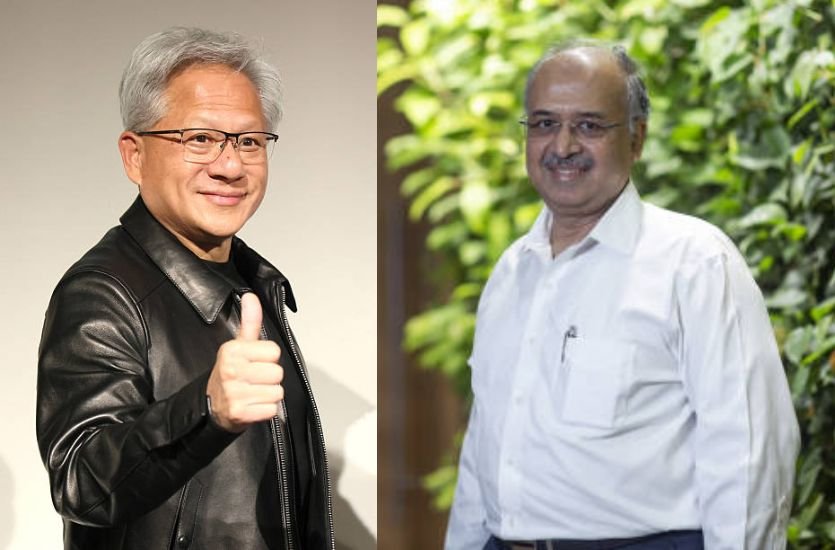
Dilip Shanghvi and Jensen Huang are two highly successful entrepreneurs whose careers have shaped very different industries. Shanghvi built Sun Pharmaceutical Industries into one of the world’s major pharmaceutical companies. At the same time, Huang co-founded NVIDIA and helped transform it from a graphics-chip company into a global leader in accelerated computing and artificial intelligence. Although the two billionaires have different backgrounds, education, and business strategies, their stories provide an interesting comparison of long-term entrepreneurship, innovation, and leadership.
There is no established public evidence that Dilip Shanghvi and Jensen Huang are business partners, relatives, or involved in a joint venture. Their connection is primarily a comparison between two influential founders who built enormous companies in pharmaceuticals and technology. Shanghvi’s career has been driven by medicines, acquisitions, and international expansion, while Huang’s career has been closely connected with semiconductor engineering, GPUs, software platforms, and artificial intelligence.
Quick Bio Table: Dilip Shanghvi and Jensen Huang
| Detail | Dilip Shanghvi | Jensen Huang |
|---|---|---|
| Full Name | Dilip Shantilal Shanghvi | Jen-Hsun Huang |
| Date of Birth | October 1, 1955 | February 17, 1963 |
| Birthplace | Amreli, Gujarat, India | Taiwan |
| Nationality | Indian | Taiwanese-American |
| Education | University of Calcutta | Oregon State University and Stanford University |
| Industry | Pharmaceuticals | Semiconductors, AI and Computing |
| Company | Sun Pharmaceutical Industries | NVIDIA |
| Company Founded | 1983 | 1993 |
| Current Role | Executive Chairman, Sun Pharma | President and CEO, NVIDIA |
| Known For | Building Sun Pharma | Building NVIDIA and advancing AI computing |
Who Is Dilip Shanghvi?
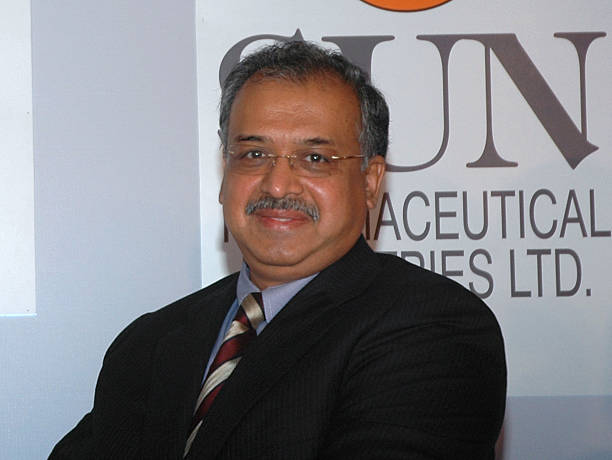
Dilip Shanghvi is an Indian billionaire entrepreneur and the founder of Sun Pharmaceutical Industries. Born on October 1, 1955, in Amreli, Gujarat, Shanghvi came from a business family involved in pharmaceutical distribution. Instead of following a conventional corporate career, he decided to establish his own pharmaceutical company and gradually built it into one of India’s most important healthcare businesses.
Shanghvi studied commerce at the University of Calcutta. His educational background was different from that of many pharmaceutical executives because he did not begin his career as a medical researcher or pharmaceutical scientist. His strength was business strategy, understanding markets,s and identifying opportunities in the pharmaceutical sector.
According to Forbes-based reporting, Shanghvi started Sun Pharma in 1983 with approximately $200 borrowed from his father. The company began with a very small operation and initially concentrated on a limited number of medicines, particularly products related to psychiatry. What started as a modest pharmaceutical business eventually developed into a global company with operations and products serving markets around the world.
How Dilip Shanghvi Built Sun Pharma
One of the most important elements of Shanghvi’s business story is his focus on specialization. Sun Pharma did not attempt to compete everywhere immediately. Its early strategy concentrated on particular therapeutic areas, allowing the company to build expertise and establish relationships with specialists.
Over the following decades, Sun Pharma expanded its product portfolio, manufacturing capabilities, and international presence. Acquisitions became an important part of the company’s growth strategy. Instead of relying entirely on organic expansion, Sun Pharma used major corporate transactions to increase the company’s scale and access to new markets.
One of the most significant moments in Sun Pharma’s history was its acquisition of Ranbaxy Laboratories. The transaction, announced in 2014 and completed in 2015, had an equity value of approximately $4 billion. The deal dramatically increased Sun Pharma’s international scale and helped establish it as a much larger global pharmaceutical company.
Shanghvi’s career demonstrates how patience and strategic expansion can transform a small company into a major international enterprise. His success was not based on a single product or a short-term business trend. Instead, Sun Pharma developed through decades of pharmaceutical operations, acquisitions, research, and international expansion.
Dilip Shanghvi’s Leadership Style
Shanghvi has often been associated with a relatively quiet and analytical approach to business. Compared with technology executives who frequently appear on large stages, he has generally maintained a lower public profile.
His approach has focused heavily on understanding opportunities, controlling risk,k and building businesses for the long term. His transition from Managing Director to Executive Chairman in 2025 also demonstrates how his role has evolved as Sun Pharma has matured.
Shanghvi stepped down as Managing Director effective September 1, 2025, while continuing as Executive Chairman. Kirti Ganorkar became Managing Director. This means that Shanghvi remains deeply connected with the company’s strategic direction even though day-to-day executive responsibility has shifted.
Dilip Shanghvi’s Net Worth
Dilip Shanghvi is one of India’s wealthiest pharmaceutical entrepreneurs. His personal wealth is closely connected to his ownership and economic interest in Sun Pharma and therefore changes as the company’s market value changes.
Recent Forbes-based figures in September 2026 placed Shanghvi’s estimated net worth at approximately $27 billion. Because billionaire wealth estimates change with stock prices and other market conditions, the number should be considered an estimate rather than a fixed amount.
His fortune represents more than personal wealth. It reflects the enormous expansion of Sun Pharma from a small pharmaceutical operation into a multinational healthcare company.
Who Is Jensen Huang?
Jensen Huang is a Taiwanese-American technology entrepreneur and the co-founder, President,t and Chief Executive Officer of NVIDIA. Born in 1963, Huang followed a very different path from Shanghvi.
Huang studied electrical engineering at Oregon State University and later earned a master’s degree in electrical engineering from Stanford University. Before establishing NVIDIA, he worked in the semiconductor industry, including positions at LSI Logic and Advanced Micro Devices.
His technical education and professional experience provided him with a strong foundation in computer engineering and semiconductor technology. In 1993, Huang joined Chris Malachowsky and Curtis Priem to establish NVIDIA.
At the time, the future importance of graphics processors and artificial intelligence was far from obvious. NVIDIA initially focused heavily on graphics technology and computer gaming. Over time, however, the company’s processors became useful for a much broader range of computational workloads.
How Jensen Huang Built NVIDIA
NVIDIA’s transformation is one of the most important technology stories of the modern era. The company’s graphics processing units, commonly known as GPUs, were originally associated strongly with computer graphics and gaming.
The technology eventually proved useful for parallel computing. NVIDIA developed CUDA, a software platform that enabled developers to use its GPUs for computing tasks beyond traditional graphics. This became particularly important for scientific computing and machine learning.
As artificial intelligence developed, GPUs became increasingly valuable for training and running sophisticated AI models. NVIDIA’s hardware and software ecosystem eventually became a critical part of the infrastructure supporting modern artificial intelligence.
This transformation greatly increased NVIDIA’s economic importance. The company moved from being primarily associated with gaming graphics to becoming one of the world’s most influential suppliers of AI computing infrastructure.
Huang’s decision to continue investing heavily in accelerated computing before the full scale of today’s AI boom became obvious played an important role in NVIDIA’s transformation. His long-term approach allowed the company to benefit when demand for AI computing increased dramatically.
Jensen Huang’s Leadership Style
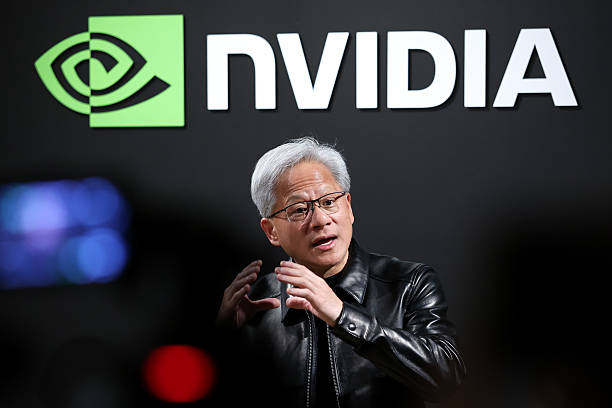
Jensen Huang has a much more visible public profile than Dilip Shanghvi. He frequently appears at major technology conferences, product announcements,t,s and NVIDIA events. His distinctive black leather-jacket appearance has also become closely associated with his public image.
However, beyond his personality and public visibility, Huang’s leadership is strongly connected to long-term technological investment. NVIDIA spent years developing GPU architecture, software tools,s and computing platforms that eventually became highly valuable for AI.
Huang has remained NVIDIA’s President and CEO since the company’s founding. This is particularly notable because many technology companies experience leadership changes as they become large public corporations. Huang, however, has remained at the center of NVIDIA’s strategy for more than three decades.
Jensen Huang’s Net Worth
Jensen Huang’s wealth has increased enormously alongside NVIDIA’s market value. His fortune is closely connected to his ownership stake in NVIDIA, meaning that changes in the company’s share price can have a significant effect on his estimated net worth.
In September 2026, Forbes-based estimates placed Huang’s wealth close to $200 billion. One recent report placed his estimated fortune at approximately $198.8 billion, following strong NVIDIA share performance and the company’s announced $12.9 billion acquisition of Hugging Face.
The difference between Huang’s estimated wealth and Shanghvi’s is substantial. However, comparing their fortunes alone does not fully explain their business achievements because they operate in completely different industries and their companies have experienced different market cycles.
Dilip Shanghvi and Jensen Huang: Business Comparison
The most interesting aspect of Dilip Shanghvi and Jensen Huang is not simply their wealth but how differently they created it.
Shanghvi built his business in pharmaceuticals, an industry characterized by research, regulation, manufacturing, patents, clinical development, and long product lifecycles. His strategy involved identifying therapeutic opportunities, expanding internationally,y and using acquisitions to increase Sun Pharma’s capabilities.
Huang built his company in semiconductors and computing, where technological innovation, processor architecture, software ecosystems, and enormous research investments are central to competition. NVIDIA’s growth eventually became closely linked to the explosive demand for artificial intelligence.
Their companies therefore represent two different models of modern business success. Sun Pharma illustrates how a focused pharmaceutical company can expand through specialization and strategic acquisitions. NVIDIA illustrates how sustained investment in technology platforms can produce enormous growth when a new computing paradigm emerges.
Dilip Shanghvi and Jensen Huang Net Worth Compared
The wealth comparison between Dilip Shanghvi and Jensen Huang is striking. Recent September 2026 estimates put Shanghvi’s fortune at roughly $27 billion, while Huang’s fortune approached $200 billion.
This means Huang’s estimated fortune is several times larger than Shanghvi’s. However, net worth should not be viewed as a direct measurement of intelligence, business quality, or personal achievement.
Huang’s enormous wealth has been heavily influenced by the dramatic rise in NVIDIA’s market value during the artificial intelligence boom. Shanghvi’s wealth has been built over more than four decades through the expansion of Sun Pharma.
The two fortunes therefore reflect different industries and different market environments.
Similarities Between Dilip Shanghvi and Jensen Huang
Despite their differences, Dilip Shanghvi and Jensen Huang share several important characteristics.
Both built companies that became much larger than their original operations. Shanghvi transformed a small pharmaceutical company into an international healthcare business, while Huang transformed NVIDIA from a graphics-focused company into a central player in AI computing.
Both also demonstrated long-term commitment. Shanghvi has remained associated with Sun Pharma for more than four decades, while Huang has led NVIDIA since its founding in 1993.
Another similarity is that both operate in industries where technical knowledge and innovation are essential. Pharmaceutical companies depend on research and scientific development, while NVIDIA operates at the intersection of semiconductor engineering, software,e and artificial intelligence.
Their stories also demonstrate the importance of adapting to changing markets. Shanghvi expanded Sun Pharma beyond its original focus and increasingly emphasized specialty and innovative medicines. Huang helped NVIDIA move beyond traditional graphics into accelerated computing and AI.
Differences Between Dilip Shanghvi and Jensen Huang
The differences are equally significant. Shanghvi’s career is rooted in healthcare and pharmaceuticals, while Huang’s is rooted in technology and semiconductors.
Their educational backgrounds also differ. Shanghvi studied commerce, while Huang pursued electrical engineering at both undergraduate and graduate levels.
Their leadership positions also differ in 2026. Shanghvi is Executive Chairman of Sun Pharma after stepping down as Managing Director in 2025. Huang continues to serve as NVIDIA’s President and CEO.
Their public personalities are also different. Shanghvi is generally known for a more private and reserved approach, while Huang has developed a highly recognizable public identity within the global technology industry.
Are Dilip Shanghvi and Jensen Huang Related?
There is no reliable public evidence establishing a family relationship between Dilip Shanghvi and Jensen Huang. There is also no established evidence that they are business partners or that they operate a shared company.
The reason their names may appear together is primarily that they are both prominent billionaire founders and successful business leaders. Articles comparing Dilip Shanghvi and Jensen Huang generally focus on their careers, companies, wealth, and leadership approaches rather than a direct relationship between the two men.
Therefore, an accurate biography or comparison should avoid suggesting that they personally worked together unless reliable evidence establishes such a connection.
Recent Developments in Their Businesses
In 2026, both entrepreneurs remain relevant to major developments in their respective industries.
Sun Pharma continues to expand its global pharmaceutical business, with Shanghvi retaining an important strategic position as Executive Chairman. The company is also pursuing further expansion in innovative and specialty medicines.
NVIDIA, meanwhile, remains at the center of the global AI infrastructure boom. The company’s enormous data-center business demonstrates how far it has moved beyond its original graphics focus. Recent reporting also highlighted NVIDIA’s planned $12.9 billion acquisition of Hugging Face, reflecting Huang’s continuing interest in strengthening the company’s broader AI ecosystem.
These developments show that neither founder’s story is simply historical. Both continue to influence major companies and industries in 2026.
What We Can Learn From Their Success
The careers of Dilip Shanghvi and Jensen Huang demonstrate that successful entrepreneurship does not follow one fixed formula.
Shanghvi’s story emphasizes patience, specialization, strategic acquisitions,s and gradual international expansion. He started with a small pharmaceutical operation and spent decades building Sun Pharma into a global company.
Huang’s story emphasizes technological vision, research, platform development,nt and the willingness to invest in a technology before its full commercial potential becomes obvious. NVIDIA’s transformation into an AI infrastructure leader demonstrates the value of maintaining a long-term technological strategy.
Both careers also show why adaptability matters. Markets change, technologies develop,p and industries evolve. Companies that survive for decades need leaders who can recognize new opportunities without abandoning the strengths that made the business successful in the first place.
Final Thoughts on Dilip Shanghvi and Jensen Huang
Dilip Shanghvi and Jensen Huang represent two very different paths to global business success. Shanghvi built his reputation through pharmaceuticals and transformed Sun Pharma from a small operation into a major international healthcare company. Huang built NVIDIA alongside two co-founders and guided the company from graphics technology toward accelerated computing and artificial intelligence.
Their industries, education, leadership styles, es and wealth are significantly different, yet both have demonstrated an extraordinary ability to build for the long term. Shanghvi’s career highlights the importance of specialization and strategic expansion, while Huang’s career demonstrates the potential of technological innovation and long-term investment.
There is no verified direct partnership or personal relationship connecting the two men. Their real connection is that both became influential founder-leaders whose companies grew far beyond their original ambitions.
For that reason, comparing Dilip Shanghvi and Jensen Huang provides a useful look at two different forms of entrepreneurship: one built around global healthcare and pharmaceuticals, and the other built around computing, semiconductors,s and artificial intelligence.
Disclaimer: Net worth figures are estimates and can change significantly with market conditions. They should not be treated as exact statements of personal wealth or as financial advice.
Visit Editorial Magazine for more stories.