
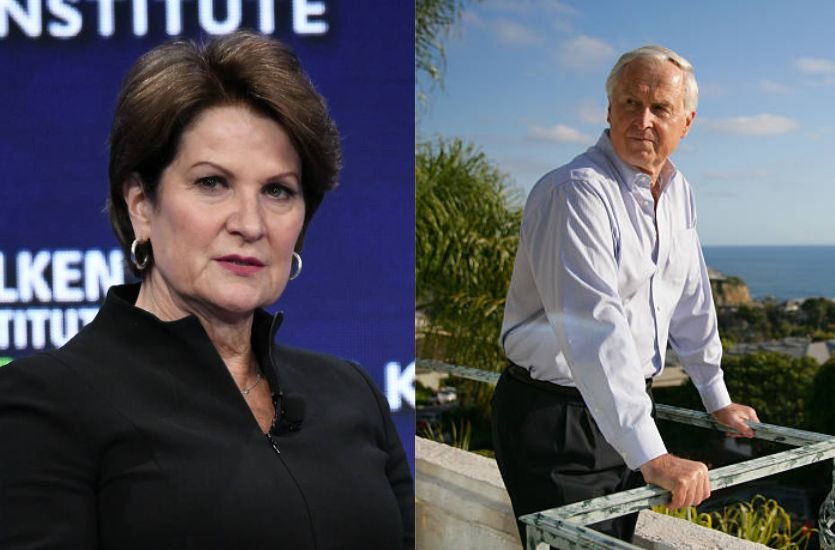
The business world has been shaped by executives who combine technical knowledge, professional experience, and strategic decision-making to lead major organizations. Lowell McAdam and Tom Kennedy are two examples of business leaders whose careers demonstrate how engineering expertise can develop into senior corporate leadership. Although they worked in different industries, both became influential executives at major American companies and contributed to the development of technology-driven businesses.
Lowell McAdam is widely recognized for his leadership at Verizon Communications, where he served as chairman and chief executive officer. His career focused on telecommunications, wireless networks, digital services, and business expansion. Tom Kennedy, whose full name is Thomas A. Kennedy, is known for his long career at Raytheon, an American aerospace and defense technology company. He progressed from engineering responsibilities to become its chairman and chief executive officer before taking an executive leadership position at Raytheon Technologies.
The professional journeys of Lowell McAdam and Tom Kennedy offer an interesting comparison of two different approaches to corporate leadership. McAdam helped guide a major telecommunications company through changes in wireless ownership and digital markets, while Kennedy led a defense technology organization through operational restructuring, engineering development, and a major corporate combination.
Quick Bio Table
| Details | Lowell McAdam | Tom Kennedy |
|---|---|---|
| Full name | Lowell C. McAdam | Thomas A. Kennedy |
| Nationality | American | American |
| Profession | Business executive | Business executive and engineer |
| Industry | Telecommunications | Aerospace and defense |
| Main company | Verizon Communications | Raytheon |
| Education | Cornell University, University of San Diego | Rutgers University, Air Force Institute of Technology, UCLA |
| CEO appointment | Verizon, 2011 | Raytheon, 2014 |
| Chairman appointment | Verizon, 2012 | Raytheon, 2014 |
| Known for | Wireless communications and business strategy | Defense technology and engineering leadership |
Who Is Lowell McAdam?
Lowell C. McAdam is an American business executive best known for his leadership at Verizon Communications. He served as the company’s chief executive officer from August 2011 until August 2018 and as chairman from January 2012 until March 2019. His career is closely connected to the growth of wireless communications and the expansion of telecommunications infrastructure in the United States.
McAdam became an important figure in the telecommunications industry through his experience in engineering, network operations, international business development, and corporate management. Before becoming Verizon’s CEO, he held several senior positions within Verizon Wireless and other telecommunications organizations. These experiences gave him a detailed understanding of the challenges involved in building and managing large communication networks.
His leadership period coincided with major changes in how people and businesses used technology. Smartphones, mobile internet, digital communication platforms, and connected devices became increasingly important. Verizon had to adapt to these developments while maintaining its position in a competitive telecommunications market.
McAdam’s professional story is particularly notable because he developed his career through technical and operational experience rather than following only a traditional business-management path.
Lowell McAdam’s Early Life and Education
Lowell McAdam’s educational background played an important role in preparing him for a career in technology and business leadership. He attended Cornell University, where he earned a bachelor’s degree in engineering in 1976. His engineering education provided a foundation in technical problem-solving, systems, and infrastructure.
After completing his undergraduate studies, McAdam pursued a Master of Business Administration at the University of San Diego. This additional qualification helped him develop business and management knowledge that complemented his engineering background.
He also served for six years in the United States Navy Civil Engineer Corps. His military experience exposed him to structured operations, technical responsibilities, and organizational management. In 1979, he became a licensed professional engineer, reflecting his professional qualifications in the engineering field.
These educational and professional experiences contributed to his ability to understand both the technical and commercial aspects of telecommunications. Managing a large communications company requires more than knowledge of business strategy. It also involves understanding infrastructure investment, network reliability, customer expectations, and technological development.
McAdam’s combination of engineering education, military service, and business training became an important part of his professional identity.
Lowell McAdam’s Early Professional Career
McAdam began developing his telecommunications career through positions at Pacific Bell. During this period, he gained experience in the American telephone industry and became familiar with the operational requirements of large communication businesses.
In 1993, he joined AirTouch Communications, where his responsibilities expanded into international wireless operations. He became involved with cellular business ventures in several countries, including Spain, Portugal, Sweden, Italy, South Korea, and Japan. This international experience provided an opportunity to understand how wireless networks and telecommunications businesses operated in different markets.
His work at AirTouch was significant because mobile communications were developing rapidly during the 1990s. Cellular technology was becoming more accessible, and telecommunications companies were investing in network infrastructure to serve growing numbers of customers.
McAdam later became president and chief executive officer of PrimeCo Personal Communications, a joint venture involving Bell Atlantic and Vodafone AirTouch. One of his important responsibilities was overseeing the development of an early all-digital wireless network.
These positions helped him build a reputation as an executive with practical knowledge of telecommunications technology and business operations. His experience across different organizations prepared him for increasingly senior responsibilities within Verizon.
Leadership at Verizon Wireless
Lowell McAdam joined Verizon Wireless in 2000 as executive vice president and chief operating officer. He became involved in managing the company’s operations during a period when wireless communication was becoming an essential part of everyday life.
The telecommunications industry was moving beyond traditional voice services. Customers increasingly expected reliable mobile coverage, better communication quality, and access to new digital services. Companies needed to invest in network capacity and improve their ability to serve growing customer bases.
In 2007, McAdam became president and chief executive officer of Verizon Wireless. He held this position until 2010. His responsibilities included overseeing the company’s operations and supporting its competitive position in the wireless market.
His leadership experience at Verizon Wireless became an important stepping stone toward managing the wider Verizon Communications organization. He had already developed an understanding of the company’s network infrastructure, customer requirements, operational structure, and competitive environment.
This experience also placed him in a strong position to understand the importance of wireless technology in the future of telecommunications. Mobile connectivity was no longer simply an additional service. It was becoming a central part of communication, entertainment, business operations, and internet access.
Lowell McAdam as CEO and Chairman of Verizon
In October 2010, McAdam became president and chief operating officer of Verizon Communications. On August 1, 2011, he officially became the company’s chief executive officer. He was appointed chairman of the board on January 1, 2012.
His appointment came at an important time for Verizon. The telecommunications industry was experiencing growing competition, increasing demand for mobile data, and rapid changes in digital technology.
One of the most significant developments during his leadership was Verizon’s acquisition of Vodafone’s 45 percent ownership interest in Verizon Wireless in 2014. The transaction gave Verizon complete ownership of its wireless business and represented a major strategic decision for the company.
McAdam also supported Verizon’s expansion into digital media and connected technology. The company acquired AOL in 2015 and Yahoo’s operating business in 2017. These acquisitions were part of an effort to strengthen Verizon’s digital media capabilities and expand its presence beyond traditional telecommunications services.
Another area of interest was the Internet of Things, commonly known as IoT. This technology connects physical devices to the internet, allowing them to exchange information and support automated processes. Verizon explored opportunities involving connected vehicles, business systems, industrial applications, and other connected services.
His tenure demonstrated how telecommunications companies were attempting to adapt to a changing digital economy while maintaining investment in their core network businesses.
Retirement and Professional Legacy of Lowell McAdam
In June 2018, Verizon announced that Hans Vestberg would succeed McAdam as chief executive officer, effective August 1, 2018. McAdam remained executive chairman during the transition and retired from the company at the end of December 2018.
He stepped down as chairman in March 2019. His departure marked the conclusion of an important period in Verizon’s corporate history.
McAdam’s professional legacy is associated with the development of wireless communications, the complete ownership of Verizon Wireless, investments in digital media, and the company’s efforts to explore new technology markets.
His career also illustrates the value of combining technical education with practical management experience. He moved from engineering-related work into increasingly responsible leadership positions and eventually became the head of one of the largest telecommunications organizations in the United States.
Although his time as CEO ended in 2018, his career remains relevant to discussions about telecommunications leadership, wireless network development, and corporate strategy.
Who Is Tom Kennedy?
Tom Kennedy, whose full name is Thomas A. Kennedy, is an American aerospace and defense industry executive best known for his leadership at Raytheon Company. He served as the company’s chief executive officer from 2014 and chairman from October 2014 until its combination with United Technologies Corporation in April 2020.
Kennedy developed his career through engineering, military service, technical management, and corporate leadership. Unlike executives who enter senior business positions early in their careers, he spent decades working in the aerospace and defense industry before reaching the highest levels of corporate management.
He joined Raytheon in 1983 and held various engineering and management positions over more than three decades. His professional experience included radar development, defense systems, airborne technology, and business operations.
Kennedy’s leadership became particularly important as Raytheon continued investing in advanced technology and managing relationships with government and military customers. His career also involved organizational restructuring and international business development.
One of the most important developments associated with his later career was the combination of Raytheon and United Technologies, which created Raytheon Technologies in 2020. The transaction brought together major businesses involved in aerospace, defense, and advanced engineering.
Tom Kennedy’s Early Life and Education
Tom Kennedy’s educational background reflects his strong connection to engineering and technical development. He earned a Bachelor of Science degree in electrical engineering from Rutgers University. He later completed a Master of Science degree at the Air Force Institute of Technology and earned a PhD in engineering from the University of California, Los Angeles, in 1984.
His academic qualifications provided a foundation for understanding complex technological systems. Electrical engineering is particularly relevant to areas such as radar, communications, electronic systems, and aerospace technology.
Before joining Raytheon, Kennedy served as a captain in the United States Air Force. His military background provided additional experience in technical environments and helped develop his understanding of defense-related operations.
His combination of military experience and advanced engineering education became an important foundation for his professional career. Working in the aerospace and defense sector requires an understanding of highly specialized technologies, operational requirements, and the needs of government customers.
Kennedy’s educational journey also demonstrates the importance of continuous professional development. His progression from an engineering degree to advanced postgraduate qualifications helped prepare him for the technical and managerial responsibilities he later assumed at Raytheon.
Beginning His Career at Raytheon
Kennedy joined Raytheon in 1983, beginning his career in engineering with a focus on radar development. At that time, Raytheon was already an established company in the aerospace and defense technology industry.
Radar systems are important for detecting, tracking, and identifying objects through radio waves. They are used in military operations, aviation, weather monitoring, and other applications. Developing these systems requires advanced engineering knowledge and an understanding of complex electronic technologies.
Kennedy’s early responsibilities gave him direct exposure to the technical side of the company’s business. Rather than concentrating exclusively on corporate administration, he developed an understanding of the products and technologies that supported Raytheon’s operations.
Over the years, he moved into different leadership positions across the organization. His responsibilities expanded beyond engineering into business management, strategic planning, and operational decision-making.
This gradual progression helped him understand how technical development connects with financial performance, customer relationships, and long-term corporate objectives.
His experience also gave him knowledge of Raytheon’s different business areas and the challenges involved in managing a large defense technology company. By the time he reached senior executive positions, he had spent decades developing professional experience within the organization.
Tom Kennedy’s Rise to Senior Management
Kennedy’s career advancement reflected his growing experience in engineering and business operations. Between 2007 and 2010, he served as vice president of the Tactical Airborne Systems product line within Raytheon’s Space and Airborne Systems business.
In 2010, he became vice president and president of the Integrated Defense Systems business unit. This position involved overseeing a major part of Raytheon’s operations and managing activities connected with defense technology.
His responsibilities included business performance, organizational management, technology development, and customer requirements. These areas were particularly important because Raytheon’s products often served government and military organizations with complex operational needs.
In April 2013, Kennedy became executive vice president and chief operating officer of Raytheon. One of his important responsibilities was leading the consolidation of the company’s six businesses into four.
The restructuring was intended to improve productivity, organizational agility, and affordability. It also supported the company’s efforts to strengthen its international business operations.
This period demonstrated Kennedy’s ability to move beyond technical responsibilities and manage broader organizational challenges. His experience in several business units gave him the knowledge needed to understand how different departments could work together more effectively.
Tom Kennedy as CEO and Chairman of Raytheon
In March 2014, Kennedy became chief executive officer of Raytheon Company. He was elected chairman of the board in October of the same year.
His appointment placed him in charge of a major American defense and technology organization. Raytheon operated in areas involving defense systems, intelligence solutions, aerospace technology, cybersecurity, and advanced engineering.
During his leadership, the company continued developing technologies for military and government customers. Its business activities included radar systems, missile defense, precision weapons, intelligence solutions, and other advanced defense capabilities.
Kennedy’s engineering background was particularly relevant to the company’s operations. Defense technology requires substantial investment in research, development, testing, and manufacturing. Companies operating in this sector must also maintain strict technical standards and meet the requirements of government contracts.
He focused on maintaining Raytheon’s technological capabilities while supporting business performance and operational efficiency. The company also continued pursuing international opportunities and strengthening its position in global defense markets.
Cybersecurity was another important area within the broader technology environment. As organizations became more dependent on connected systems and digital infrastructure, protecting information and communication networks became increasingly significant.
Kennedy’s leadership combined his technical knowledge with experience in corporate management. His career at Raytheon demonstrates how long-term industry experience can help an executive understand both the products a company develops and the business systems required to support them.
The Raytheon and United Technologies Combination
One of the most significant developments during Kennedy’s leadership was the combination of Raytheon Company and United Technologies Corporation.
The transaction was completed in April 2020, creating Raytheon Technologies Corporation. It brought together Raytheon’s defense and intelligence businesses with United Technologies’ aerospace-related operations.
The combination created a large organization with capabilities across several areas of aerospace and defense. These included aircraft systems, engines, advanced electronics, defense technologies, and engineering solutions.
Kennedy became executive chairman of the newly formed Raytheon Technologies Corporation in April 2020. Greg Hayes became the company’s chief executive officer.
The combination was strategically important because it brought together businesses with different but complementary capabilities. Aerospace and defense companies increasingly rely on advanced engineering, electronics, software, manufacturing, and integrated systems.
For Kennedy, the transaction represented a major transition from leading Raytheon Company to helping guide a newly combined corporation.
The new organization later changed its name to RTX Corporation in 2023. This development continued the company’s evolution as a major participant in the global aerospace and defense industry.
The combination remains an important part of Kennedy’s professional legacy because it represented a significant change in the structure of the businesses he had helped lead.
Tom Kennedy’s Career After Raytheon
Following his executive chairman responsibilities at Raytheon Technologies, Kennedy continued contributing to business and corporate governance activities.
His professional experience made him a suitable candidate for board-level responsibilities in organizations operating in technology, manufacturing, and other industries.
In December 2022, Textron announced that Kennedy had been elected to its board of directors. Textron operates across multiple industries, including aircraft, defense, industrial products, and finance.
Kennedy’s experience in aerospace, defense, engineering, and corporate management provided valuable knowledge for board-level discussions involving strategy, technology, operations, and risk management.
His career also demonstrates that executive leadership does not necessarily end when an individual leaves a chief executive position. Experienced business leaders can continue contributing through corporate boards, advisory responsibilities, and professional organizations.
Kennedy’s journey from engineering work at Raytheon to senior corporate leadership illustrates the importance of technical expertise, organizational knowledge, and long-term professional development.
Lowell McAdam and Tom Kennedy: Similarities in Their Careers
Lowell McAdam and Tom Kennedy worked in different industries, but their professional backgrounds share several important characteristics.
Both executives developed their careers through technical education and practical industry experience. McAdam studied engineering at Cornell University, while Kennedy earned advanced engineering qualifications from Rutgers University, the Air Force Institute of Technology, and UCLA.
Their professional journeys also demonstrate the importance of understanding a company’s operations before taking responsibility for its overall direction. McAdam held leadership positions at Pacific Bell, AirTouch, PrimeCo, and Verizon Wireless before becoming CEO of Verizon Communications. Kennedy spent decades progressing through engineering, business-unit leadership, and operational management positions at Raytheon.
Another similarity is their involvement in major corporate developments. McAdam led Verizon through the acquisition of Vodafone’s ownership interest in Verizon Wireless and supported the company’s expansion into digital media. Kennedy led Raytheon through organizational restructuring and became executive chairman following its combination with United Technologies.
Both executives also operated in industries where technology and innovation were central to long-term business success. Telecommunications companies depend on network infrastructure and connectivity, while aerospace and defense organizations depend on advanced engineering, electronics, and integrated technological systems.
Their careers demonstrate that successful leadership in technology-driven industries requires a combination of technical understanding, strategic planning, operational experience, and the ability to manage organizational change.
Differences Between Lowell McAdam and Tom Kennedy
Despite their professional similarities, McAdam and Kennedy had different career paths and areas of responsibility.
McAdam’s career was primarily focused on telecommunications. His leadership involved wireless networks, broadband services, digital media, mobile connectivity, and the expansion of Verizon’s business operations.
Kennedy’s professional career centered on aerospace and defense technology. His responsibilities included radar development, defense systems, engineering operations, cybersecurity, and relationships with government and military customers.
Their educational backgrounds also differed. McAdam earned an engineering degree from Cornell University and an MBA from the University of San Diego. Kennedy completed undergraduate and postgraduate engineering studies and also served as a captain in the United States Air Force.
Their most notable corporate developments were also different. McAdam’s leadership was closely associated with Verizon’s full ownership of Verizon Wireless, while Kennedy’s later leadership involved the creation of Raytheon Technologies through the combination of Raytheon and United Technologies.
These differences make their careers interesting to compare because they demonstrate how executives with technical backgrounds can lead organizations in very different sectors.
The Importance of Engineering in Corporate Leadership
The professional experiences of Lowell McAdam and Tom Kennedy highlight the importance of engineering knowledge in modern business leadership.
Engineering is not limited to designing products or solving technical problems. It also involves understanding complex systems, evaluating risks, improving processes, and finding practical solutions to difficult challenges.
For McAdam, engineering knowledge was relevant to telecommunications infrastructure, network development, and wireless services. His understanding of technical operations helped him manage a business that depended on reliable communication networks and substantial infrastructure investments.
For Kennedy, engineering experience was central to the development and management of defense technologies. His background in electrical engineering and radar development provided an understanding of the technical capabilities that supported Raytheon’s business.
Both careers show how technical education can create opportunities for broader professional responsibilities. However, engineering knowledge alone does not guarantee executive success. Business leaders must also understand financial performance, employee management, customer expectations, corporate governance, and long-term strategy.
McAdam and Kennedy developed these additional skills through years of professional experience and increasing organizational responsibility.
Their Influence on American Business and Technology
McAdam and Kennedy made their contributions through different sectors, but both were involved in industries that play important roles in the American economy.
Telecommunications is essential to modern communication, business operations, education, entertainment, and digital services. During McAdam’s leadership, Verizon continued investing in its wireless operations and expanding its position in the changing communications market.
The aerospace and defense sector also has a major role in national security, aviation, technological research, and advanced manufacturing. Under Kennedy’s leadership, Raytheon continued developing products and systems for military and government customers while pursuing improvements in its business structure.
Their careers also illustrate how major corporations must respond to changing market conditions. Verizon faced the growing importance of mobile data and digital services, while Raytheon operated in a technology environment where advanced defense capabilities and international business relationships remained important.
Rather than following identical professional paths, the two executives demonstrated different ways of applying technical knowledge and business experience to large organizations.
Are Lowell McAdam and Tom Kennedy Connected?
The names Lowell McAdam and Tom Kennedy are sometimes discussed together in the context of business leadership and technology-related industries. However, their professional backgrounds belong to separate corporate organizations.
McAdam’s major executive career was associated with Verizon Communications, while Kennedy’s career was primarily connected to Raytheon and its successor organization, Raytheon Technologies.
There is no established public evidence that they are relatives or that they maintained a direct business partnership. Their strongest connection is their experience leading major American corporations that depend on technological innovation, engineering expertise, and long-term strategic planning.
Comparing them is therefore more meaningful when the focus remains on their executive careers, professional achievements, and influence within their respective industries.
Lessons From Their Professional Journeys
The careers of Lowell McAdam and Tom Kennedy provide several useful lessons about professional development and business leadership.
Their educational backgrounds demonstrate the value of building strong technical knowledge before pursuing broader management responsibilities. Both executives developed expertise that was directly relevant to the industries in which they eventually became leaders.
Their career progression also highlights the importance of gaining experience across different organizational functions. McAdam worked in telecommunications operations and international wireless businesses, while Kennedy developed experience across engineering, defense systems, and senior operational management.
Another important lesson is the ability to adapt to industry changes. Telecommunications and aerospace technology are constantly evolving, requiring companies to invest in innovation and respond to new business challenges.
Their experiences also show that major corporate decisions can shape the future direction of an organization. Verizon’s wireless ownership strategy and the Raytheon–United Technologies combination are examples of significant developments during their leadership periods.
Conclusion
Lowell McAdam and Tom Kennedy represent two different but equally interesting professional journeys in American corporate leadership. McAdam became a prominent telecommunications executive through his work at Pacific Bell, AirTouch, PrimeCo, and Verizon. His leadership at Verizon was associated with wireless network development, digital media expansion, and important corporate acquisitions.
Tom Kennedy built his career at Raytheon through engineering, military experience, and progressively senior management positions. As chairman and CEO, he led the company through operational changes and played an important role in the combination that created Raytheon Technologies.
Although their industries and responsibilities were different, both executives demonstrated how technical education, professional experience, and strategic decision-making can contribute to successful corporate leadership. Their careers remain relevant examples of the relationship between engineering expertise and business management in major technology-driven organizations.
READ MORE : Denis Villeneuve and Alberto Baillères
READ MORE : Rupert Murdoch and Lei Jun

One thought on “Lowell McAdam and Tom Kennedy: Careers, Leadership, and Contributions to Technology”