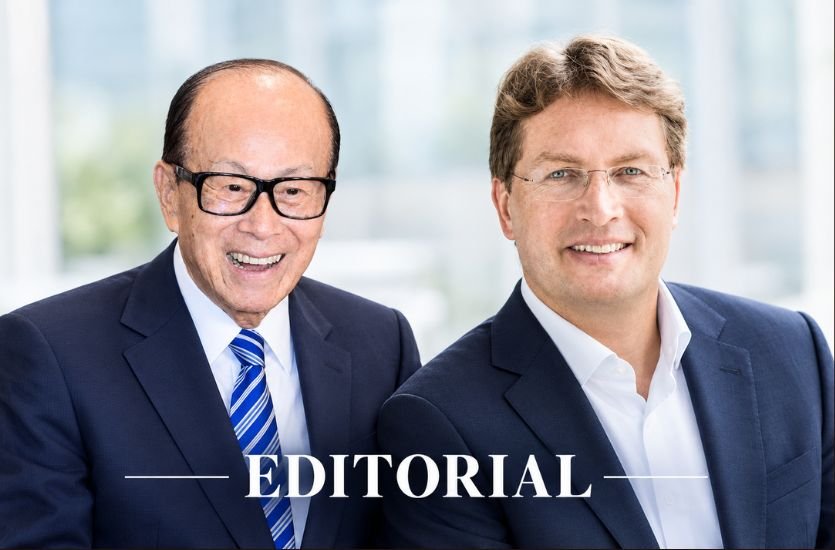
Li Ka-shing and Ola Källenius are two prominent figures in the international business world, although they built their careers in different industries and under different circumstances. Li Ka-shing became widely known for developing a diversified business empire spanning property, infrastructure, retail, telecommunications, and investments. Ola Källenius, meanwhile, rose through the ranks of the automotive industry to become chairman of Mercedes-Benz Group AG, one of the world’s best-known premium vehicle manufacturers.
Their professional journeys offer an opportunity to examine two distinct forms of business leadership. Li Ka-shing’s career reflects entrepreneurship, long-term investment, diversification, and philanthropy. Källenius’s career illustrates corporate management, international operations, automotive engineering and development, and the challenges facing an established luxury vehicle manufacturer.
Although their names can be discussed together in a comparative business article, their careers should not be presented as a shared venture or personal partnership without reliable evidence. Their significance lies in their respective contributions to global commerce and the different ways they have approached business growth, organizational development, and changing markets.
Quick Biography of Li Ka-shing and Ola Källenius
| Detail | Li Ka-shing | Ola Källenius |
|---|---|---|
| Full name | Li Ka-shing | Ola Källenius |
| Birth date | July 29, 1928 | June 11, 1969 |
| Birthplace | Chaozhou, China | Västervik, Sweden |
| National background | Hong Kong business leader | Swedish-German executive |
| Main industry | Diversified business and investment | Automotive industry |
| Known for | Building a major international business group | Leading Mercedes-Benz Group AG |
| Major organization | CK Group | Mercedes-Benz Group AG |
| Career milestone | Founded Cheung Kong Industries in 1950 | Joined Daimler-Benz in 1993 |
| Philanthropic or corporate focus | Education, healthcare, research, and investment | Premium vehicles, technology, and corporate strategy |
Who Is Li Ka-shing?
Li Ka-shing is a Hong Kong business magnate whose career developed from modest beginnings into one of the most recognized business success stories in Asia. He established his first manufacturing enterprise in 1950 and subsequently expanded into property development, infrastructure, retail, telecommunications, and other international business activities.
His rise is associated with the development of Cheung Kong, the expansion of Hutchison-related businesses, and the corporate groups that became known as CK Hutchison Holdings and CK Asset Holdings. Over several decades, Li helped build an international investment portfolio operating across different markets and industries.
Li’s professional reputation rests partly on his ability to identify opportunities beyond his original manufacturing business. Rather than remaining focused on a single product category, he pursued property development and investments that gave his business interests exposure to different sources of revenue. His career therefore offers a useful example of diversification as a long-term corporate strategy.
Another important part of his public legacy is philanthropy. Through the Li Ka Shing Foundation, he has supported education, medical research, healthcare services, and social welfare initiatives. His business career and charitable activities together have made him an influential figure in discussions about entrepreneurship, wealth creation, and the social responsibilities of successful businesspeople.
Li Ka-shing’s Early Life and the Beginning of His Career
Li Ka-shing was born in Chaozhou, in China’s Guangdong region, in 1928. His early life was shaped by difficult family circumstances and the disruption caused by war. His family moved to Hong Kong, where he faced further hardship following his father’s death from illness.
Because of these circumstances, Li left school at a young age and began working to help support his family. His early employment gave him experience in the practical realities of earning a living, managing responsibilities, and working within commercial organizations. These experiences preceded the establishment of his own business.
In 1950, Li founded Cheung Kong Industries, initially focusing on manufacturing plastic products. The business benefited from his attention to production and the use of injection-moulding technology to manufacture goods at commercial scale. Plastics provided an entry point into manufacturing, allowing him to establish a foundation from which he could pursue broader opportunities.
The early years of his career are important because they demonstrate that his eventual business interests did not begin as a diversified conglomerate. They developed through a series of decisions, investments, and changes in commercial direction. His movement from manufacturing into property and other sectors illustrates how a business can evolve when its founder recognizes opportunities outside the original market.
The Expansion of Li Ka-shing’s Business Empire
A defining development in Li Ka-shing’s career was his expansion into real estate. During the 1960s, Hong Kong’s property market presented opportunities for entrepreneurs willing to invest in development and assets over extended periods. Li built a substantial presence in this sector, establishing the foundations for the wider Cheung Kong business group.
Property investment became a central part of his business activities because it offered exposure to the development of commercial buildings, residential projects, and urban infrastructure. Real estate also provided a different business model from manufacturing, relying on land, capital allocation, development planning, and long-term asset management.
Li’s subsequent business interests expanded into ports, retail, telecommunications, utilities, and infrastructure. These activities gave his wider business group an international reach and reduced its dependence on any single industry. The strategy was not simply to own more businesses, but to develop a portfolio with operations in sectors that served different commercial needs.
CK Hutchison Holdings became associated with international businesses in ports, telecommunications, retail, and infrastructure, while CK Asset Holdings focused substantially on property development and investment. The distinction between these organizations is important because Li’s legacy is connected to a broader corporate structure rather than one company operating in every sector.
Li retired as chairman of CK Hutchison Holdings and CK Asset Holdings in 2018, becoming a senior adviser. His retirement marked a transition from direct executive leadership to an advisory role, while the companies continued under a new generation of corporate leadership.
Li Ka-shing’s Approach to Investment and Business Leadership
Li Ka-shing’s career provides a useful example of the role of diversification in business development. By moving from plastics into property and then into other sectors, he built a portfolio with exposure to multiple industries. Diversification can help a business reduce its dependence on one market, although it does not eliminate risk or guarantee successful results.
His investment history also highlights the importance of timing and capital allocation. Property development, infrastructure, and telecommunications require substantial investment and often operate over long periods. Decisions in these sectors can have consequences for years, making financial discipline, risk assessment, and careful selection of assets important considerations.
Another feature of Li’s business history is international expansion. His associated companies established operations beyond Hong Kong, connecting his business interests to markets across Europe, Asia, and other regions. Such expansion requires businesses to navigate different regulations, customer expectations, competitive conditions, and economic environments.
It would be misleading to describe every investment associated with Li as successful or to assume that diversification always produces better results. Large portfolios also face market volatility, regulatory challenges, debt exposure, and the difficulty of overseeing businesses with different operating requirements. Nevertheless, his career remains a significant case study in building and managing a diversified international business group.
Li Ka-shing’s Philanthropy and Social Contributions
Philanthropy is an important part of Li Ka-shing’s public profile. The Li Ka Shing Foundation supports initiatives involving education, healthcare, medical research, and social development. These activities extend his public influence beyond corporate ownership and investment.
Education has been one of the foundation’s major areas of interest. Support for educational institutions and reform initiatives can expand access to learning, strengthen research capabilities, and help institutions develop resources for future generations. Medical research and healthcare services represent another central area, reflecting the role charitable funding can play in supporting scientific work and improving healthcare access.
Li’s philanthropic activities also provide a broader perspective on the relationship between business success and public benefit. Wealth generated through commercial activity can be used to support organizations and projects that are not primarily designed to produce financial returns. However, the outcomes of charitable programs should be assessed through their specific activities and results rather than through the donor’s reputation alone.
His foundation has helped establish philanthropy as a significant component of his legacy. For readers interested in Li Ka-shing, his charitable work offers another dimension of his career alongside manufacturing, property development, investment, and corporate leadership.
Who Is Ola Källenius?
Ola Källenius is a Swedish-German business executive best known for his leadership at Mercedes-Benz Group AG. Born on June 11, 1969, in Västervik, Sweden, he studied finance and accounting at the Stockholm School of Economics and international management through the CEMS program at the University of St. Gallen.
Källenius joined Daimler-Benz in 1993 through its International Management Associate Program. Unlike Li Ka-shing, who founded a manufacturing business before moving into other sectors, Källenius developed his career within an established multinational corporation. His progression involved positions in corporate controlling, procurement, operations, high-performance engines, vehicle manufacturing, marketing, sales, and research and development.
These roles exposed him to different parts of the automotive business. The industry requires coordination between engineering, manufacturing, supply chains, product design, distribution, brand management, and customer service. Experience across these areas can help an executive understand how individual decisions affect the wider organization.
Källenius became a member of Daimler AG’s Board of Management in 2015 and its chairman on May 22, 2019. Daimler AG later adopted the name Mercedes-Benz Group AG. He also serves as chairman of the Board of Management of Mercedes-Benz AG, the company’s principal passenger-car and van operating entity.
His leadership is associated with the challenges of maintaining a premium automotive brand while the industry undergoes technological, regulatory, and competitive changes. His career provides a different perspective on business leadership from Li Ka-shing’s experience as an entrepreneur and investor.
Ola Källenius’s Education and Early Professional Experience
Källenius’s education helped prepare him for management responsibilities in an international industrial company. His studies in finance and accounting provided a foundation in financial performance, business planning, and resource allocation. His international management education also supported a career in an organization operating across national markets.
After joining Daimler-Benz in 1993, he worked in corporate controlling in the United States before moving into procurement roles connected to Mercedes-Benz vehicles and powertrain systems. Procurement is particularly important in automotive manufacturing because vehicles depend on extensive supplier networks and complex component systems. Purchasing decisions affect cost, quality, production schedules, and relationships with suppliers.
In 2003, Källenius became executive director of operations at McLaren Automotive in the United Kingdom. He later led Mercedes-Benz HighPerformanceEngines, also in the UK, before returning to a leadership position at Mercedes-Benz U.S. International in Alabama in 2009.
In 2010, he became managing director of Mercedes-AMG, the performance-oriented division associated with Mercedes-Benz. He subsequently moved into group marketing and sales leadership before joining the board in 2015.
This sequence of positions is significant because it shows how Källenius gained experience in different business functions and geographic markets. His career was not limited to finance or one product division. Instead, it developed through roles that connected operations, performance vehicles, sales, and corporate strategy.
Ola Källenius and His Leadership at Mercedes-Benz
Källenius became chairman of Daimler AG in May 2019, taking responsibility for a company with a long automotive history and a globally recognized premium brand. The business later became Mercedes-Benz Group AG, reflecting a corporate structure focused on the Mercedes-Benz name and its core automotive activities.
As chairman, Källenius operates in a competitive environment shaped by changing customer expectations, technological development, environmental regulations, and competition from established manufacturers and newer automotive companies. Leadership in this setting involves balancing the company’s historical strengths with the need to adapt its products and operations.
Mercedes-Benz has built its reputation around vehicle engineering, design, safety, comfort, and premium positioning. Protecting that reputation requires continued investment in product development while managing costs and responding to changes in the global automotive market. Executives must consider both the immediate financial performance of the business and the investments needed to maintain its competitiveness over time.
Källenius’s responsibilities also involve coordinating a large international organization. Decisions concerning manufacturing locations, supplier relationships, vehicle development, distribution, and regional sales can affect the performance of the group across multiple markets.
His position illustrates the difference between leading a corporation and founding an entrepreneurial business. An executive chairman must work within an established governance structure, cooperate with other board members, and answer to shareholders while directing the company’s strategic priorities.
Electric Vehicles and the Changing Automotive Industry
One of the major issues facing Mercedes-Benz under Källenius’s leadership is the transition toward electric mobility. Electric vehicles are changing how manufacturers develop products, manage supply chains, compete on technology, and communicate value to customers.
Traditional automotive manufacturing relies heavily on internal combustion engines and associated mechanical systems. Electric vehicles require different powertrain components, battery technology, electronic systems, software, and charging-related considerations. Manufacturers must therefore invest in new capabilities while maintaining existing product lines that continue to serve customers.
Mercedes-Benz has introduced electric vehicles within its broader product portfolio, while continuing to operate in the premium passenger-car and van markets. The pace of electrification depends on multiple factors, including consumer demand, charging infrastructure, production costs, government policies, and competition.
For Källenius, the challenge is not simply to introduce more electric models. The company must also determine how to make these products commercially attractive, maintain premium quality, manage manufacturing expenses, and develop technology that meets customer expectations.
Digital technology represents another important part of this transition. Modern vehicles increasingly incorporate connected services, digital interfaces, driver-assistance features, and software updates. These developments can change how customers interact with vehicles and how manufacturers provide services after a vehicle has been sold.
However, the transition also creates uncertainty. Consumer demand for electric vehicles varies by market, and manufacturers face pressure from battery costs, price competition, and changing regulations. A successful strategy requires adapting to these conditions rather than assuming that one technology or market approach will perform equally well everywhere.
Mercedes-Benz’s Global Business Strategy
Mercedes-Benz operates in international markets where customer preferences, regulations, economic conditions, and competitive pressures differ considerably. A strategy that works well in one region may require adjustments in another.
Premium automotive manufacturers must protect their brands while developing products that reflect local demand. They also need to manage production networks, supplier relationships, distribution channels, and financial services across different countries.
Källenius’s experience in the United States, the United Kingdom, and Germany provides context for his leadership of an international organization. His previous responsibilities covered operational management, high-performance engines, procurement, marketing, sales, and research and development.
China is also an important market for the global automotive industry, particularly for manufacturers competing in the premium segment and for companies developing electric vehicles. Competition from domestic manufacturers, changes in consumer preferences, and advances in vehicle software make the market strategically significant.
Mercedes-Benz must therefore consider global competition alongside its established strengths in engineering, design, and brand recognition. Maintaining a premium position depends on more than historical reputation; it also requires continued product development, customer trust, operational efficiency, and appropriate responses to market changes.
The company’s strategy demonstrates the complexity of managing a global manufacturing business. Unlike a diversified investment group, an automotive manufacturer must coordinate large-scale production and product development while managing substantial fixed costs and long development cycles.
Li Ka-shing and Ola Källenius: Comparing Their Leadership Styles
Comparing Li Ka-shing and Ola Källenius reveals different approaches to business leadership, shaped by their professional backgrounds.
Li Ka-shing built businesses through entrepreneurship, asset investment, acquisitions, and expansion into new industries. His career involved deciding where to allocate capital and how to develop a collection of businesses with different sources of revenue. The breadth of his interests allowed his associated groups to participate in multiple sectors.
Källenius, in contrast, developed his career within a major automotive company. His progression involved acquiring experience across several functions before taking responsibility for the wider organization. His work requires balancing corporate strategy with product development, industrial operations, financial performance, and changing customer demand.
Their approaches also differ in terms of business scope. Li Ka-shing’s career is closely associated with diversification across industries, while Källenius leads a group whose central identity remains tied to premium passenger vehicles, vans, and related financial services.
Despite these differences, their careers share several themes. Both illustrate the importance of understanding markets, making decisions under uncertainty, and adapting organizations to changing conditions. Both also operate within international business environments where decisions can affect employees, customers, suppliers, investors, and communities.
Neither career should be reduced to a single management formula. Entrepreneurship and investment involve different responsibilities from executive leadership in a multinational manufacturer. Their experiences are best understood through the demands of the businesses they helped build or lead.
Are Li Ka-shing and Ola Källenius Connected?
The keyword “Li Ka-shing and Ola Källenius” brings together two internationally recognized business figures, but a comparison of their careers should not be mistaken for evidence of a direct relationship.
Li Ka-shing is associated with CK Hutchison Holdings, CK Asset Holdings, and his philanthropic foundation. Ola Källenius is associated with Mercedes-Benz Group AG and its automotive operations. Their publicly documented professional histories follow different paths and focus on different business sectors.
There is also an important distinction between Li Ka-shing and Li Shufu, the Chinese automotive entrepreneur known as Eric Li. Li Shufu founded Geely, an automotive group with investments in the international car industry, including a significant shareholding in Mercedes-Benz Group. Li Ka-shing and Li Shufu are different individuals with different business backgrounds.
This distinction matters when discussing Chinese investment in the automotive industry or the ownership structure of Mercedes-Benz. Similar surnames do not establish a business connection, and any claim that Li Ka-shing personally partnered with Källenius would require specific, credible documentation.
A factual article can still compare the two figures without claiming they worked together. Their different career paths provide a useful way to explore entrepreneurship, corporate leadership, investment diversification, and the management of global businesses.
Business Lessons from Their Professional Journeys
The careers of Li Ka-shing and Ola Källenius offer several broader insights into how businesses develop and respond to change.
Li Ka-shing’s early experience in manufacturing illustrates how a business can develop from a relatively focused operation into a larger organization. His subsequent move into property and other sectors demonstrates the potential importance of identifying opportunities beyond an original product or service. It also highlights the need to assess investment risks carefully when expanding into unfamiliar industries.
Källenius’s career illustrates the value of developing expertise across multiple functions within an organization. Experience in finance, procurement, operations, sales, and research can provide a wider understanding of the decisions required to manage a multinational manufacturer. His progression also demonstrates that leadership in a technology-intensive industry requires responding to developments that can alter products, production processes, and customer expectations.
Both careers highlight the importance of long-term thinking, although the meaning of long-term planning differs by business model. An investor may focus on asset values, portfolio composition, and opportunities for expansion. An automotive executive must consider product-development cycles, manufacturing capacity, research spending, and the evolution of vehicle technology.
Another lesson concerns adaptability. Business conditions change through economic cycles, technological advances, competitive pressure, and shifts in customer behavior. Leaders must evaluate these changes using evidence rather than relying solely on past success.
Finally, the careers show that reputation is built through different forms of responsibility. Entrepreneurs and investors are associated with the businesses and assets they develop, while corporate executives are accountable for guiding existing organizations and implementing strategy within established governance systems.
The Lasting Influence of Li Ka-shing and Ola Källenius
Li Ka-shing’s influence is reflected in the international reach of the business groups associated with his career, as well as in his support for education, healthcare, and medical research. His journey from manufacturing to a diversified business portfolio has made him a significant figure in the history of Hong Kong entrepreneurship and investment.
Ola Källenius’s influence is connected to his leadership of Mercedes-Benz Group during a period of considerable change in the automotive industry. His responsibilities include protecting the company’s premium positioning while navigating electrification, digital technology, international competition, and the financial demands of developing new vehicles.
Their contributions differ because their roles and industries differ. Li Ka-shing’s career emphasizes the development and allocation of capital across multiple businesses, while Källenius’s career emphasizes the management and strategic direction of a global automotive manufacturer.
Together, their stories provide a useful perspective on the variety of paths that can lead to business influence. They also demonstrate why understanding a leader’s industry, professional background, and responsibilities is essential when evaluating their achievements.
Conclusion
Li Ka-shing and Ola Källenius represent two distinct forms of leadership in the global business environment. Li Ka-shing built an international business legacy through manufacturing, property development, investment, diversification, and philanthropy. Ola Källenius advanced through the automotive industry to lead Mercedes-Benz Group, where he faces the challenges of premium branding, technological change, and international competition.
Their careers are not interchangeable, and a direct partnership between them should not be assumed. Nevertheless, examining them together offers valuable insight into entrepreneurship, corporate governance, strategic investment, and the importance of adapting to changing markets.
Ultimately, the significance of Li Ka-shing and Ola Källenius lies in what their separate professional journeys reveal about business leadership. One demonstrates the development of a diversified business empire, while the other illustrates the responsibilities of guiding a major automotive company through an evolving industrial landscape.
READ MORE : Kevin Corke Spouse
READ MORE : Phebe Novakovic and Brian Moynihan