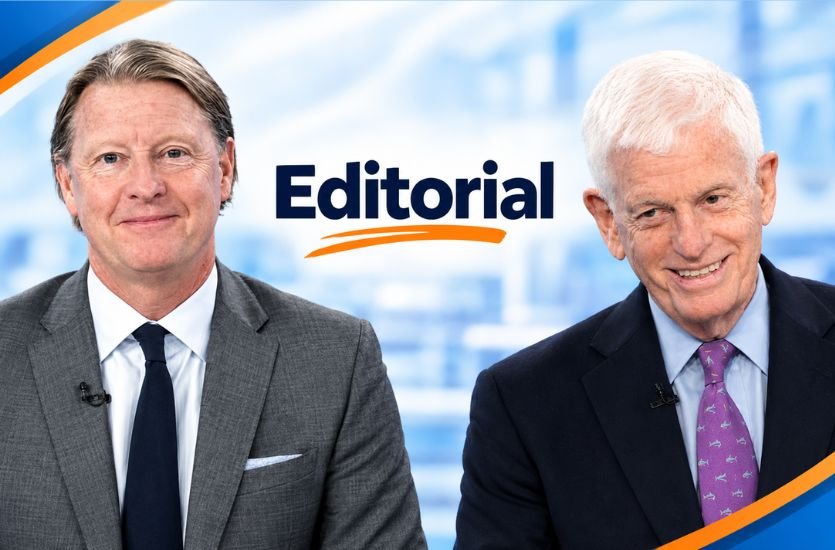
Hans Vestberg and Mario Gabelli are two recognized figures in the American business landscape, known for their contributions to telecommunications and investment management. Although their professional careers developed in different industries, both have built reputations through specialized knowledge, strategic decision-making, and long-term business thinking. Hans Vestberg became widely known for his leadership at Ericsson and Verizon, while Mario Gabelli established himself as an investor and the founder of GAMCO Investors.
Interest in Hans Vestberg and Mario Gabelli brings together two different areas of business: the development of modern communication networks and the financial analysis of companies. Understanding their backgrounds helps explain how technology executives and investment professionals influence corporate strategy, business growth, and the broader economy. However, their professional similarities should not be confused with evidence of a direct personal relationship or formal business partnership.
Quick Bio Table
| Detail | Hans Vestberg | Mario Gabelli |
|---|---|---|
| Full name | Hans Vestberg | Mario Joseph Gabelli |
| Nationality | Swedish | American |
| Profession | Telecommunications executive | Investor and asset-management executive |
| Known for | Leadership at Ericsson and Verizon | Founding GAMCO Investors |
| Major industry | Telecommunications and technology | Finance and investment management |
| Educational background | Business studies at Uppsala University | Fordham University and Columbia Business School |
| Key expertise | Network infrastructure and corporate strategy | Value investing and financial research |
| Major organization | Verizon Communications | GAMCO Investors |
Who Is Hans Vestberg?
Hans Vestberg is a Swedish business executive whose career has been closely associated with telecommunications, network infrastructure, and technology leadership. He gained international recognition through senior positions at Ericsson, a major telecommunications equipment and services company, and Verizon Communications, one of the leading telecommunications providers in the United States.
Vestberg’s professional journey reflects the development of the telecommunications industry from traditional communication systems toward advanced mobile networks, high-speed connectivity, and digital services. His leadership experience has involved managing large organizations, making long-term infrastructure decisions, and adapting business strategies to changing technological demands.
One of the defining features of his career has been the combination of operational management and technology strategy. Telecommunications companies must coordinate technical teams, infrastructure investment, customer services, and financial objectives. Executives in this sector therefore need to understand both the capabilities of communication networks and the commercial requirements of operating a large business.
Vestberg’s career at Ericsson provided the foundation for his later responsibilities at Verizon. His subsequent work in the United States placed him at the center of discussions about 5G deployment, broadband expansion, network reliability, and the future of digital connectivity.
Hans Vestberg’s Early Career and Education
Hans Vestberg was born on June 23, 1965, in Hudiksvall, Sweden. He studied business administration at Uppsala University, developing an educational foundation that supported his later work in corporate management and international business.
He joined Ericsson in 1988, beginning a career that would eventually take him into senior executive positions. Ericsson operates in a complex international market where telecommunications providers depend on equipment, software, services, and network technologies to maintain and expand their communication systems.
During his years with the company, Vestberg held positions involving different markets and business operations. This experience exposed him to international management, financial planning, and the practical challenges of operating across geographical regions.
His progression through the organization demonstrated the importance of understanding multiple aspects of a business before taking responsibility for its overall direction. Working across different functions can help executives appreciate the relationship between operational performance, customer needs, technological development, and financial results.
Vestberg’s career also illustrates how telecommunications leadership requires continuous adaptation. Mobile technology changes rapidly, and companies must make decisions about research, equipment, infrastructure, and commercial priorities well before the results of those investments become fully visible.
Leadership at Ericsson
Vestberg became Ericsson’s chief financial officer in 2007 and later served as president and chief executive officer from 2010 to 2016. His time at the company coincided with significant changes in telecommunications, including increasing demand for mobile data, expanding smartphone adoption, and the development of new network technologies.
As CEO, he was responsible for guiding a global organization operating in a competitive technology market. Ericsson’s business involved supplying telecommunications equipment and services to network operators, making its performance closely connected to investment decisions made by mobile and broadband providers around the world.
The role required attention to customer relationships, operational efficiency, technological development, and the company’s competitive position. Telecommunications equipment manufacturers must respond to changing standards while maintaining reliable products and services for customers who operate critical communication networks.
Vestberg’s leadership period also demonstrated the challenges of managing a technology company through industry changes. Competitive pressure, customer spending patterns, and financial performance can affect even established businesses. Executive leadership therefore involves balancing long-term technological opportunities with immediate operational and commercial realities.
After leaving Ericsson in 2016, Vestberg continued his career in telecommunications. His experience at the company remained an important part of his professional background and contributed to his subsequent responsibilities at Verizon.
Hans Vestberg at Verizon Communications
Vestberg joined Verizon in 2017 as executive vice president and president of global networks, also serving as chief technology officer. In August 2018, he became the company’s chief executive officer, and he took on the additional role of chairman in 2019.
Verizon operates wireless networks, broadband services, and communications solutions for consumers, businesses, and public-sector customers. Its operations require substantial investment in network equipment, spectrum, fiber infrastructure, cybersecurity, and customer support.
Vestberg’s leadership was particularly associated with Verizon’s 5G strategy. Fifth-generation wireless technology was developed to support improvements in mobile connectivity and provide capabilities for applications requiring greater network performance. Its commercial development created opportunities in consumer communications, enterprise connectivity, and certain industrial applications.
Deploying a large-scale 5G network requires more than introducing new mobile devices. Telecommunications providers must invest in spectrum, network equipment, backhaul connections, software, and ongoing maintenance. They must also determine how quickly to expand coverage while managing costs and competing for customers.
Vestberg’s responsibilities included overseeing these strategic considerations and guiding Verizon’s investments in its network. The company’s 5G initiatives also formed part of its broader effort to strengthen its position in wireless services and expand its home internet offerings.
Another important area was broadband expansion. Reliable broadband infrastructure supports remote work, online education, digital entertainment, cloud-based business services, and many other activities. Verizon’s network investments were intended to serve customers whose connectivity requirements continued to evolve.
In October 2025, Verizon announced a leadership transition that appointed Dan Schulman as CEO and Mark Bertolini as chairman. Vestberg left those positions and was scheduled to serve as a special adviser through October 4, 2026, while assisting with the transition and the planned integration of Frontier Communications. His executive career at Verizon is an important part of the company’s recent history, but his former titles should not be presented as current positions.
Mario Gabelli: Background and Professional Identity
Mario Joseph Gabelli is an American investor, financial analyst, and asset-management executive. He is best known for founding GAMCO Investors and developing a research-oriented approach to identifying investment opportunities.
Unlike Vestberg, whose career has focused on operating telecommunications businesses, Gabelli’s work centers on studying companies, evaluating securities, and managing investment portfolios. His professional interests involve understanding how businesses generate earnings, how their assets contribute to their value, and what developments might influence their future financial performance.
Gabelli’s approach emphasizes detailed research rather than relying exclusively on short-term movements in stock prices. Investment professionals examine a company’s financial statements, competitive environment, management decisions, industry conditions, and potential growth opportunities before deciding whether an investment is attractive.
This approach requires patience and analytical discipline. A company can have strong underlying assets yet face temporary market pressure, while another business may appear inexpensive because investors anticipate significant difficulties. Distinguishing between these situations requires careful investigation and a clear understanding of risk.
Gabelli’s career has made him a prominent figure in value-oriented investment management. His work through GAMCO Investors reflects the importance of fundamental research in assessing businesses and making portfolio decisions.
Education and the Foundations of Mario Gabelli’s Career
Gabelli graduated summa cum laude from Fordham University with a bachelor’s degree in accounting and later earned an MBA from Columbia Business School. He also holds the Chartered Financial Analyst designation, a professional qualification associated with investment analysis and portfolio management.
His educational background provided a foundation in accounting, financial analysis, and business valuation. These disciplines are central to investment management because investors need to understand the economic performance of businesses before estimating their potential worth.
Accounting helps investors evaluate revenue, expenses, assets, liabilities, and cash flow. Financial analysis helps explain how those figures relate to a company’s operating performance, capital structure, and future prospects. Business valuation brings these elements together to estimate what an enterprise may be worth under different assumptions.
Gabelli applied this research-oriented foundation throughout his investment career. His work demonstrates how financial professionals can use detailed company analysis to identify opportunities that may not be immediately apparent from market prices alone.
The Founding and Development of GAMCO Investors
Gabelli’s investment business began with Gabelli & Company, an institutional research firm established in 1976. In 1977, he founded GAMCO Investors to provide investment management services through separately managed accounts. The organization subsequently expanded into additional investment products, including mutual funds.
The development of GAMCO Investors reflects the growth of an investment business built around research and portfolio management. Rather than concentrating on a single stock or industry, investment management firms may examine numerous sectors and companies to identify opportunities that match their investment objectives.
GAMCO’s research process focuses on evaluating businesses, understanding their underlying value, and considering events that could influence their market prices. Its investment activities have included publicly traded companies across a variety of industries.
Building an investment management organization also requires more than identifying attractive securities. Firms must manage portfolios, monitor risks, communicate with clients, meet regulatory obligations, and maintain operational systems that support investment decisions.
Gabelli’s leadership has connected his individual investment philosophy with the broader organization. GAMCO has developed a range of investment funds and services for different client groups, including individual investors and institutions.
The firm’s history illustrates how an investment professional can develop a distinctive research approach and build an organization around that methodology.
Understanding Mario Gabelli’s Value Investing Philosophy
Value investing involves estimating the underlying economic value of a business and comparing that estimate with the price at which its shares trade. The objective is to identify situations in which the market price may not fully reflect the company’s potential or underlying assets.
Gabelli is associated with a methodology known as Private Market Value with a Catalyst. Private Market Value refers to an estimate of what an informed buyer might consider paying for a business or its assets. A catalyst is an event or development that could help bring market attention to that underlying value.
Potential catalysts may include corporate restructuring, asset sales, changes in industry conditions, management decisions, or other developments that affect how investors view a company. These possibilities require research because not every anticipated event occurs, and some developments take longer than expected.
The approach also involves considering a margin of safety. An investor may seek a meaningful difference between the estimated value of a business and its market price to help account for uncertainty in the valuation.
However, value investing does not guarantee profits. Estimates of business value depend on assumptions about future earnings, competition, costs, and economic conditions. A share price that appears inexpensive can decline further if the company’s circumstances deteriorate.
Gabelli’s investment philosophy highlights the importance of combining research with risk awareness. Successful analysis requires understanding not only why an investment might be attractive but also what could cause the original assessment to be wrong.
Hans Vestberg and Mario Gabelli: Comparing Their Careers
The careers of Hans Vestberg and Mario Gabelli offer two different perspectives on business decision-making. Vestberg’s work has centered on operating large telecommunications organizations and directing technology investment. Gabelli’s work has centered on analyzing businesses and making investment decisions based on their estimated value.
A telecommunications executive must consider how infrastructure spending affects network quality, customer satisfaction, competitive positioning, and financial performance. Many investments involve significant initial costs and require years of planning before their full benefits become apparent.
An investment manager, by contrast, must determine whether a business represents an attractive opportunity at its current price. That assessment involves reviewing the company’s financial condition, competitive position, potential catalysts, and risks.
Despite these differences, both careers involve long-term thinking. Infrastructure decisions can influence a telecommunications company’s performance for years, while investment decisions may depend on how a business develops over an extended period.
Both fields also require specialized knowledge. Vestberg’s experience was built through telecommunications operations and executive management. Gabelli’s expertise developed through financial research, valuation, and investment management.
The comparison is useful because it shows how different professional roles contribute to business activity. Executives make decisions about how organizations operate and invest, while investors assess the economic prospects and market value of those organizations.
Is There a Direct Connection Between Hans Vestberg and Mario Gabelli?
The keyword “Hans Vestberg and Mario Gabelli” may suggest that the two individuals share a specific personal or professional connection. However, reliable public information reviewed for this article does not establish that they are relatives, close personal associates, or formal business partners.
Their careers do have some broader industry overlap. Vestberg led Verizon, a major telecommunications company, while Gabelli has held leadership roles in businesses connected to broadband transport and communications services, including LICT Corporation. Gabelli’s investment activities also involve evaluating publicly traded companies across different sectors.
These circumstances place both individuals within the wider business environment in which telecommunications companies, investors, and corporate decision-makers operate. Nevertheless, shared industry interests do not prove that two individuals have worked together or participated in a joint venture.
A specific claim about shared investments, ownership, or direct business dealings would require supporting evidence from corporate disclosures, regulatory filings, or official company announcements. Without such evidence, the most accurate approach is to discuss their professional backgrounds separately and explain the broader context in which their careers may intersect.
This distinction matters because search results can place two names together even when the available information does not establish a direct relationship. A combined keyword should therefore be treated as a research topic rather than proof of a partnership.
Why Hans Vestberg and Mario Gabelli Attract Business Interest
Both individuals have been associated with organizations that influence important parts of the economy. Telecommunications infrastructure supports communication, commerce, and digital services, while investment management helps direct capital toward businesses and financial markets.
Vestberg’s career is relevant to discussions about network modernization, 5G technology, broadband expansion, and the management of large technology organizations. His experience at Ericsson and Verizon provides examples of the challenges involved in maintaining competitive infrastructure while responding to changes in customer demand.
Gabelli’s career is relevant to discussions about equity research, company valuation, investment funds, and the principles of value investing. His work through GAMCO Investors provides an example of how a research-driven investment philosophy can be developed into a financial services organization.
Their professional histories also demonstrate the importance of adapting to different market conditions. Telecommunications companies must respond to technological changes and competing network providers. Investment managers must respond to economic developments, company performance, and changing market expectations.
For business readers, these different perspectives offer a useful way to understand how corporate strategy and financial analysis relate to one another. They are complementary parts of the broader business environment, even when no direct relationship between particular individuals has been established.
Frequently Asked Questions
Who is Hans Vestberg?
Hans Vestberg is a Swedish telecommunications executive best known for serving as CEO of Ericsson and later CEO and chairman of Verizon Communications. His career has involved international business leadership, network infrastructure, and 5G technology strategy.
Who is Mario Gabelli?
Mario Gabelli is an American investor and asset-management executive who founded GAMCO Investors. He is widely recognized for his value-investing philosophy and research-driven approach to evaluating companies.
Are Hans Vestberg and Mario Gabelli related?
No publicly verified family relationship between Hans Vestberg and Mario Gabelli has been established in the reliable sources reviewed for this article.
Have Hans Vestberg and Mario Gabelli worked together?
The available information reviewed does not establish a formal partnership or joint venture between them. Any specific claim about direct business dealings should be supported by reliable corporate records or official disclosures.
What is the main difference between Hans Vestberg and Mario Gabelli?
Vestberg’s career has focused on telecommunications technology and executive management, whereas Gabelli’s career has focused on investment research, business valuation, and asset management.
What is Mario Gabelli known for in investing?
Gabelli is known for value investing and his Private Market Value with a Catalyst methodology. This approach emphasizes estimating the underlying value of businesses and identifying developments that could influence how the market values them.
What was Hans Vestberg’s role at Verizon?
Vestberg served as Verizon’s CEO from 2018 to 2025 and chairman from 2019 to 2025. Verizon announced his departure from those roles in October 2025 and a transition to an advisory position through October 4, 2026.
Conclusion
Hans Vestberg and Mario Gabelli represent two distinct areas of business leadership. Vestberg built his reputation through telecommunications management, international executive experience, and leadership associated with Verizon’s 5G strategy. Gabelli developed his reputation through investment research, value investing, and the growth of GAMCO Investors.
Their careers differ in purpose and professional responsibilities, but both illustrate the importance of expertise, research, and strategic decision-making. Vestberg’s experience highlights the challenges of developing and managing communication infrastructure, while Gabelli’s work demonstrates the role of financial analysis in evaluating businesses and investment opportunities.
Although the combined keyword may encourage readers to look for a direct connection, the evidence reviewed does not establish a formal partnership or family relationship between the two men. Their professional backgrounds are best understood as separate careers that offer different perspectives on technology, finance, and corporate strategy.
For readers interested in business leadership, telecommunications, or investing, examining both individuals provides a broader understanding of how companies create value, how executives make long-term decisions, and how investors assess the opportunities and risks associated with business performance.
READ MORE : Ray Dalio and Patricia Poppe
READ MORE : Derek Jeter and Gail Boudreaux



One thought on “Hans Vestberg and Mario Gabelli: Careers, Leadership, and Business Influence”