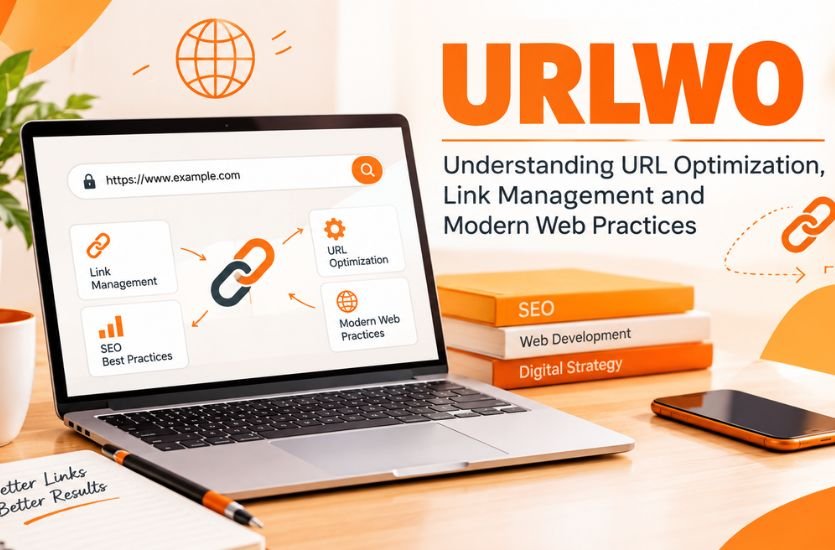
The internet depends on URLs every day. Whenever someone opens a website, reads an article, visits a product page, shares a social media post, or scans a QR code, a web address is usually involved. As websites and digital campaigns have become more complicated, managing those addresses has become increasingly important.
This is where the term URLWO has started appearing across online discussions. However, URLWO is not as straightforward as established web terms such as URL, HTTP, HTML, or DNS. Different websites currently describe it in different ways. Some connect URLWO with URL Workflow Optimization or user-friendly URL optimization, while others describe it as a broader approach to link management, URL shortening, tracking, branding, and redirects.
Because of these differences, URLWO is best approached carefully. Rather than treating it as a universally recognized technology, it is more useful to examine the URL and link-management practices commonly associated with the term. These practices include creating readable URLs, maintaining consistent structures, organizing links, managing redirects, measuring link activity, and making web addresses easier to understand.
Quick Bio
| Detail | Information |
|---|---|
| Keyword | URLWO |
| Common context | URL optimization and link management |
| Other reported meaning | URL Workflow Optimization |
| Related areas | SEO, URLs, redirects, analytics, digital marketing |
| Technical standard | Not an established web standard |
| Main purpose discussed online | Creating, organizing, optimizing, and managing web links |
| Current status | Emerging and inconsistently defined term |
What Is URLWO?
URLWO is an emerging web-related term associated with the organization, optimization, and management of URLs. Its exact meaning varies between online sources, which makes it different from established technical terminology with a fixed definition.
One group of articles describes URLWO as a form of URL Workflow Optimization, where URLs are deliberately planned and managed so that they remain readable, logical, stable, and useful. Another group presents URLWO more like a link-management concept involving shortened URLs, branded links, redirects, tracking, analytics, and campaign organization.
The most practical interpretation is therefore broader than a single software feature. URLWO can be discussed in relation to the way websites and digital teams create, organize, distribute, monitor, and maintain web addresses.
This distinction is important because some online articles describe URLWO as if it were already a standardized software technology. Current search results do not establish one universally accepted definition or technical standard for the term. Recent coverage has specifically pointed out the conflicting descriptions and the lack of clear evidence supporting some of the stronger product-related claims.
What Does URLWO Stand For?
There is no reliably established universal full form for URLWO.
Several websites use variations involving Uniform Resource Locator and Workflow Optimization, while others describe URLWO more generally as a URL-optimization concept without assigning a formal expansion.
This difference should not be ignored. When an acronym belongs to an established technical standard, its expansion normally remains consistent across authoritative documentation. In the case of URLWO, current online descriptions do not show that same level of agreement.
For that reason, it is safer to explain the commonly reported interpretation rather than claim that one particular full form is officially confirmed. In contexts where URLWO is used to describe a URL-management methodology, URL Workflow Optimization is one of the commonly reported expansions.
URLWO and Traditional URLs
To understand URLWO, it is first necessary to understand the role of a normal URL.
A URL, or Uniform Resource Locator, is an address used to locate a resource on the web. A simple URL might contain a domain name followed by a path identifying a particular page.
For example, a website might use an address such as:
example.com/blog/url-optimization
This address provides useful information before the page is opened. The domain identifies the website, while the path indicates that the page belongs to a blog section and concerns URL optimization.
A different URL might contain numbers, database identifiers, parameters, or tracking information. Such addresses can still work perfectly well, but they may be less readable to ordinary visitors.
The ideas associated with URLWO generally focus on improving the way these addresses are planned and managed. The objective is not to replace URLs. Instead, the emphasis is on making URLs more useful, understandable, organized, and manageable.
URLWO and URL Optimization
URL optimization is one of the clearest areas associated with the URLWO concept.
A well-designed URL should communicate useful information about its destination without becoming unnecessarily complicated. A page about website security, for example, might use a path such as example.com/website-security, which is easier to understand than a random string of numbers.
Good URL structure can contribute to a cleaner website architecture. Categories, directories, and page paths can be arranged in a logical way so that visitors and website administrators can understand how content is organized.
However, URL optimization should not be confused with simply making every URL as short as possible. A very short URL can still be meaningless. The better objective is clarity.
A useful URL should generally be descriptive, consistent, readable, and stable. Changing established addresses repeatedly just to make them slightly shorter can create unnecessary redirects and broken references.
URLWO and URL Shortening
URL shortening is another concept frequently connected with URLWO.
A URL shortener takes a longer destination address and provides a shorter address that redirects visitors to the original page. This can be particularly useful when a URL contains long parameters or when a compact link is needed for social media, printed material, advertisements, messages, or presentations.
For example, a complicated destination might contain campaign parameters that make the address difficult to share. A shortened address can provide a cleaner public-facing version while still sending visitors to the original page.
Several current articles describe URLWO as a URL-shortening or smart-link platform. However, other research into the term has questioned whether a clearly verifiable, established URLWO shortening service currently exists in the form described by those articles.
Therefore, URL shortening should be treated as a practice associated with some descriptions of URLWO rather than as a confirmed universal function of URLWO itself.
URLWO and Link Management
Link management is broader than URL shortening.
A link-management process can involve storing links, organizing them by campaign or project, monitoring destinations, maintaining redirects, creating consistent naming systems, and reviewing performance information.
For businesses managing hundreds or thousands of digital links, organization can become particularly important. Marketing teams may create separate links for advertisements, newsletters, social media campaigns, printed materials, events, and different landing pages.
Without a consistent system, older links can become difficult to identify. A URLWO-style approach can therefore be understood as an emphasis on making the entire link lifecycle easier to manage.
This interpretation also explains why different websites connect URLWO with both URL optimization and link management. They are related areas, even though they are not exactly the same thing.
URLWO and Branded URLs
Branded URLs are another concept commonly mentioned in discussions about modern link management.
A branded link can contain recognizable wording instead of a completely random sequence of characters. This can make the address easier to identify when it appears in a marketing campaign or promotional message.
For example, a company promoting a seasonal campaign might prefer a recognizable address associated with the campaign rather than an automatically generated combination of unrelated letters and numbers.
Branding can improve consistency, but it should not be confused with security. A short or attractive URL is not automatically trustworthy. Users should still consider the domain and final destination before providing sensitive information.
This is particularly important because shortened or redirected links can sometimes hide the final destination. URL organization should therefore be combined with transparent and responsible link practices.
URLWO and Redirects
Redirects are an important part of URL management.
A redirect sends visitors from one web address to another. Website owners commonly use redirects when pages move, domains change, content is consolidated, or an old address needs to continue directing visitors to a current destination.
A carefully managed redirect can preserve access to an existing page while allowing the website structure to change.
Poor redirect management can create problems. Multiple redirect steps can make troubleshooting harder, while incorrect redirects can send visitors to irrelevant or nonexistent pages.
A URLWO-style workflow should therefore consider not only how a URL looks when it is created but also what happens to that URL over time.
URLWO and Analytics
Link analytics are frequently mentioned in articles about URLWO. Some descriptions associate the concept with measuring clicks, traffic sources, device categories, geographic information, and campaign performance.
Analytics can be useful when a business distributes the same type of content through multiple channels. Separate campaign links may help a marketing team understand how much interaction comes from email, social media, advertising, or printed materials.
However, a click does not automatically represent a successful conversion. Someone can click a link without purchasing a product, completing a form, subscribing to a service, or reading an article.
Privacy also matters. Organizations using tracking systems should understand what information is collected, how it is processed, and how long it is retained.
Consequently, analytics should be considered a supporting component of link management rather than proof that a particular URL strategy is automatically successful.
Does URLWO Improve SEO?
URLWO itself should not be treated as a guaranteed SEO ranking technique.
Some websites claim that URLWO can improve search visibility, crawling, rankings, or click-through rates. However, these claims should be separated from the established principles of URL optimization. Current search results show that different publishers make stronger or weaker claims about the term, and there is no clear evidence that URLWO itself is a recognized Google ranking factor.
Good URL structure can still be useful for SEO.
Readable URLs can make page destinations easier for users to understand. Logical website architecture can also make large sites easier to organize and maintain. Clear internal structures can support navigation and content management.
But SEO depends on far more than URLs. Content quality, relevance, technical accessibility, internal linking, page experience, mobile usability, website structure, and many other factors contribute to organic search performance.
A shorter URL cannot compensate for poor content.
URLWO for Businesses
Businesses can benefit from applying organized URL practices regardless of whether they use the term URLWO.
A growing company may eventually have product pages, service pages, blog articles, landing pages, advertisements, event pages, customer resources, and campaign-specific destinations.
If every department creates URLs differently, maintaining the website can become difficult. A consistent naming system can make URLs easier to recognize and manage.
For marketing teams, link organization can also make campaigns easier to measure. A structured approach can separate links by campaign, platform, audience, or project.
The underlying principle is simple: URLs should be treated as long-term digital assets rather than disposable strings of characters.
URLWO for Bloggers and Content Creators
Bloggers and creators also manage many links.
A creator may publish links through articles, newsletters, social profiles, videos, sponsorship campaigns, and digital products. As the number of links increases, finding the correct destination can become difficult.
Clear URL structures can make content easier to organize. A blog might use consistent paths for technology, business, lifestyle, or biography content.
Creators should also avoid changing established URLs unnecessarily. If an article has already been indexed, shared, or referenced elsewhere, changing its address without proper redirection can create avoidable problems.
A stable URL structure can therefore provide value even when no specialized URLWO software is involved.
URLWO for Large Websites and E-Commerce
Large websites have more complicated URL requirements.
An online store can contain thousands of products, categories, filters, sorting options, product variations, and tracking parameters. These systems can generate many different URL combinations.
The challenge is not necessarily to eliminate parameters. Some parameters perform important functions. The objective is to understand which URLs are primary pages and which addresses are created for filtering, tracking, or temporary purposes.
Large publishers can face similar issues. Categories, tags, author pages, archives, search pages, and articles can all create different URL structures.
Planning these systems before a website becomes very large can make future maintenance easier. This is one of the strongest practical ideas behind the workflow-oriented interpretation of URLWO.
URLWO and QR Codes
QR codes are another area frequently associated with modern link management.
A QR code can connect printed material to an online destination. Businesses may use QR codes on posters, menus, packaging, brochures, business cards, event materials, or advertisements.
If the QR code points to a managed redirect, the destination may be changeable without replacing the printed code, depending on the particular system being used.
Some current articles describe QR-code management as part of URLWO-style services. However, this should not be treated as a universal feature of URLWO because the term itself does not define one standardized software platform.
Security and Privacy Considerations
Security is important whenever redirects or shortened links are involved.
A shortened URL can make it harder for a visitor to see the final destination before clicking. This does not make short links inherently unsafe, but it means users should be careful with unfamiliar addresses.
Sensitive information such as passwords, payment details, or account-recovery information should only be entered on trusted websites.
Website owners should also protect the accounts that control their redirects. If an account manages a large collection of public links, unauthorized access could potentially affect many destinations.
Privacy is another consideration when link analytics are used. Tracking systems may collect information about interactions, depending on their configuration and capabilities. Organizations should therefore use appropriate privacy practices and understand what data their chosen systems process.
Common URLWO Mistakes
One common mistake is assuming that shorter always means better. A URL can be extremely short while providing almost no useful information.
Another mistake is filling URLs with unnecessary keywords. Keyword repetition can make an address look unnatural and difficult to read.
Changing established URLs without a clear reason can also create unnecessary work. Whenever a URL must change, appropriate redirects should be considered so that existing visitors and references can continue reaching the correct content.
Another problem is creating inconsistent structures across the same website. If one section uses categories while another uses random identifiers, managing the site becomes more difficult.
Finally, businesses should avoid assuming that a URL-management concept automatically produces better rankings or conversions. URL structure is one part of a larger digital strategy.
Best Practices for URL Optimization
A strong URL strategy begins with clarity. The address should communicate the general purpose of the page without unnecessary complexity.
Consistency is equally important. Similar types of pages should follow similar naming patterns wherever practical.
Stability should also be considered. Once an address has been published and established, it should not be changed merely for cosmetic reasons.
Meaningful words are generally more useful than unexplained strings of numbers. At the same time, URLs should remain concise enough to be practical.
Organizations should also document their URL conventions. A simple internal standard can help writers, developers, marketers, and SEO teams follow the same structure.
Finally, important links should be monitored over time. Broken destinations, unnecessary redirect chains, outdated campaign links, and accidental URL changes can all create maintenance problems.
Is URLWO a Real Technology?
The answer depends on what someone means by URLWO.
As a general concept, the practices associated with URLWO are real and well established. URL optimization, redirects, URL shortening, branded links, link tracking, and analytics are all familiar areas of web technology.
The uncertainty concerns whether URLWO itself represents one standardized technology or universally recognized platform.
Current search results contain multiple competing descriptions. Some websites present it as a methodology, some as a link-management system, and some as a specific product or service. Other recent investigations have questioned whether the product-related claims can be independently verified.
Therefore, it is more accurate to describe URLWO as an emerging and inconsistently defined term than to present it as an established web standard.
Final Thoughts on URLWO
URLWO is an interesting example of how new digital terminology can develop across the web. Current online sources connect the term with URL optimization, workflow organization, link management, URL shortening, redirects, branding, tracking, and analytics. However, the definitions are not consistent enough to establish one universally accepted meaning.
The most useful way to understand URLWO is to focus on the underlying practices rather than the label. A well-managed URL should be readable, relevant, stable, organized, and appropriate for its destination. Businesses and creators can benefit from consistent link structures, reliable redirects, responsible analytics, and careful maintenance.
URLWO should also not be presented as a magic SEO technique. Good URL practices can contribute to better organization and usability, but they are only one part of successful website management.
As the term continues to appear across online publications, its meaning may become clearer or may continue to evolve. For now, the safest and most useful approach is to distinguish documented URL-management practices from claims about URLWO itself. That makes the subject easier to understand and prevents an emerging term from being presented as a technical standard without sufficient evidence.
READ MORE : Tips Lifestyle PushYourDesign
READ MORE : BTWRadioVent Event by BetterThisWorld


One thought on “Urlwo: Understanding URL Optimization, Link Management and Modern Web Practices”