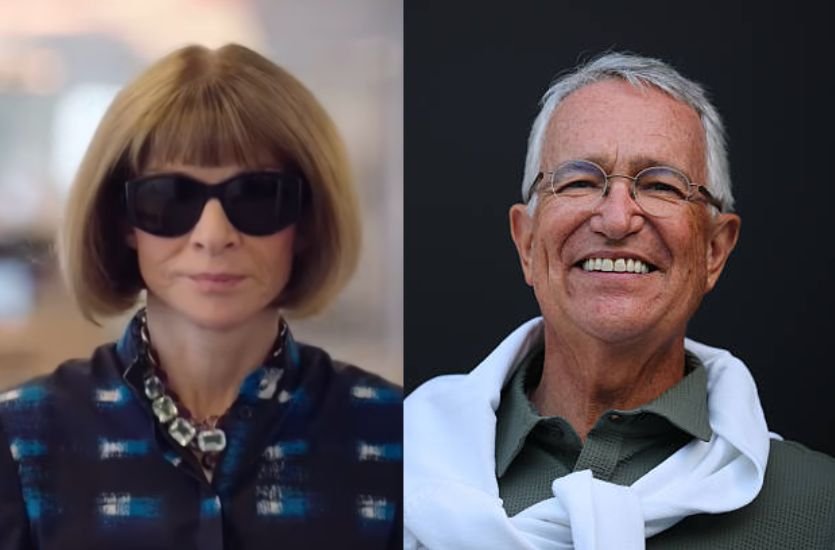
Anna Wintour and Ricardo Salinas are two internationally recognized public figures whose careers have developed in very different industries. Wintour is closely associated with fashion journalism, Vogue, Condé Nast, and some of the world’s most influential cultural and fashion events. Ricardo Salinas Pliego, meanwhile, is a Mexican entrepreneur whose business career is connected with Grupo Salinas, TV Azteca, Grupo Elektra, Banco Azteca, telecommunications, and other ventures.
The two names sometimes appear together in online searches, which can create questions about whether Anna Wintour and Ricardo Salinas have a professional, family, or personal connection. Available public information does not establish a family relationship between them. Instead, their biographies show two separate career paths that have made each figure influential in a different part of international media, culture, and business.
Understanding Anna Wintour and Ricardo Salinas therefore requires looking at their individual backgrounds, professional achievements, current roles, and the reasons their names may appear together online. Wintour’s career represents the editorial and creative side of global fashion media, while Salinas’ career represents entrepreneurship, corporate management, and business expansion across several industries.
Quick Bio Table
| Detail | Anna Wintour | Ricardo Salinas |
|---|---|---|
| Full Name | Anna Wintour | Ricardo Benjamín Salinas Pliego |
| Born | 1949 | 1955 |
| Nationality | British-American | Mexican |
| Main Field | Fashion journalism and media | Business and entrepreneurship |
| Best Known For | Vogue and Condé Nast | Grupo Salinas and its businesses |
| Major Organization | Condé Nast / Vogue | Grupo Salinas |
| Current Major Role | Chief Content Officer of Condé Nast and Global Editorial Director of Vogue | Chairman and founder associated with Grupo Salinas |
| Major Industries | Fashion, publishing, media and culture | Retail, finance, television, telecommunications and technology |
| Major Public Association | Vogue, Met Gala and fashion media | TV Azteca, Grupo Elektra and Banco Azteca |
| Professional Base | London and New York fashion media | Mexico and international business |
Who Is Anna Wintour?
Anna Wintour is one of the most recognizable figures in modern fashion publishing. Her career has been closely connected with Vogue, where she became editor-in-chief of American Vogue in 1988. Over the following decades, her influence expanded beyond magazine editing into international fashion, cultural events, celebrity media, and the wider Condé Nast organization.
Wintour began her career in fashion journalism in Britain before moving to the United States. Her editorial experience included positions at British and American fashion publications before she eventually took leadership of Vogue. Her arrival at American Vogue marked an important stage in the magazine’s development and helped establish her as one of the most influential editorial figures in fashion.
Her role at Vogue has involved more than selecting magazine content. Fashion publishing operates at the intersection of designers, photographers, models, celebrities, advertisers, cultural institutions, and luxury businesses. Wintour’s career has therefore placed her at the center of a much larger media ecosystem.
Anna Wintour and Vogue
Vogue remains the most important part of Wintour’s public professional identity. She became editor-in-chief of American Vogue in 1988 and held that position for decades. During her tenure, Vogue expanded its cultural reach while continuing to focus on fashion and style.
In 2025, Condé Nast announced a change in Wintour’s responsibilities. She stepped away from the day-to-day editorial leadership of American Vogue while continuing as Chief Content Officer of Condé Nast and Global Editorial Director of Vogue. The new Head of Editorial Content for American Vogue, Chloe Malle, assumed responsibility for the magazine’s daily editorial direction while reporting to Wintour.
This distinction is important when discussing Wintour in 2026. Describing her simply as the current editor-in-chief of American Vogue would not accurately reflect the organizational structure announced in 2025. Condé Nast currently lists Wintour as Chief Content Officer and Global Editorial Director of Vogue.
Anna Wintour’s Wider Influence
Wintour’s influence extends beyond the pages of Vogue. Her career has connected fashion journalism with entertainment, art, design, celebrity culture, and major international events.
One of the most visible examples is the Met Gala, the annual Costume Institute benefit at the Metropolitan Museum of Art in New York. Wintour has played a major role in the event’s development and its relationship with the fashion industry and popular culture.
Her influence also extends through Vogue’s international operations and projects such as Vogue World. These initiatives have helped Vogue function not only as a magazine but also as a broader media and cultural brand.
Wintour continues to contribute to Vogue in 2026. Vogue’s contributor archive lists recent work by her, including a May 2026 piece remembering Donald Newhouse.
Anna Wintour’s Current Position in 2026
The most important recent change in Wintour’s career occurred in 2025, when Vogue announced that American Vogue would appoint a new Head of Editorial Content.
Wintour retained her global responsibilities. Her Condé Nast role includes overseeing editorial direction across several major brands, while her Vogue position focuses on the publication’s global editorial network.
This means her influence remains international even though the daily editorial management of American Vogue is handled by Chloe Malle.
For readers searching for current information about Anna Wintour, this distinction provides important context. Her career has moved from the traditional role of a magazine editor toward a broader global editorial leadership position.
Who Is Ricardo Salinas?
Ricardo Benjamín Salinas Pliego is a Mexican entrepreneur and business leader associated with Grupo Salinas. His career is connected with a diverse collection of companies operating across consumer retail, financial services, television, telecommunications, and technology.
Grupo Salinas’ corporate history traces Salinas’ involvement with the family business to 1980 and identifies 1987 as the year he assumed leadership. Under his leadership, the group’s activities expanded considerably beyond its original retail foundations.
The companies associated with Grupo Salinas have given Salinas a significant presence in Mexican business and media. His business interests have included Grupo Elektra, TV Azteca, Banco Azteca, Totalplay, Italika, and other ventures.
Ricardo Salinas and Grupo Salinas
Grupo Salinas developed from a family business into a diversified corporate group. Its history includes expansion into financial services, television broadcasting, telecommunications, technology, and consumer products.
Grupo Elektra became an important part of the group’s retail and financial-services operations. Banco Azteca expanded access to financial services through a business model connected with the group’s retail network. TV Azteca became one of Mexico’s major television broadcasters.
Telecommunications also became part of the group’s portfolio through Totalplay. These developments illustrate the breadth of Salinas’ business interests and help explain why his public profile extends beyond traditional retail entrepreneurship.
Grupo Salinas describes Salinas as its founding chairman and continues to identify him as a central figure within the organization.
Ricardo Salinas and TV Azteca
Television has been one of the most visible components of Salinas’ business career. TV Azteca operates as a major Mexican television broadcaster and has played an important role in the country’s media landscape.
Forbes identifies TV Azteca and Grupo Elektra among the major businesses associated with Salinas. The company’s television operations have given him influence in Mexican media in addition to his interests in retail and financial services.
This creates an interesting contrast with Anna Wintour. Both figures are connected with major media organizations, but their positions within media are fundamentally different. Wintour’s career is rooted in editorial direction and fashion publishing, while Salinas’ media interests are part of a larger diversified business empire.
Ricardo Salinas and Financial Services
Financial services are another major component of the Grupo Salinas ecosystem. Banco Azteca operates alongside Grupo Elektra and has historically provided financial products to consumers connected with the retail network.
This combination of retail and banking is a distinctive part of the group’s business model. A consumer may interact with the group’s retail operations while also accessing financial services through the associated banking business.
For Salinas, this demonstrates how his career has developed through interconnected businesses rather than a single industry. His public profile therefore extends across commerce, finance, media, and telecommunications.
Ricardo Salinas’ Wealth in 2026
Public estimates of billionaire wealth change over time because company valuations, share prices, private assets, and other financial factors can change.
Forbes currently lists Ricardo Salinas Pliego and family at approximately $3.7 billion, with the real-time figure dated September 10, 2026. Forbes’ 2026 Mexico wealth coverage also listed his fortune at $3.7 billion.
The figure should be understood as a dated estimate rather than a permanent value. Forbes’ April 2026 report noted that the 2026 figure was lower than the $4.9 billion figure reported for 2025.
When writing about billionaire wealth, it is therefore more accurate to include the year or date of the estimate rather than presenting one number as a timeless fact.
Ricardo Salinas and the 2026 Tax Dispute Developments
Another major aspect of Salinas’ recent public profile concerns long-running tax disputes involving companies associated with Grupo Salinas.
Forbes México reported in April 2026 that the Mexican Supreme Court had definitively ruled against Grupo Salinas companies in disputes involving approximately 48 billion pesos in tax liabilities and that the commitments were subsequently addressed around the end of 2025 and beginning of 2026.
Grupo Salinas has presented its own account of the matter. In a January 2026 statement, the company said that its tax litigation with the Mexican government had been brought to a definitive close and that 32 billion pesos would be paid in installments. The company also stated that it strongly disagreed with the government’s position while saying it wanted to move forward.
These statements should be distinguished carefully. Forbes provides an external financial account, while Grupo Salinas’ statements represent the company’s own position regarding the disputes.
Anna Wintour and Ricardo Salinas: Are They Related?
One of the most important questions behind the search phrase Anna Wintour and Ricardo Salinas is whether the two are related.
There is no reliable public evidence establishing a family relationship between Anna Wintour and Ricardo Salinas Pliego. Their biographies point toward different family backgrounds, national histories, and professional careers.
Wintour was born in London and developed her career through British and American fashion journalism. Salinas is Mexican and developed his career through the family business that became part of the broader Grupo Salinas organization.
Their names appearing together online should therefore not be interpreted as proof of a family connection or partnership.
Anna Wintour and Ricardo Salinas: Professional Comparison
Although their industries differ, both figures have built long careers around organizations with substantial public visibility.
Wintour’s professional identity is primarily editorial. Her work involves content, creative direction, fashion journalism, international media, and cultural events. Her influence comes largely through publications and the wider Vogue brand.
Salinas’ professional identity is primarily entrepreneurial. His career involves corporate ownership, business management, investments, consumer services, broadcasting, financial services, and telecommunications.
Their geographic focus also differs. Wintour’s career is strongly associated with London and New York, while Salinas’ business activities are strongly connected with Mexico.
The scale and structure of their organizations are also different. Wintour operates within Condé Nast’s global editorial structure, while Salinas is associated with a diversified group of companies operating across several commercial sectors.
Why Their Names Appear Together Online
The exact reason for combined searches involving Anna Wintour and Ricardo Salinas is not established by a major official source. However, articles using the two names together generally discuss them as separate public figures and compare their professional backgrounds.
One recent article using the exact phrase focuses on Wintour’s position in global fashion media and Salinas’ role in Mexican business. It also addresses the question of whether the two have a family connection.
The combination may therefore reflect search interest in two prominent figures rather than evidence of a major joint project.
For SEO purposes, this distinction matters. An article should satisfy the search query without creating a fictional relationship between the subjects.
Their Relationship With Media
Media is one area where the careers of Wintour and Salinas overlap indirectly.
Wintour’s career is built around media itself. Vogue and Condé Nast are central to her professional identity, and her work involves editorial strategy, fashion journalism, cultural coverage, and global publishing.
Salinas entered media through television and built media operations as part of a wider corporate structure. TV Azteca is one of the most prominent examples of this connection.
The difference is therefore one of professional approach. Wintour represents editorial leadership within a global publishing company, while Salinas’ media involvement forms one part of a diversified entrepreneurial organization.
Anna Wintour and Ricardo Salinas in 2026
The two figures remain publicly relevant in 2026, although for very different reasons.
Wintour continues to hold senior global editorial responsibilities at Condé Nast and Vogue. Her current role reflects a transition from direct day-to-day leadership of American Vogue toward broader global editorial responsibilities.
Salinas remains associated with Grupo Salinas and its businesses while dealing with major financial and corporate developments. Forbes’ 2026 reporting highlights the changes surrounding his wealth and the group’s recent tax-related developments.
Their current positions therefore illustrate two very different forms of influence. Wintour remains a major figure in global fashion publishing, while Salinas remains a prominent Mexican entrepreneur with interests across several industries.
Final Thoughts on Anna Wintour and Ricardo Salinas
Anna Wintour and Ricardo Salinas are two highly recognizable public figures whose careers developed along separate paths. Wintour became one of the defining editorial figures in fashion through her decades-long association with Vogue and Condé Nast. Salinas developed a diversified business career through Grupo Salinas, with interests spanning retail, financial services, television, telecommunications, and technology.
Their names appearing together does not establish a family relationship or major business partnership. Available public information instead supports understanding them as two separate figures whose careers have generated substantial public attention in different fields.
As of 2026, Wintour remains Chief Content Officer of Condé Nast and Global Editorial Director of Vogue, while Chloe Malle handles the day-to-day editorial leadership of American Vogue. Salinas remains associated with Grupo Salinas, while Forbes’ current profile places his and his family’s estimated wealth at approximately $3.7 billion as of September 10, 2026.
Looking at the two figures side by side provides a useful picture of how influence can develop through very different professional routes. Anna Wintour’s career has been shaped by editorial leadership, fashion, publishing, and culture, while Ricardo Salinas’ career has been shaped by entrepreneurship, corporate expansion, media, retail, finance, and telecommunications.
READ MORE : Tim Dove and Shari Redstone
READ MORE : Howard Marks and David Zaslav

3 thoughts on “Anna Wintour and Ricardo Salinas: Careers, Backgrounds and Key Facts”