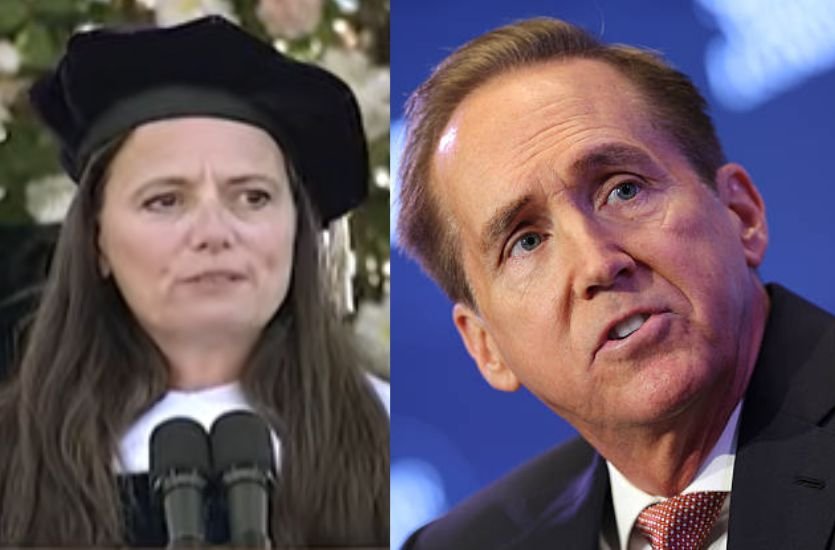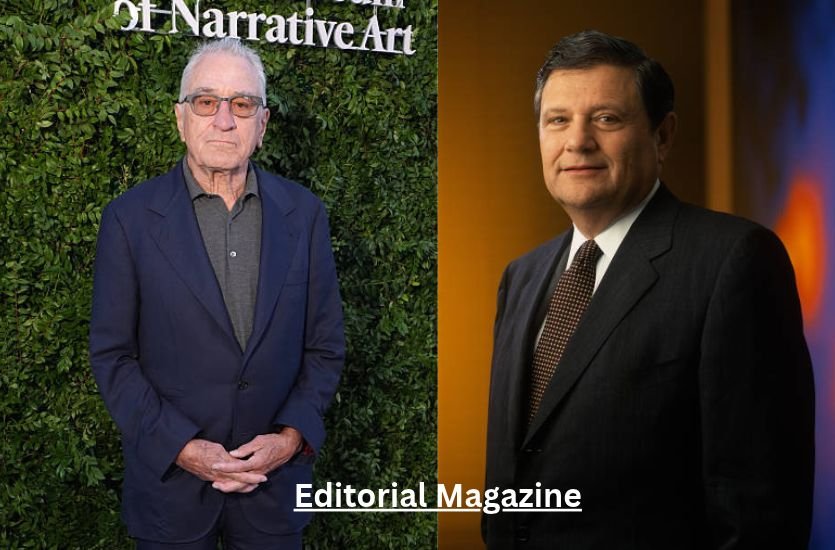
Jerry Speyer and Robert De Niro are two prominent figures associated with New York, but their careers developed in very different fields. Speyer built his reputation in commercial real estate and business leadership, while De Niro became an internationally recognized actor, filmmaker, producer, and cultural figure. Their names can appear together because both have had connections to important New York civic and cultural institutions, including the National September 11 Memorial & Museum.
Although there is no well-established evidence that Jerry Speyer and Robert De Niro are relatives or major business partners, their professional stories intersect through New York’s broader civic and cultural landscape. Looking at their careers separately helps explain why the two names are sometimes discussed together.
Quick Answer: Who Are Jerry Speyer and Robert De Niro?
Jerry Speyer is an American real estate executive and the chairman of Tishman Speyer, the global real estate company he co-founded in 1978 with Robert Tishman. His career has included major roles in business, education, healthcare, culture, and civic organizations. Tishman Speyer’s official biography identifies Speyer as one of the company’s two founding partners and lists his involvement with organizations including the National September 11 Memorial & Museum and the Museum of Modern Art.
Robert De Niro is an American actor, filmmaker, and producer known for films including The Godfather Part II, Taxi Driver, Raging Bull, and Goodfellas. He is also closely associated with Tribeca and helped establish the Tribeca Film Festival following the September 11 attacks as part of an effort to help revitalize Lower Manhattan.
The clearest documented connection between Speyer and De Niro is their association with the National September 11 Memorial & Museum, rather than a family relationship or a major joint commercial venture.
Who Is Jerry Speyer?
Jerry I. Speyer is a major figure in American commercial real estate. He is the chairman of Tishman Speyer and was one of the company’s two founding partners when it was established in 1978.
Tishman Speyer developed into an international real estate company involved in owning, developing, operating, and investing in properties. Speyer’s career therefore represents the business and property-development side of New York’s influence.
His professional activities have extended beyond real estate. Tishman Speyer’s official biography lists his involvement with organizations such as the Museum of Modern Art, Yankee Global Enterprises, the National September 11 Memorial & Museum, the Kennedy Center Corporate Fund Board, and the Städel Museum in Frankfurt.
Speyer has also held important positions with major New York institutions. Rockefeller Center’s official biography notes that he previously served as chairman of the Federal Reserve Bank of New York, chairman emeritus of Columbia University, chairman emeritus of the Real Estate Board of New York, and chairman emeritus of the Partnership for New York City.
Jerry Speyer’s Education and Early Career
Speyer’s educational background is closely connected with Columbia University. His official biography states that he earned a bachelor’s degree from Columbia College and an MBA from Columbia University Graduate School of Business.
Before establishing Tishman Speyer, Speyer was involved with Tishman Realty & Construction. The Federal Reserve Bank of New York’s historical biography records his earlier professional experience and subsequent leadership in the real estate industry.
The creation of Tishman Speyer in 1978 became a defining point in his career. The company combined the Tishman family’s real estate background with Speyer’s business leadership and subsequently became associated with major commercial properties and development projects.
Jerry Speyer and New York Real Estate
New York has been central to Speyer’s professional identity. His work has involved commercial property, development, investment, and the management of major real estate assets.
Tishman Speyer describes itself as a global real estate owner, developer, and investment manager. The company’s current corporate information says it operates across numerous international markets and serves businesses, families, and communities through different types of real estate projects.
Speyer’s involvement with Rockefeller Center is another important part of his New York profile. Rockefeller Center’s official website identifies him as chairman of Tishman Speyer and highlights his extensive civic and institutional background.
His career illustrates how commercial real estate can overlap with broader civic life. Large-scale property organizations often interact with cultural institutions, educational organizations, community initiatives, and city development.
Who Is Robert De Niro?
Robert De Niro is an American actor, filmmaker, and producer whose career has lasted for decades. He became especially known for dramatic performances and collaborations with major filmmakers.
Some of the films most strongly associated with De Niro include The Godfather Part II, Taxi Driver, Raging Bull, The Deer Hunter, Goodfellas, Awakenings, and Cape Fear.
His career has covered much more than serious drama. De Niro has also worked in comedy, filmmaking, producing, and business. This range has allowed him to remain a significant figure in American entertainment across multiple generations.
His two Academy Award wins are among the most recognizable achievements of his acting career. He won the Academy Award for Supporting Actor for The Godfather Part II and later won the Academy Award for Leading Actor for Raging Bull.
Robert De Niro and the Tribeca Connection
One of the most important parts of De Niro’s connection to New York is Tribeca.
De Niro, Jane Rosenthal, and Craig Hatkoff were involved in establishing the Tribeca Film Festival in the aftermath of the September 11 attacks. The festival was created as part of a broader effort to bring cultural activity and people back to Lower Manhattan.
Tribeca’s official history describes the organization as growing from the film festival into a wider entertainment and storytelling organization. Its activities have included film, television, music, gaming, and other forms of media.
The festival’s origins are particularly relevant when discussing De Niro alongside Jerry Speyer because both men’s civic connections intersect with the post-September 11 history of Lower Manhattan.
Recent reporting marking the 25th anniversary of the September 11 attacks has also revisited De Niro and Rosenthal’s decision to establish the festival. According to their recollections, the goal was to help revitalize the Tribeca neighborhood at a difficult moment for New York.
Jerry Speyer and the National September 11 Memorial & Museum
The most important documented connection between Jerry Speyer and Robert De Niro is their association with the National September 11 Memorial & Museum.
Speyer’s official Tishman Speyer biography lists the National September 11 Memorial & Museum among his board affiliations.
The connection is significant because the memorial and museum is one of New York’s major institutions dedicated to preserving the history and memory of the September 11 attacks.
De Niro has also been associated with the institution through its board history. This provides a concrete institutional reason that the two names can appear together.
Their involvement should not be interpreted as evidence of a joint business enterprise. Instead, it demonstrates how individuals from different professional backgrounds can become involved with the same civic institution.
Why Are Jerry Speyer and Robert De Niro Discussed Together?
At first glance, Speyer and De Niro appear to have little professional overlap.
Speyer’s career centers on commercial real estate, investment, development, and civic leadership. De Niro’s career centers on acting, filmmaking, entertainment, hospitality, and cultural activities.
Their documented connection is therefore more accurately described as civic and institutional rather than primarily commercial.
Both have also developed strong associations with New York. Speyer’s career is connected to the city’s commercial buildings, business organizations, educational institutions, and cultural organizations. De Niro’s career is connected to New York’s film culture, Tribeca, restaurants, and the revitalization of Lower Manhattan.
Jerry Speyer and Robert De Niro: A Comparison
| Category | Jerry Speyer | Robert De Niro |
|---|---|---|
| Main profession | Real estate executive | Actor, filmmaker, producer |
| Major professional association | Tishman Speyer | Tribeca |
| Industry | Commercial real estate | Film and entertainment |
| New York connection | Real estate and civic leadership | Film, culture and Tribeca |
| Major institutional connection | National September 11 Memorial & Museum | National September 11 Memorial & Museum |
| Education | Columbia College and Columbia Business School | Acting and performing arts training |
| Best known for | Real estate leadership | Acclaimed film performances |
| Major public recognition | Business and civic leadership | Two Academy Awards |
The comparison shows that the two men represent different forms of influence. Speyer’s influence is primarily associated with business, property, and institutions, while De Niro’s is strongly associated with cinema and culture.
Their Different Forms of Influence
Jerry Speyer and Robert De Niro demonstrate how influence can develop in very different professional environments.
Speyer’s career has been built around organizations, investment, real estate, and institutional leadership. His work is connected to physical spaces and the long-term development and management of property.
De Niro’s influence has largely been created through performances, films, filmmaking, and cultural organizations. His work reaches audiences through cinema rather than commercial property.
The distinction is useful because the word “influence” does not necessarily mean the same thing in every profession. A real estate executive may influence a city through buildings, development, investment, and institutions, while an actor may influence culture through performances and stories.
New York as the Common Thread
New York provides perhaps the clearest broader connection between Jerry Speyer and Robert De Niro.
For Speyer, New York has been a central location for his business career and civic involvement. His professional history includes major New York institutions and commercial real estate organizations.
For De Niro, New York has been central to both his personal and professional identity. His work in Tribeca and the creation of the Tribeca Film Festival strengthened his connection with Lower Manhattan.
This makes the two figures interesting to compare. One is closely connected with the city’s built environment, while the other is closely connected with its cultural environment.
Robert De Niro’s Broader Business Interests
Although De Niro is best known as an actor, his professional interests have expanded into areas outside traditional film production.
His involvement with Tribeca demonstrates an interest in building cultural institutions rather than simply appearing in films. He has also been associated with hospitality and restaurant ventures, including the Nobu brand.
This broader business activity means that De Niro’s career cannot be described only through his acting credits. He has also participated in projects involving hospitality, entertainment, and cultural development.
Jerry Speyer’s Broader Civic Role
Speyer’s career also extends beyond his central role in real estate.
His official biography identifies a long list of civic, educational, cultural, and healthcare affiliations. These include the Museum of Modern Art, New York-Presbyterian Hospital, the National September 11 Memorial & Museum, Columbia University-related organizations, and other institutions.
The breadth of these affiliations helps explain why Speyer’s public profile includes both business and civic leadership.
His career demonstrates that major business executives can become involved in institutions whose purposes extend beyond commercial activity.
Did Jerry Speyer and Robert De Niro Work Together?
There is no strong evidence that Jerry Speyer and Robert De Niro formed a major joint commercial company or partnership.
Their documented intersection is primarily through civic and institutional involvement, especially the National September 11 Memorial & Museum.
Therefore, descriptions suggesting that the two are business partners should be treated carefully unless they provide specific evidence of a particular transaction, company, project, or joint venture.
Are Jerry Speyer and Robert De Niro Related?
There is no established public evidence of a family relationship between Jerry Speyer and Robert De Niro.
They come from different professional backgrounds and have built separate careers.
The appearance of their names together is better explained by their shared New York connections and institutional involvement than by a documented family relationship.
Why the Connection Matters
The connection between Jerry Speyer and Robert De Niro is interesting because it demonstrates how different areas of New York life can intersect.
Speyer represents commercial real estate and institutional leadership. De Niro represents cinema, entertainment, and cultural entrepreneurship.
Their association with the National September 11 Memorial & Museum places these different professional worlds within the same civic institution.
This also reflects the broader role that prominent business leaders and cultural figures can play in nonprofit and public-interest organizations.
Frequently Asked Questions
Are Jerry Speyer and Robert De Niro related?
No established public family relationship between Jerry Speyer and Robert De Niro has been documented. Their known connection is primarily institutional and civic.
What is Jerry Speyer famous for?
Jerry Speyer is best known for his career in commercial real estate and as chairman and founding partner of Tishman Speyer, which was formed in 1978.
What is Robert De Niro famous for?
Robert De Niro is best known for his long film career and performances in movies such as The Godfather Part II, Taxi Driver, Raging Bull, and Goodfellas. He is also a filmmaker, producer, and co-founder associated with the Tribeca Festival.
What company did Jerry Speyer co-found?
Jerry Speyer co-founded Tishman Speyer with Robert Tishman in 1978. Tishman Speyer’s official biography identifies Speyer as one of the company’s two founding partners.
What is Robert De Niro’s connection to Tribeca?
De Niro was one of the founders involved in establishing the Tribeca Film Festival and Tribeca’s broader cultural organization. The initiative emerged following the September 11 attacks and was intended in part to help revitalize Lower Manhattan.
Do Jerry Speyer and Robert De Niro have a connection to the 9/11 Memorial?
Yes. Jerry Speyer is listed by Tishman Speyer among his board affiliations with the National September 11 Memorial & Museum. De Niro has also been associated with the museum’s board history.
Are Jerry Speyer and Robert De Niro business partners?
There is no well-established evidence of a major direct business partnership between the two. Their documented connection is better described as civic and institutional.
Why are Jerry Speyer and Robert De Niro mentioned together?
They are both prominent New York figures from different professional fields, and their careers intersect through New York’s civic and cultural institutions, particularly the National September 11 Memorial & Museum.
Final Thoughts
Jerry Speyer and Robert De Niro built their reputations in very different worlds. Speyer became a major figure in commercial real estate through Tishman Speyer and developed an extensive record of civic and institutional involvement. De Niro became one of America’s best-known actors while also expanding into filmmaking, hospitality, and cultural projects.
Their most meaningful documented connection is not a family relationship or a major joint business venture. Instead, it is their association with New York’s civic and cultural landscape, including the National September 11 Memorial & Museum.
Looking at their careers together provides an interesting comparison between real estate and entertainment, business leadership and creative work, and the different ways individuals can contribute to the life of a major city.
Visit: Editorial Magazine